Automatic High-Level Can Depalletizer
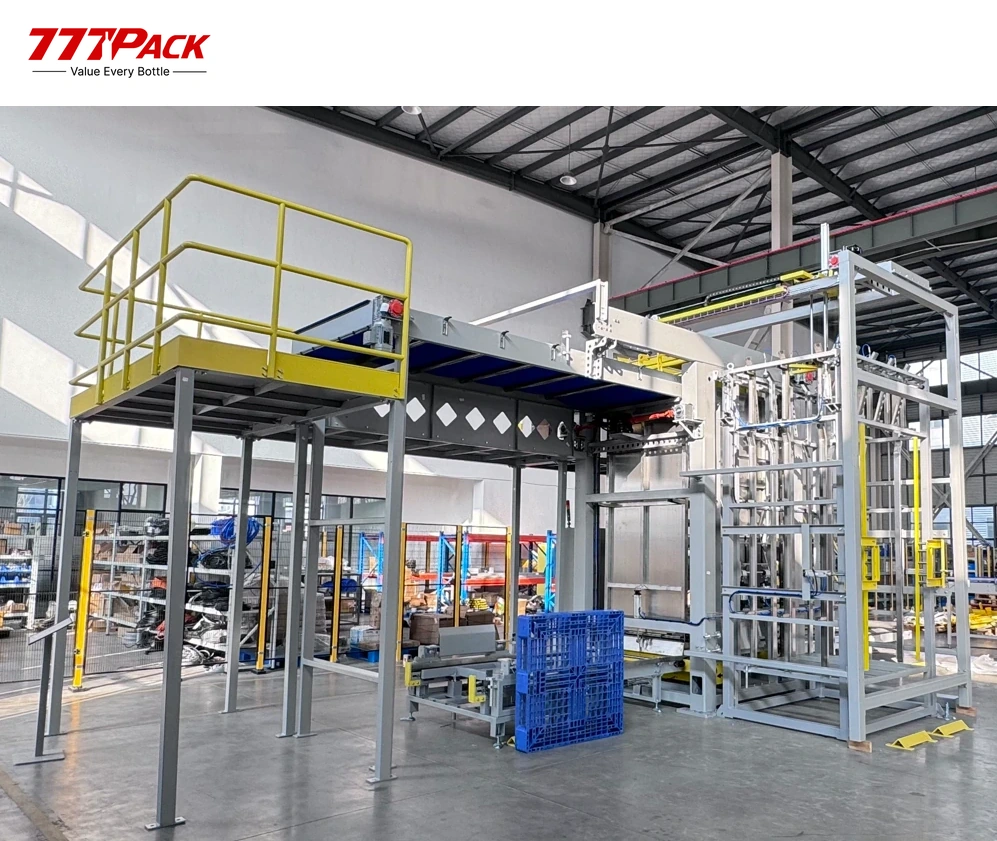
Unload palletized empty cans layer by layer to an elevated outfeed conveyor. This automatic high-level can depalletizer combines motor-driven pallet lifting, layer transfer, interlayer-sheet collection and empty-pallet discharge. Reference output: 36,000 cans/hour.
Line integration
Position in the Production Line
High-level depalletizing feeds empty metal cans into the container-handling line. The example below shows its position in a carbonated beverage canning line.
- 01Water TreatmentFilter · Purify · Disinfect
- Parallel preparation02AProduct PrepMix · Chill · Carbonate02BDepalletizingUnload · Separate · FeedCURRENT
- 03RinsingRinse · Drain · Prepare
- 04FillingFill · Seam
- 05WarmingWarm · Reduce CondensationOptional
- 06DryingRemove Surface Moisture
- 07CodingDate · Batch · Traceability
- 08LabelingSleeve · Hot Melt · Self-AdhesiveOptional
- 09PackingFilm · Carton · Tray
- 10PalletizingStack Finished Packs
Swipe or scroll to explore all stages →
Example flow for carbonated drinks in metal cans. Confirm the can material, size and layer pattern for the selected depalletizer. Rinsing, filling, warming and packing are separate downstream stages; final equipment scope follows the project configuration.
Equipment Overview
The Automatic High-Level Can Depalletizer supplies empty cans from pallet stacks to the elevated container conveyor at the beginning of a canning line. A motor-driven platform lifts the pallet to the unloading level. The transfer mechanism clamps and raises a complete can layer, moves it horizontally, and releases it onto the outfeed conveyor.
The reference configuration handles cans 70–360 mm high at 36,000 cans/hour. It includes an infeed buffer for two full pallet loads, automatic interlayer-sheet collection, empty-pallet discharge and collection, and an operator access platform with stairs and guardrails. Siemens PLC and touchscreen controls coordinate the automatic sequence.
Forklift loading and manual removal of straps and wrapping film take place before automatic unloading. Pallet dimensions are configured for the project; the specified maximum stack height is 2,000 mm. Can diameter, material, wall stiffness, pallet load and layer pattern should be checked against actual samples.
Selection and Line Integration
Match the elevated outfeed height, conveyor width, guides, buffer length and transfer speed to the next can inspection or rinsing stage. For downstream planning, review the can carbonated drink filling and seaming machine and our canned beverage production lines.
Request a Matched Configuration
Send can drawings and samples, pallet and layer details, target output and the available factory layout. Our pre-sale engineering review can coordinate the depalletizer, empty-can conveyor and downstream equipment. Compare other layouts in the bottle and can depalletizing range.
Key Component Brands
Control and pneumatic components specified for this configuration.
Siemens: PLC and touchscreen HMI; Schneider Electric: Variable frequency drives and relays; SICK: Photoelectric and proximity sensors; AirTAC: Cylinders and solenoid valves.
Core Specifications
| System type | Automatic high-level can depalletizer |
|---|---|
| Reference production capacity | 36,000 cans/hour |
| Can height | 70–360 mm |
| Main-machine dimensions (L × W × H) | 8,500 × 3,000 × 5,400 mm |
| Machine weight (reference) | 7 tonnes |
| Total power (reference) | 8 kW |
| Power supply | Three-phase AC 380 V ±5%, 50 Hz |
| Pallet dimensions | Configured to project requirements |
| Maximum stack height | 2,000 mm; confirm the pallet-height allowance in the final layout |
| Full-pallet infeed buffer | 2 pallet loads |
| Sheet magazine arrangement | One shared magazine for top boards and interlayer sheets in this configuration |
| Operator platform | Stairs and guardrails; 2.5 mm patterned floor plate |
Working Principle
Engineering Highlights
Practical arrangements for pallet supply, elevated transfer and collection.
High-level layer transfer
Lift · Clamp · TransferThe pallet rises to the unloading level, where a full can layer is lifted and transferred to the elevated outfeed conveyor.
Two-pallet infeed buffer
2 full pallet loadsThe double-row chain arrangement buffers incoming pallets and moves the next unpacked load toward the lift.
Shared sheet magazine
Top boards + interlayer sheetsThis configuration uses one magazine for top boards and interlayer sheets. Confirm sheet and board dimensions and the required handling sequence.
Automatic empty-pallet handling
Discharge and collectionAfter unloading, the platform lowers the empty pallet and the chain conveyor transfers it to the collection station for forklift pickup.
Line Integration
Equipment role and connections for the selected canning application.
The depalletizer supplies empty cans at the container-preparation stage. Beverage preparation runs separately before the two flows meet at filling. The outfeed conveyor connects to the specified can inspection or rinsing stage, followed by filling and seaming. The flow near the top of this page illustrates a carbonated beverage canning application.
- Can format: Provide height, diameter, material, empty-can weight and samples to check the layer-transfer arrangement.
- Pallet and stack: Confirm pallet dimensions, full-pallet weight, layer pattern, layer count and the 2,000 mm maximum stack-height requirement.
- Elevated outfeed: Agree conveyor elevation, width, guides, accumulation space and matched speed with the inspection, rinsing and filling equipment.
- Top boards and sheets: Confirm dimensions, material, thickness, condition and collection capacity for the shared magazine.
- Control coordination: Agree ready/run/fault signals, accumulation response, start/stop sequence and emergency-stop interfaces.
- Forklift and operator access: Reserve routes for pallet loading and empty-pallet pickup, plus clear access to the operator platform and maintenance areas.
Configuration and Project Scope
- Pallet infeed conveyor
Double-row chain conveying and buffering for two full pallet loads.
- Motor-driven pallet lift
Raises the full pallet to the unloading level and indexes successive can layers.
- Can-layer transfer and outfeed
Clamps, lifts and transfers a complete layer to the can conveyor.
- Interlayer handling and collection
Automatic separating-sheet removal and stacking, with the shared magazine arrangement specified for this project.
- Empty-pallet conveyor and collection
Automatically discharges and collects empty pallets for forklift removal.
- Operator access and controls
Raised platform with stairs and guardrails; Siemens, Schneider Electric, SICK and AirTAC components as listed above.
- Can and pallet format
Confirm can samples, pallet dimensions, layer pattern, stack height and total load.
- Conveyor and building interfaces
Agree elevated outfeed, downstream equipment, factory clear height and handling routes.
- Boards, sheets and utilities
Confirm collection arrangements, compressed-air requirements and the electrical interface.
- Downstream equipment
Can rinsing, filling/seaming, warming and packaging are defined separately in the complete-line scope.
Utilities and Installation
Electrical supply
380 V · 3-phase · 50 HzReference supply: three-phase AC 380 V ±5%, 50 Hz. Total reference power: 8 kW.
Compressed air
Confirm for the selected configurationPneumatic cylinders and solenoid valves are included. Agree air pressure, air quality and consumption during project engineering.
Building and access
5,400 mm machine heightCheck clear height above the machine, floor loading for the reference 7-tonne system, service access and forklift routes. The operator walkway includes stairs and guardrails.
Frequently Asked Questions
Selection, operating sequence, utilities and line integration.
What is the reference output of this high-level can depalletizer?
The reference production capacity is 36,000 cans/hour. Confirm the required sustained output with the actual can format, pallet layer pattern, sheet condition and downstream conveyor arrangement. Include these conditions in the agreed acceptance test.
Which can sizes and pallets can it handle?
The documented can-height range is 70–360 mm, and pallet dimensions are configured for the project. The specified maximum stack height is 2,000 mm; confirm how the pallet itself is included in this height. Send can diameter, material, weight, samples, pallet load and layer details for a matched configuration.
Is transport wrapping removed automatically?
An operator removes the straps and wrapping film at the unpacking position. Forklift loading and empty-pallet pickup are also part of the operating process. The automatic cycle covers pallet conveying and lifting, interlayer handling, can-layer transfer, and empty-pallet discharge and collection.
How does the machine unload each can layer?
A motor-driven lift raises the pallet to the preset unloading level. After the separating sheet is collected, the transfer mechanism clamps and lifts a complete can layer, moves it horizontally and releases the cans onto the outfeed conveyor. The lift then indexes for the next layer.
Do top boards and interlayer sheets use one magazine?
This project configuration specifies one shared collection magazine for top boards and interlayer sheets. Confirm board and sheet dimensions, material, condition and the required handling sequence when preparing the final equipment scope.
How does it connect to a can filling line?
The depalletizer feeds empty cans to the selected inspection or rinsing stage before filling and seaming. Match conveyor elevation, width, buffering, speed and control signals. Review the can carbonated drink filling machine and canned beverage production line for downstream planning.
Which component brands are specified?
The configuration lists Siemens PLC and touchscreen HMI, Schneider Electric variable frequency drives and relays, SICK photoelectric and proximity sensors, and AirTAC cylinders and solenoid valves. The final component list forms part of the agreed technical configuration.
What installation space and utilities are required?
The reference main-machine dimensions are 8,500 × 3,000 × 5,400 mm (L × W × H), with a weight of 7 tonnes and total power of 8 kW. Supply is three-phase AC 380 V ±5%, 50 Hz. Allow additional clear height, service space, sheet collection and forklift access; confirm compressed-air requirements for the final system.
What information should I send for a quotation?
Provide can drawings and samples, target cans/hour, pallet size and full-pallet weight, layer pattern, layer count, stack height, top-board and interlayer details, downstream conveyor elevation, factory layout, available utilities and project location. Use our configuration request page. For palletized glass bottles, see the low-level glass bottle depalletizer.
Project Services
Manufacturing & Line Integration
Core equipment manufacturing, auxiliary-machine coordination and complete-line integration are managed as one system to reduce interface risks before delivery.
FAT & Quality Inspection
Project checks before packing and delivery.
Installation & Commissioning
On-site setup, testing and operator training.
Local Support in Indonesia
Local coordination for service and spare parts.
Plan Your Empty-Can Infeed System
Send your can format, pallet details, target output and factory layout so the depalletizer can be matched to the line.