Wine & Vodka Bottling Turnkey Solution
Turnkey Wine & Vodka Bottling Lines
Plan a glass bottle line for still wine or vodka around your product, bottle and finished presentation. Match filling conditions, product compatibility, oxygen requirements and closures with the labeling and packing stages.
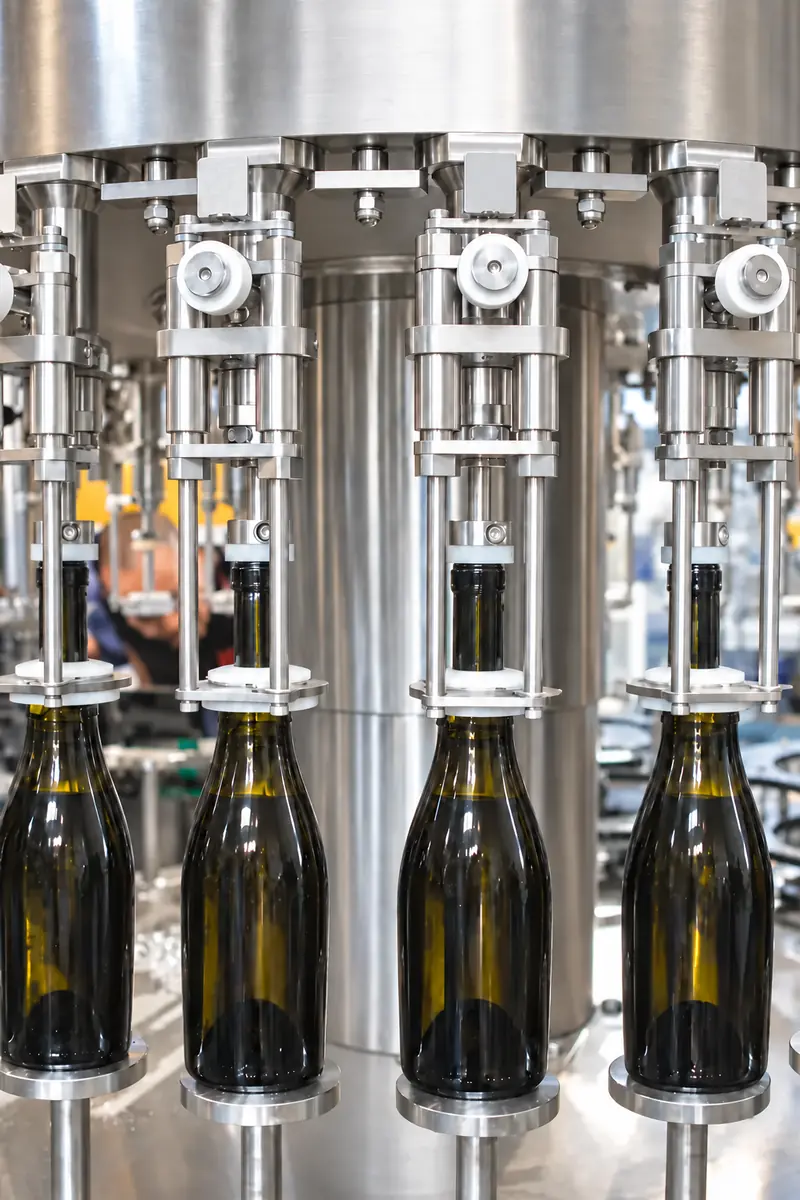
Wine or Vodka + neck finish + closure + presentation
Package illustration for planning discussion. Approved drawings, samples and product conditions define the proposed line.
Plan before selecting machines
Four decisions shape your wine or vodka bottling line
Define the wine or vodka supplied to the bottling line, the approved bottle and closure, and the required presentation before selecting equipment. Sparkling wine needs a separate pressure-filling assessment.
Are you bottling wine or vodka?
Provide the wine or vodka specification, alcohol content where relevant, filling temperature and quality targets. Confirm product-contact compatibility, filling conditions and closure requirements for every product. Sparkling wine adds carbonation and pressure requirements that need a separate review.
Which bottles and closures will you use?
Supply bottle drawings, neck-finish details and closure samples. Corks and screw caps require suitable closing equipment and format parts. Review bottle handling, fill level, closure compatibility and inspection together, especially when several bottle shapes or presentation formats are planned.
Where does upstream processing end?
Define the condition of the wine or vodka delivered to the bottling line. Wine or spirit production, filtration, product storage and transfer need clear scope boundaries. Confirm included product-conditioning equipment, cleaning requirements and responsibility for product quality at the inlet.
What finished presentation is required?
List bottle formats, closures, labels, any capsules, case patterns and required output for each combination. Include available space and changeover expectations. These details help determine handling methods, application equipment, conveyor routing and the packing arrangement for your finished product range.
Production flow
Six-Stage Glass Bottle Line for Wine & Vodka
Product: Still Wine or Vodka · Container: Glass Bottle. This bottling flow starts with prepared product. Filling and closure equipment are specified for the beverage, bottle and closure.
Depalletizing
Feed empty glass bottles to the bottling line.
Filling
Fill and close glass bottles with the specified wine or vodka system.
Coding
Apply date, batch and traceability information.
Labeling
Apply labels matched to the glass bottle and finished presentation.
Packing
Pack bottles in the agreed case or other finished-pack format.
Palletizing
Stack finished packs in the agreed pallet pattern.
The six stages are depalletizing, filling, coding, labeling, packing and palletizing. Bottle preparation and closing are coordinated with the selected filling system. Any drying, capsules, filtration or inspection requirements are defined within the project scope. Sparkling wine requires a separate pressure-filling review.
Explore equipment by function
Connect the equipment around your project
Review the equipment functions alongside your wine or vodka and packaging specifications. Start with the glass bottle wine and vodka filling machine, then confirm product-contact materials, bottle formats and closure compatibility for your project.
Glass Bottle Preparation
Review empty-glass feeding, controlled handling and the preparation process.
Explore Equipment →Wine & Vodka Filling & Closing
Review the wine and vodka filler, product conditions, neck finish and closure requirements.
Explore Equipment →Coding & Marking
Define the date, batch and production traceability information.
Explore Equipment →Coding & Labeling
Match traceability information, package decoration and presentation.
Explore Equipment →Secondary Packaging
Select film, tray or carton packs around the sales format.
Explore Equipment →Palletizing Systems
Define finished packs, pallet dimensions and stacking patterns.
Explore Equipment →Factory layout & project specification
Turn your requirements into a practical factory plan
Share your building drawing and production requirements. Planning connects equipment placement with material flow, working space, cleaning access, utilities and acceptance conditions. Include empty-container storage, finished packs and maintenance access in the review.
- Product & Filling Interface
Wine or vodka specification, alcohol content where relevant, filling temperature, oxygen targets, filtration and product-transfer scope.
- Bottle & Presentation
Bottle drawing and neck finish, closure samples, capsules, labels and case pattern.
- Output & Utilities
Output by format, working schedule, factory plan, power, air, drainage and any required product or process gas supply.
- Quality & Acceptance
Supply boundary, sample materials, cleaning, inspection, operator training and agreed acceptance conditions.
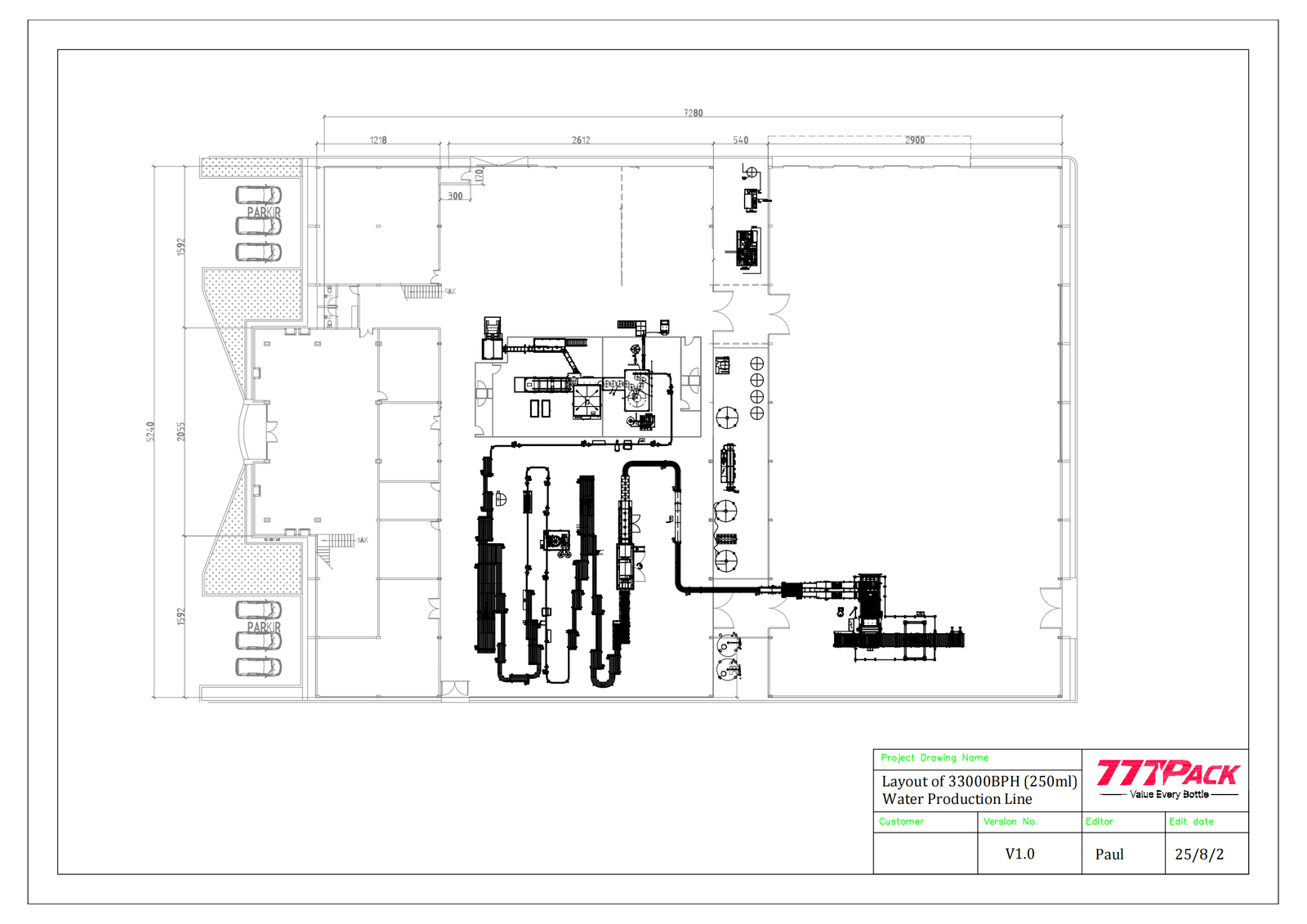
Illustrative layout example. Your arrangement is developed around the confirmed product process, equipment scope and building.
Scope & investment
What affects the cost of your line?
A useful quotation starts with the actual product process, approved formats and equipment scope. Compare the supply boundary, utilities, change parts, inspection, site preparation and delivery responsibilities alongside the equipment price.
- 01
Wine or vodka requirements, product compatibility, filling conditions and agreed oxygen targets.
- 02
Bottle geometry, neck finish, cork or screw-cap equipment and format changes.
- 03
Included filtration, product transfer, cleaning, gas supply and other utilities.
- 04
Capsules, label formats, case patterns, bottle protection and downstream integration.
From proposal to start-up
Define the delivery scope and responsibilities
777Pack coordinates engineering, manufacturing and line integration in China, with local project support in Indonesia. Confirm each delivery and support arrangement in your project proposal.
01
Requirements & Layout
Confirm products, formats, equipment scope, upstream interfaces and the factory arrangement. Define which items are supplied by each party.
02
Manufacturing & FAT
Agree on sample materials, factory acceptance checks and the product conditions used for testing. Record the approved formats and inspection requirements.
03
Installation & Commissioning
Plan access, utility readiness, installation, integration and start-up responsibilities. Confirm acceptance conditions before equipment delivery.
04
Training & After-Sales
Confirm operator training, cleaning and maintenance procedures, inspection methods, spare parts and the support arrangements in the proposal.
Buyer questions
Wine & Vodka Bottling Line FAQ
Can one line bottle both wine and vodka?
A shared line can be considered only after reviewing both product specifications, alcohol compatibility, filling conditions, cleaning, bottles and closures. Confirm the operating range and changeover requirements for the proposed equipment. Sparkling wine requires a separate pressure-filling assessment.
Can the line use corks and screw caps?
Both closure types can be considered during planning, but each requires suitable closing equipment and compatible bottle necks. Confirm the closure range, bottle drawings and changeover expectations. Do not assume that changing a format part alone provides both closing functions.
Why are bottle-neck details important?
The neck finish determines how the bottle and closure fit together. It also affects closing equipment and format parts. Accurate drawings and representative samples help identify compatibility before procurement and support a defined inspection and acceptance process for the finished bottle.
Does the line include winemaking or vodka production?
Wine or vodka production is an upstream scope specified separately from bottling. Define the prepared-product supply interface, product condition and transfer arrangements. List any required filtration, storage or conditioning equipment so the supply boundary and responsibilities are clear.
Build your project brief
Plan your wine and vodka bottling line
Send the wine or vodka specification, alcohol content where relevant, filling temperature, bottle drawings, neck details, closures and agreed oxygen targets. Include output by format, label requirements, case patterns, upstream product scope, available layout and utilities for a project-specific assessment.