Bottled Water Turnkey Solution
Turnkey Bottled Water Production Lines (AMDK)
Plan a bottled water production line around your water source, bottle and cap specifications, required output and factory layout. For an AMDK production line in Indonesia, 777Pack combines equipment integration with local project support. AMDK means Air Minum Dalam Kemasan, or packaged drinking water.
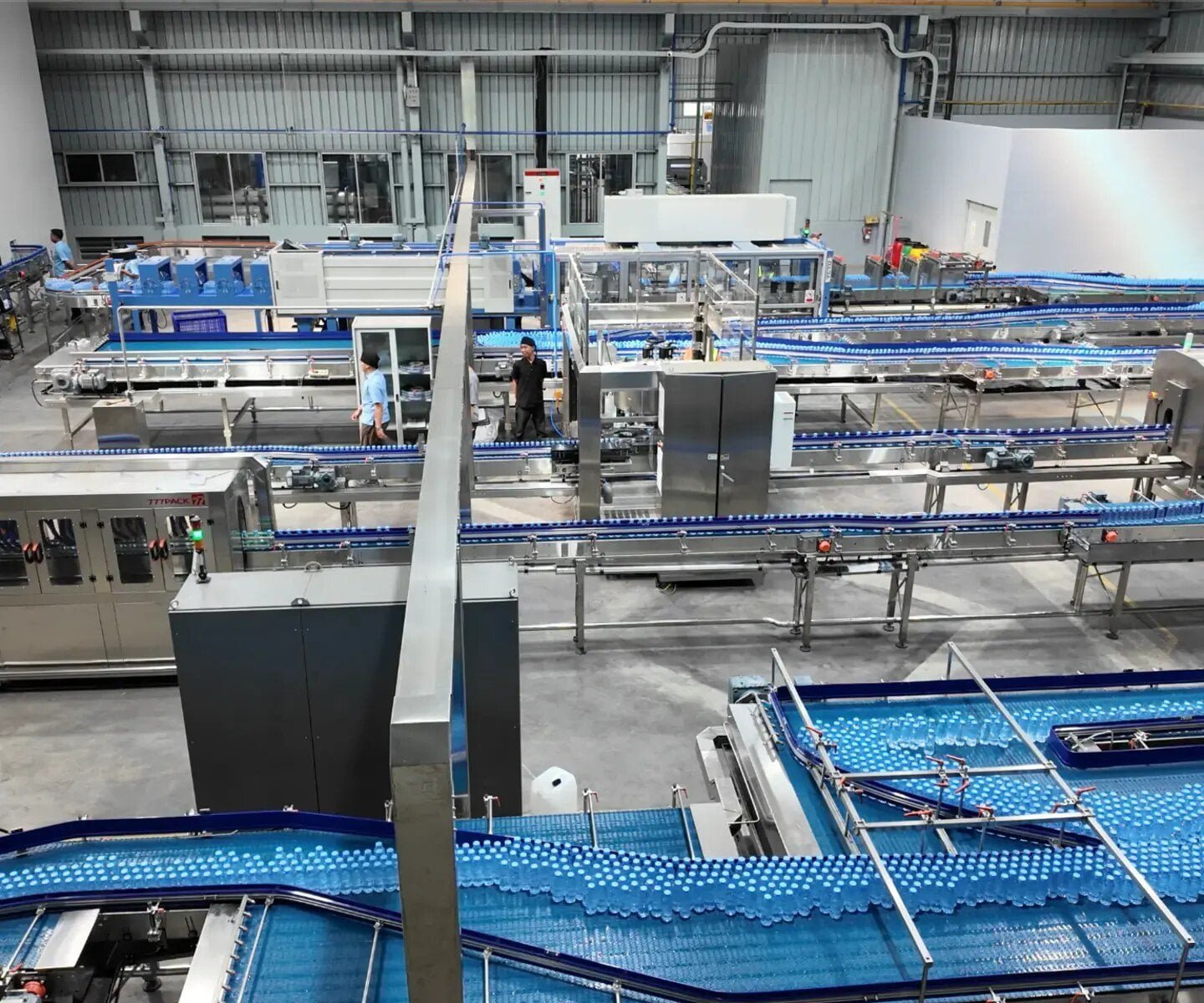
Project reference: 33,000 BPH, 250 ml PET bottled water line in Bandung, Indonesia.
Plan before selecting machines
Four decisions shape your bottled water line
Start a water bottling plant by confirming the water source, product and packaging, output target, site and project scope. Local permits and product requirements need separate confirmation for the destination country.
What treatment does my source water need?
Start with a raw-water report and your intended finished-water specification. Treatment equipment is selected after these requirements are reviewed. Use the RO vs UF water treatment guide to compare selection criteria against your water report.
How much production capacity should I choose?
Share your bottle sizes, expected demand and working hours. The proposal should identify its capacity basis and the downstream equipment required. Read the bottling line capacity planning guide to estimate required output and review line balance.
Will the complete line fit my factory?
Provide building dimensions, access points and available utilities. Planning considers equipment, conveyors, operator access, maintenance space and future expansion.
How can I assess a complete line?
Review the Bandung 33,000 BPH, 250 ml PET case for its configuration and operating video. Its specifications describe that specific project.
Production flow
Representative PET Water Line
Water treatment and bottle blowing prepare water and containers in parallel before filling. Purchased-bottle, glass and large-container projects require a different preparation route.
Water Treatment
Prepare product water to the agreed specification.
Bottle Blowing
Produce PET bottles from matched preforms and molds.
Filling
Rinse, fill and cap the approved bottle format.
Drying
Remove surface moisture before downstream operations.
Coding
Apply date, batch and traceability information.
Labeling
Apply the selected OPP, sleeve or self-adhesive label.
Packing
Group bottles in the agreed film or carton pack.
Palletizing
Stack finished packs in the agreed pallet pattern.
This representative flow shows an on-site PET blowing route. With purchased empty bottles, the agreed receiving and feeding arrangement replaces bottle blowing. Drying, inspection, cleaning, automatic palletizing and other auxiliaries are included only where the project scope requires them.
If ozone disinfection is being considered for your water treatment process, review the bromate risk and ozone disinfection guide when planning source-water assessment, process controls and monitoring.
Buy Empty PET Bottles or Blow Them on Site
Both routes supply empty PET bottles to the filling and capping stage of a water bottling line. Purchasing bottles makes bottle supply, delivery and storage part of the project plan. On-site blowing adds preform feeding, heating, stretch blow molding and the associated mold, air and cooling requirements. Compare the two routes against approved bottle samples, supply arrangements, available space, utilities and future output.
| Planning item | Purchased empty PET bottles | On-site PET blowing |
|---|---|---|
| Equipment | Confirm bottle receiving, storage, feeding and transfer to the selected filler. | Add the selected PET blower, preform handling and molds; define the air, cooling and conveyor interfaces. |
| Supply and transport | Review bottle-supplier consistency, delivery frequency and handling conditions. | Review the approved preform specification, supply arrangements and on-site forming process. |
| Storage and layout | Allow for incoming bottles, material movement and the chosen feeding arrangement. | Allow for preforms, blower and utility equipment, bottle transfer and maintenance access. |
| Utilities | Confirm utilities for the filling line and any selected bottle-handling equipment. | Confirm the selected blower’s electrical, working-air, blowing-air and cooling requirements. |
| Bottle formats | Approve bottle drawings, neck finish, caps and supplier samples. | Approve bottle and preform design, neck finish, molds and any required format parts. |
| Expansion | Review future bottle demand, supply capacity and the filler’s container-handling arrangement. | Review the forming capacity and utilities alongside future filling and packaging demand. |
If your project includes PET bottle manufacturing, define the preforms, molds and blowing utilities alongside the water treatment and bottling equipment. Share the proposed bottle supplier or preform and bottle drawings so that the two routes can be evaluated.
Explore equipment by function
Equipment for an AMDK Production Line
Compare water bottling equipment by function. The final configuration defines the selected machines, interfaces and format requirements.
Water Treatment & Product Prep
Review source-water treatment requirements, then confirm the project-selected system.
Explore Equipment →PET Bottle Blowing
Match preforms, molds and required bottle formats.
Explore Equipment →Filling & Closing
Select filling and closure systems for your product.
Explore Equipment →Labeling Equipment
Match label style, container and artwork.
Explore Equipment →Secondary Packaging
Choose film, tray or carton packs around your sales format.
Explore Equipment →Palletizing Systems
Define finished packs, pallet sizes and stacking patterns.
Explore Equipment →Review specific equipment options
Open the machine details to compare the application, models and interfaces. The selected equipment must match your approved product, packaging and line output.
PET Water Filling · XGF
For still water in PET bottles, review the rinsing, atmospheric filling and screw-capping configuration.
Glass Water Filling · XGX
For purified or mineral water in glass, review the bottle feeding, closure and format requirements.
Rotary OPP Labeling · CY-XR
For round bottles with roll-fed wrap-around labels, compare bottle dimensions, artwork and required line speed.
Printed Film Wrapping · GN-A800-25
For beverage multipacks in printed shrink film, confirm the pack pattern, film and downstream interfaces.
Match each process to the project requirements
Use the process list to define the systems needed for your water, bottle-supply route and packaging format. The final equipment list is confirmed during engineering; selected handling, drying, inspection and palletizing stages depend on the project.
| Process | Equipment or system | Main role | Selection inputs | Configuration condition | Relevant equipment or guide |
|---|---|---|---|---|---|
| Water preparation | Project-selected water treatment system | Prepare water for the confirmed product and filling process. | Source-water information, finished-water requirements and filling demand. | Treatment stages, including any RO or disinfection arrangement, follow the water review and engineering scope. | Treatment selection guide |
| Bottle preparation | Purchased bottle supply or PET preform blowing | Supply approved empty bottles to the filler. | Bottle/preform specification, supply route, output, site and utilities. | On-site blowing equipment is selected only where that route is included. | Bottle blowing options |
| Rinsing, filling and capping | Selected PET water filling configuration | Rinse approved PET bottles, fill still water and apply the approved screw caps. | Bottle and cap samples, target output, water supply and line interfaces. | Confirm selected model, change parts and cleaning scope; do not assume every option is standard. | View equipment |
| Conveying | Bottle and pack transfer systems | Connect the selected equipment and material flows. | Conveyor height, bottle geometry, speeds, transfer direction and control signals. | Type, length and buffering are engineered for the approved layout. | Conveyor category |
| Drying, inspection and coding | Project-selected bottle drying, inspection and marking | Prepare the required bottle surface and apply or check the selected production information. | Surface condition, label/marking requirements and project quality checks. | Each function is included only where specified for the project. | Drying category Coding category |
| Labeling | Selected label-application system | Apply the approved label to the selected container. | Bottle geometry, label type and sample, surface condition and output. | Choose the label method and handling parts for the actual bottle and artwork. | View equipment |
| Secondary packaging | Selected film, carton or tray system | Create the agreed packs for handling and distribution. | Container count per pack, pack pattern, material samples and required pack output. | The linked film wrapper is an option for confirmed PE-film multipacks; other methods require separate selection. | View equipment |
| Palletizing | Selected end-of-line handling or palletizing arrangement | Arrange finished packs for the agreed pallet and handling plan. | Pack and pallet dimensions, layer pattern, output and site handling. | Automatic palletizing is selected only if included in the project scope. | View equipment |
Compare a filling machine quotation with a complete line budget
A bottling machine quotation identifies the selected filler, approved bottle and cap formats, change parts and included options. A water bottling line price also depends on treatment, bottle supply, conveying, labeling, packaging and the agreed project services. Site preparation and other business start-up costs must be identified separately. Compare the scope of each offer before comparing totals.
Review the PET water filling machineFactory layout & project specification
Turn your requirements into a practical factory plan
Share a factory drawing and the available site information. Define the equipment, material flow, working space, utilities and expansion needs before the final arrangement is approved.
- Building and access
Usable building dimensions, columns, entrances, unloading access and ceiling constraints.
- Equipment and material flow
Equipment arrangement, conveyor direction, bottle or preform receiving, packaging-material supply and finished-pack movement.
- Working and storage space
Operator and maintenance access, format-part storage, packaging materials and finished-product storage.
- Utilities and water information
Source-water report; available electricity, water, compressed air and drainage; additional cooling or other utilities required by the agreed equipment.
- Bottle and packaging formats
Bottle and cap drawings or samples, preforms if applicable, labels, pack pattern and pallet details.
- Future expansion
Planned bottle formats and output increases, available building space and future utility or transfer interfaces.
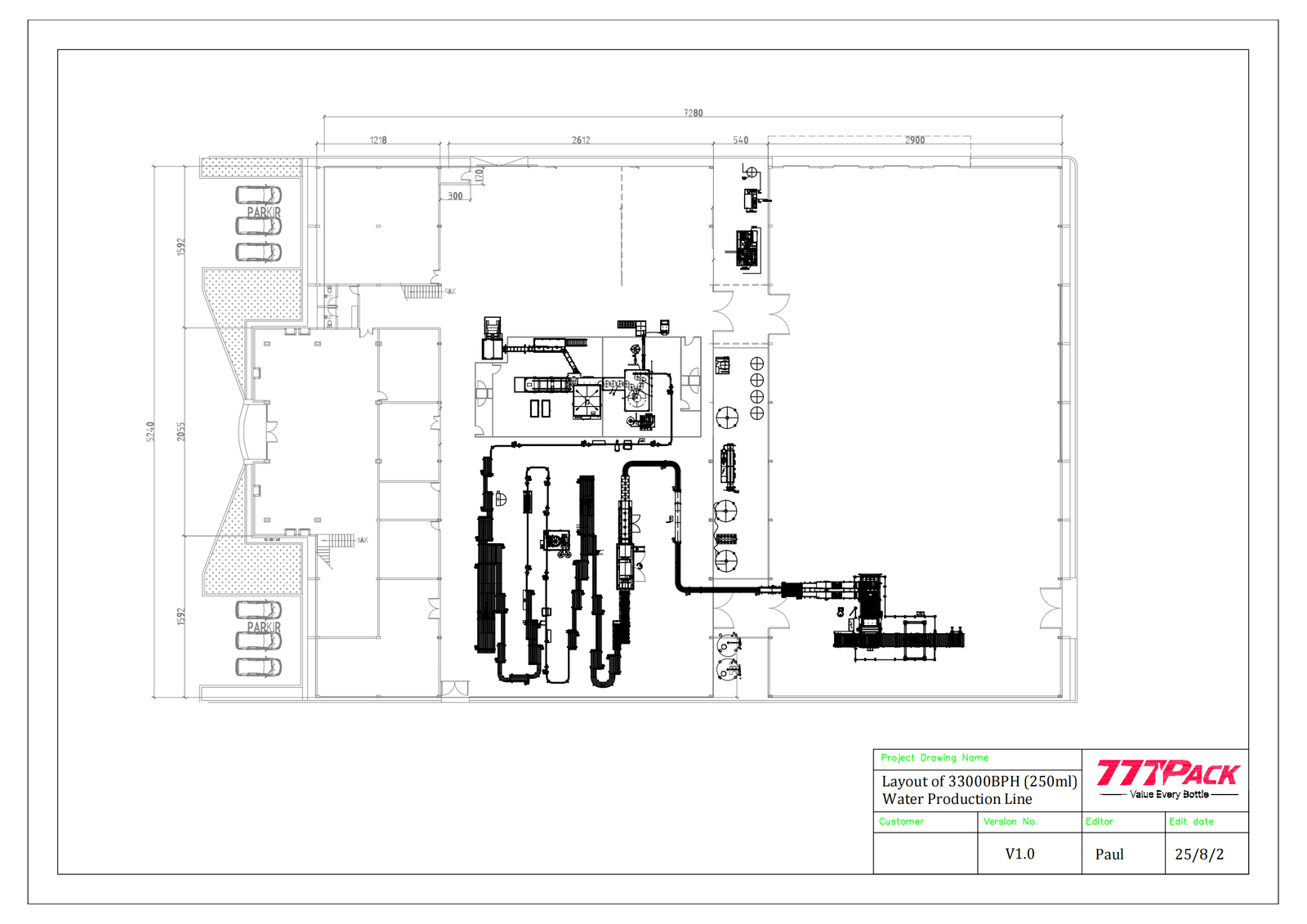
Example water bottling plant layout for planning discussion. Your arrangement is developed around the confirmed product process, equipment scope and building.
Plan Capacity Around Your Production Schedule
Start with the quantity of saleable bottles required, each bottle size and the planned production hours. Review product and bottle changes, cleaning arrangements and expected interruptions before choosing equipment. Match water preparation, bottle supply, filling, labeling and packaging so that the proposed line can meet the agreed output conditions. Rated machine speed is a selection reference; the project’s sustained saleable output must be confirmed for the approved containers, materials, utilities and operating conditions.
| Input | What to provide | Why it matters |
|---|---|---|
| Production demand | Required saleable bottles per day or shift, with expected future demand. | Provides the output target for the proposed operating schedule. |
| Bottle and cap formats | Volumes, drawings, neck finishes and cap samples for each format. | Bottle geometry and closure determine compatible handling and filling arrangements. |
| Operating schedule | Planned shifts, hours and format-change frequency. | Defines the available production time and changeover conditions. |
| Upstream and downstream scope | Water-treatment demand, bottle-supply route, label design and pack pattern. | The complete-line output depends on the selected equipment and its interfaces. |
Rated speed must state the bottle volume, format and test basis. The Bandung 33,000 BPH figure refers to its 250 mL PET combi-block configuration; individual machine ratings and output for other bottle sizes require their own confirmation. Floor area and utility loads are developed from the selected equipment and site drawing rather than a universal factory standard.
Real project evidence
Explore the Bandung bottled water project
33,000 BPH Bottled Water Combi Block Line
The Bandung project combines PET bottle blowing, filling and capping in an integrated combi-block, followed by inspection, OPP labeling, shrink packaging, conveying and palletizing. 777Pack’s recorded delivery role includes line configuration, manufacturing and integration, with site installation and commissioning support. The video documents testing and commissioning at the customer site. Use the case to review bottle transfer, downstream coordination and layout planning; output for a new configuration is confirmed against its own approved bottle format and acceptance conditions.
Scope & investment
What affects the cost of your line?
A useful quotation is based on the product process, formats and equipment scope. Confirm the supply boundary, site preparation and delivery responsibilities alongside the equipment price.
- 01
Source-water treatment and finished-water requirements.
- 02
In-house PET blowing or purchased-bottle feeding.
- 03
Output, container formats and required change parts.
- 04
Labeling, packing, palletizing and agreed site support.
How much does it cost to start a water bottling company?
A water bottling plant budget covers more than the filling machine. Equipment selection, water-treatment requirements, bottle-supply route, packaging format, automation and site services all affect the proposal. Separate the equipment quotation from the wider project budget, and identify the items included, excluded or supplied by the customer. A useful estimate starts with the water-source information, bottle and cap samples, output target, packaging requirements, factory layout and destination.
| Budget component | What to budget or confirm | Quotation boundary |
|---|---|---|
| Equipment and selected options | Treatment, bottle preparation, filling, conveyors, labeling, packing and selected auxiliary systems. | Included equipment, options, format parts and technical interfaces follow the proposal. |
| Building and site utilities | Factory preparation and the required electrical, water, air, drainage or cooling systems. | Identify customer-provided works and any supplier-provided systems separately. |
| Transport and destination costs | Packing, transport and destination-related arrangements. | Confirm delivery terms and which project costs are included in the commercial offer. |
| Installation, commissioning and training | The agreed site-service scope, customer preparation and travel arrangements if applicable. | Include only the services expressly agreed for the project. |
| Start-up materials and other project costs | Initial bottles or preforms, caps, labels, packaging materials and other customer project needs. | Confirm the customer’s start-up budget separately from equipment supply. |
Source-water treatment, output by bottle format, the number of formats, purchased bottles or on-site blowing, labels and packs, automation, supply boundaries and site services all change the required scope. Provide these inputs for a project quotation; no standard investment figure is assigned to every plant.
Request a project-specific scope and quotationFrom proposal to start-up
Define the delivery scope and responsibilities
777Pack coordinates engineering, manufacturing and line integration in China, with local project support in Indonesia. Confirm each delivery and support arrangement in your project proposal.
01
Requirements & Layout
Confirm products, formats, equipment scope, interfaces and the factory arrangement.
02
Manufacturing & FAT
Agree on test materials, factory acceptance checks and the conditions used for testing.
03
Installation & Commissioning
Plan site preparation, utility readiness, equipment installation and start-up responsibilities.
04
Training & After-Sales
Confirm operator training, maintenance procedures, spare parts and ongoing support.
Define the scope of a turnkey water bottling plant
For a turnkey water bottling plant, define the scope item by item in the project agreement. Confirm the engineering deliverables, equipment supply, factory testing, transport arrangements, site preparation, installation, commissioning, training and support to be included. Agree who provides the utilities, samples, operators and site access, and record the documents or test results used to confirm each stage.
The equipment list identifies the manufacturer and supply responsibility for each machine, the selected auxiliary suppliers, integration interfaces and the services included for the destination country. Indonesia local support and arrangements for other markets are confirmed for the agreed project scope.
| Stage | Agreed deliverable | Responsibility or confirmation | Customer preparation | Acceptance basis |
|---|---|---|---|---|
| Engineering and layout | Agreed equipment configuration, layout and interface requirements. | Confirm design inputs, engineering responsibilities and approval points. | Water information, bottle and cap samples, packaging details, output target and factory drawing. | Approved project specification and layout. |
| Equipment supply | Equipment and options listed in the agreed supply scope. | Identify the equipment supply and manufacturing roles, exclusions and customer-supplied items. | Approve bottle formats, materials and scope before production. | Agreed equipment list and technical documentation. |
| Factory Acceptance Test (FAT) | Inspection and trial runs under the agreed factory-test procedure. | Confirm test samples, conditions, performance criteria, witnessing and reporting. | Provide approved samples and confirm the agreed acceptance protocol. | Recorded results against the approved FAT procedure. |
| Transport and delivery | Packing and delivery arrangements defined by the commercial agreement. | Confirm delivery terms and destination responsibilities. | Arrange the agreed receiving, access and unloading preparations. | Agreed shipment and receiving documentation. |
| Site preparation | Site readiness against the confirmed layout and utility requirements. | Identify who supplies or completes each site utility and preparation item. | Confirm space, utilities, access and applicable local requirements. | Agreed site-readiness checklist. |
| Installation, commissioning and site acceptance | Included site services and, where agreed, a Site Acceptance Test (SAT). | Confirm service scope, personnel, test conditions and customer participation. | Provide agreed utilities, production materials, operators and safe access. | Agreed commissioning records and SAT protocol, if included. |
| Training and support | Operating guidance and support arrangements included in the project agreement. | Confirm training scope, support location and arrangements for the destination. | Nominate personnel and confirm local operating and maintenance needs. | Agreed training records and support documentation. |
Buyer questions
Bottled Water Line FAQ
What does AMDK mean, and what equipment does an AMDK production line need?
In Indonesia, AMDK stands for Air Minum Dalam Kemasan, meaning packaged drinking water. Mesin AMDK refers to the equipment used to produce it. For the bottled water projects covered here, the line can include source-water treatment, purchased-bottle feeding or on-site PET blowing, rinsing, filling and capping, conveying, coding, labeling and packaging. Drying, inspection and automatic palletizing are selected where required by the agreed project scope.
Is RO required for every bottled water line?
Treatment follows the source-water analysis and the intended finished-water requirements. Evaluate RO, UF or a combined arrangement for the actual project before selecting equipment. Send the water report and quality target; use the RO vs UF guide to prepare the selection discussion.
Can one line handle several bottle sizes?
Review each bottle drawing, neck finish and cap sample. The proposal identifies compatible formats, change parts, changeover steps and the output basis for each size. Provide all planned bottle and closure samples before the configuration is confirmed.
What support is available for an AMDK project in Indonesia?
Local sales and engineering coordination can support installation, commissioning, training and after-sales work within the agreed project scope. Confirm the site location, included services, customer preparation and spare-parts arrangements in the proposal.
What should a complete line acceptance test measure?
Agree the approved bottle and cap, label and pack format, utilities, test duration and counting method. Define the sustained output basis, treatment of rejects or interruptions, filling and closure checks, code and label quality, pack quality, transfers, control signals and selected safety checks. The agreed FAT or site-acceptance protocol records the criteria and sign-off method; the proposal confirms whether site acceptance is included.
Can I request a proposal before every detail is decided?
Yes. Share the project country, water-source information, intended bottle formats and output target that you already know. Mark undecided items as not yet confirmed. The team can identify the information needed before equipment selection, layout and the final project scope are approved.
Build your project brief
Plan your bottled water production line
Use the existing inquiry form to share what you know about the project. Include the following details in Message / Project Requirements and ask our team how to share the water report, bottle drawings and factory plan.
- Project countrySite location and the intended installation market.
- Water sourceSource conditions and an available water-quality report.
- Bottle and capBottle volumes, drawings or samples, neck finish, closure and preforms if applicable.
- Output and scheduleTarget output by bottle size, working hours and planned format changes.
- Labels and packsLabel type, material or artwork, bottles per pack and pallet requirements.
- Factory and utilitiesBuilding drawing, access, material flow and available utilities.
- Supply and site servicesEquipment, options, installation, commissioning or training you want included.
- Still undecidedMark unknown information as not yet confirmed.
You can start with incomplete information. The proposal is developed around the confirmed inputs and the equipment and services agreed for your project.