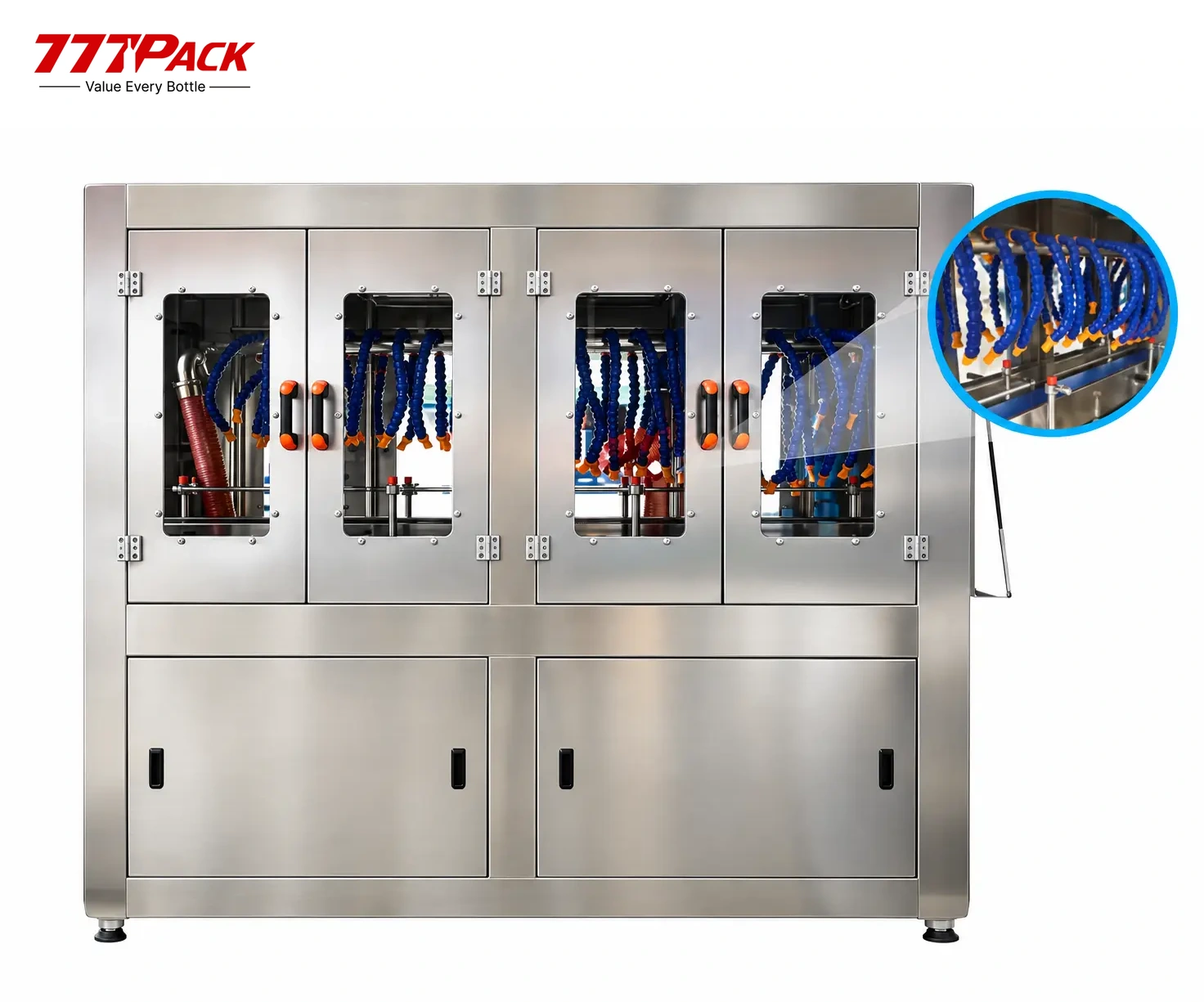
Bottle air dryer reference arrangement. The nozzle arrangement and line interfaces follow the approved project design.
Bottle Air Drying Machine
Remove water droplets from bottle exteriors with directed airflow through multiple nozzles. Installed after filling or a wet treatment stage, the dryer prepares specified bottle surfaces for the next coding or labeling operation.
Line integration
Position in the Production Line
Drying is the highlighted stage. This example removes exterior water after filling and before coding and labeling.
- Parallel preparation01AWater TreatmentFilter · Purify · Disinfect01BBottle BlowingPreform to Bottle
- 02FillingRinse · Fill · Cap
- 03DryingRemove Surface MoistureCURRENT
- 04CodingDate · Batch · Traceability
- 05LabelingSleeve · Hot Melt · Self-Adhesive
- 06PackingFilm · Carton · Tray
- 07PalletizingStack Finished Packs
Swipe or scroll to explore all stages. Drying follows Filling →
Reference flow only. For lines with pasteurizing, cooling or warming, place exterior bottle drying after the relevant wet or thermal process as specified in the final line design. Final process sequence and equipment scope depend on the product, container and project requirements.
Equipment Overview
Filling, exterior rinsing and spray treatment can leave water on bottle surfaces. Residual droplets can interfere with the specified printing area or the preparation required by a labeling process.
This machine directs airflow through multiple positioned nozzles to displace external water. The target areas are defined for the project and may include the bottle body, shoulder, neck or closure exterior. Nozzle position, airflow and the time available as bottles pass through the machine must be reviewed together.
Define the Surface That Must Be Ready
Start with the downstream operation: identify the coding zone, label area and required surface condition. Then review incoming water load, bottle geometry, temperature, line rate and the transfer distance to the next machine.
For integrated planning, see our PET bottle water filling machine, spray tunnel pasteurizing, cooling and warming systems and bottled water production lines. Our pre-sale engineering services can review the drying duty with the complete line.
How Bottle Air Drying Works
Target the required exterior surfaces and verify them at the next process.
Drying Benefits
Performance is defined for the bottle, wet condition and next process.
Targeted water removal
Airflow directed to the wet areasPosition multiple nozzles around the agreed bottle surfaces. Review shoulders, contours and recesses that may retain water during transfer.
Preparation for downstream quality
Coding zones · Label areasReduce residual droplets on the surfaces needed by the selected coder or labeler. Confirm readiness with the actual ink, label and application conditions.
A setup matched to the line
Bottle format · Speed · HandoverCoordinate nozzle settings and bottle transport with the required line output. Check stability and appearance during format trials and commissioning.
Configuration & Selection Data
The final specification follows your bottle range, incoming water condition and line layout.
| Machine function | Water-droplet removal from the exterior of bottles |
|---|---|
| Air-delivery arrangement | Multiple positioned air nozzles; final arrangement defined for the target areas |
| Target surfaces | Specify bottle body, shoulder, neck or closure exterior as required |
| Bottle compatibility | PET and glass bottle formats reviewed against samples, geometry, stability and surface condition |
| Required output | Specify normal and peak bottles/hour for each approved format |
| Incoming wet condition | Identify the upstream filling, rinse or spray process and the expected water load |
| Temperature and environment | Confirm bottle/surface temperature, ambient conditions and condensation risk |
| Conveyor and machine interfaces | Approve transfer elevation, guides, bottle spacing and coder/labeler handover |
| Controls and format settings | Agree operating settings, adjustments, start/stop response and machine-status interfaces |
| Water and air management | Define removed-water collection, drainage, air-path provisions and cleaning access |
| Utilities, materials and hygiene | Air-source arrangement, electrical load, materials and cleaning method follow the final specification |
| Acceptance, noise and energy | Agree required surface condition, test output, installed-load review and any noise measurement conditions |
Line Interfaces
The dryer removes external water after the relevant wet process and before the operation that requires the specified surface condition. Only Drying is highlighted in the example above.
A spray tunnel performs its specified pasteurizing, cooling or warming duty. The bottle air dryer performs the following surface-water removal duty; these are separate functions.
- Upstream wet process: Confirm the discharge condition from the filling machine or spray tunnel. Review water carryover, bottle temperature and available transfer space.
- Bottle transport: Match conveyor elevation, transfer geometry, guides and bottle passage through the drying zone. See pressureless bottle conveyor systems for the separate conveying duty.
- Coding: Identify the printing area and required surface condition with the selected coding and marking equipment. Verify code appearance during the line trial.
- Labeling: Coordinate surface preparation, transport distance and bottle presentation with the labeling system. Include label material and adhesive requirements in the review.
- Line operation: Agree run/stop coordination, access and removal of displaced water. For cold bottles, review the possibility of renewed condensation before coding or labeling.
Bottle & Label Compatibility
PET and glass bottle applications are confirmed with the selected formats and operating conditions. Provide actual bottles and label details before finalizing the setup.
- Geometry and transport: review height, diameter, shoulder shape, recesses, filled weight and stability through the drying zone.
- Surface condition: identify the wet areas and any decoration, coatings or features that affect water retention.
- Labels and coding: confirm whether drying occurs before labeling or whether a label is already present. Review inks, adhesives, label condition and appearance during trials.
- Nozzle clearances: set positions for the approved bottles and verify passage without nozzle interference. Record the required changes for each format.
Container and label compatibility, operating settings and inspection criteria form part of the technical agreement.
Cleaning & Maintenance Planning
Air-path condition
Inspect the supplied air arrangementDefine air-intake, filtration and inspection requirements for the installed configuration. Keep air passages and nozzles in the condition specified by the equipment instructions.
Nozzle settings and access
Keep target areas coveredInspect nozzle alignment, attachments, clearances and airflow performance. Record approved positions and review them after format changes or maintenance.
Removed-water management
Keep the drying area serviceableCheck the specified collection and drainage arrangement, cleaning access and surrounding transfer points. Avoid water build-up or carryover onto the required downstream surfaces.
General background: EHEDG GL 8 — Hygienic Design Principles. Cleaning and hygiene provisions should suit the actual equipment, materials and production environment.
Testing & Acceptance
Agree the target surfaces, incoming condition and inspection method before commissioning.
Bottle and format checks
Representative production samplesCheck bottle stability, nozzle clearances and the agreed target areas with each approved format. Inspect bottle and any existing label appearance.
Surface readiness
At the coding or labeling handoverAssess residual water under the agreed incoming wet condition and line rate. Check the printing or labeling result using the selected production materials.
Output, stops and restart
Defined line conditionsCheck bottle flow at the agreed output, machine stops and restart. Review bottle build-up and the downstream transfer after the drying zone.
Utilities and handover
Record the installed configurationReview installed load, maintenance access and water management. Complete any agreed noise checks under defined conditions and record operating settings.
Frequently Asked Questions
Drying duty, bottle compatibility, line output and project requirements.
Which bottle areas can the dryer target?
The nozzle arrangement is defined for the required exterior areas, such as the body, shoulder, neck or closure exterior. Identify where water remains and which surfaces the next process needs. Confirm the result using representative bottles.
Which bottle materials and formats can be reviewed?
PET and glass bottle applications are reviewed against the actual geometry, filled weight, stability and surface condition. Provide samples or drawings for every required format. The approved range and adjustment requirements are defined for the project.
How does air drying differ from tunnel treatment or sterilizing?
This machine removes water droplets from bottle exteriors. It does not dry the bottle interior, treat the beverage or provide a sterilizing process. Pasteurizing, cooling and warming are separate duties selected for the product and filling process.
What determines the required drying configuration?
Bottle shape, target area, incoming water load, line rate, bottle temperature and ambient conditions all affect the duty. Nozzle positions, airflow and the available treatment time are reviewed together for the required surface condition.
How is the drying-air supply specified?
The air-source arrangement and utility requirements are defined in the final configuration. Confirm the required air quality and supply equipment. The final utility list identifies the installed electrical load and any required compressed-air service.
How is the surface condition checked before coding or labeling?
Agree the target area, inspection method and acceptance condition with the downstream process. Check residual water and the actual code or label result at the handover. The requirement may concern specific surfaces rather than every recess on the bottle.
How should cold-bottle condensation be considered?
Cold bottles may collect moisture again between drying and the next machine. Review bottle temperature, ambient humidity, transfer time and line position. Surface readiness should be verified where coding or labeling actually takes place.
How are noise and energy use evaluated?
Review the final air supply, installed load, operating duty and enclosure arrangement. If a noise requirement applies, agree the operating and measurement conditions. Noise ratings and energy figures must come from the selected configuration and defined test basis.
What is needed to integrate the dryer into an existing line?
Provide the layout, conveyor elevation, available space, bottle formats and upstream/downstream machine details. The pre-sale review checks the handovers, water management and control interfaces. Installation and commissioning can be included in the agreed service scope.
What should I send for a quotation?
Send bottle samples or drawings, target output, incoming wet conditions, target drying areas, bottle temperature and the next coding or labeling process. Include the line layout and available utilities. Request a bottle-drying review.
Project Services
Manufacturing & Line Integration
Core equipment manufacturing, auxiliary-machine coordination and complete-line integration are managed as one system to reduce interface risks before delivery.
FAT & Quality Inspection
Project checks before packing and delivery.
Installation & Commissioning
On-site setup, testing and operator training.
Local Support in Indonesia
Local coordination for service and spare parts.
Prepare Your Bottles for the Next Process
Send the bottle, wet condition and line details so the target surfaces and machine interfaces can be reviewed together. Our after-sale services support installation, commissioning and operator training.