From ingredients to filling
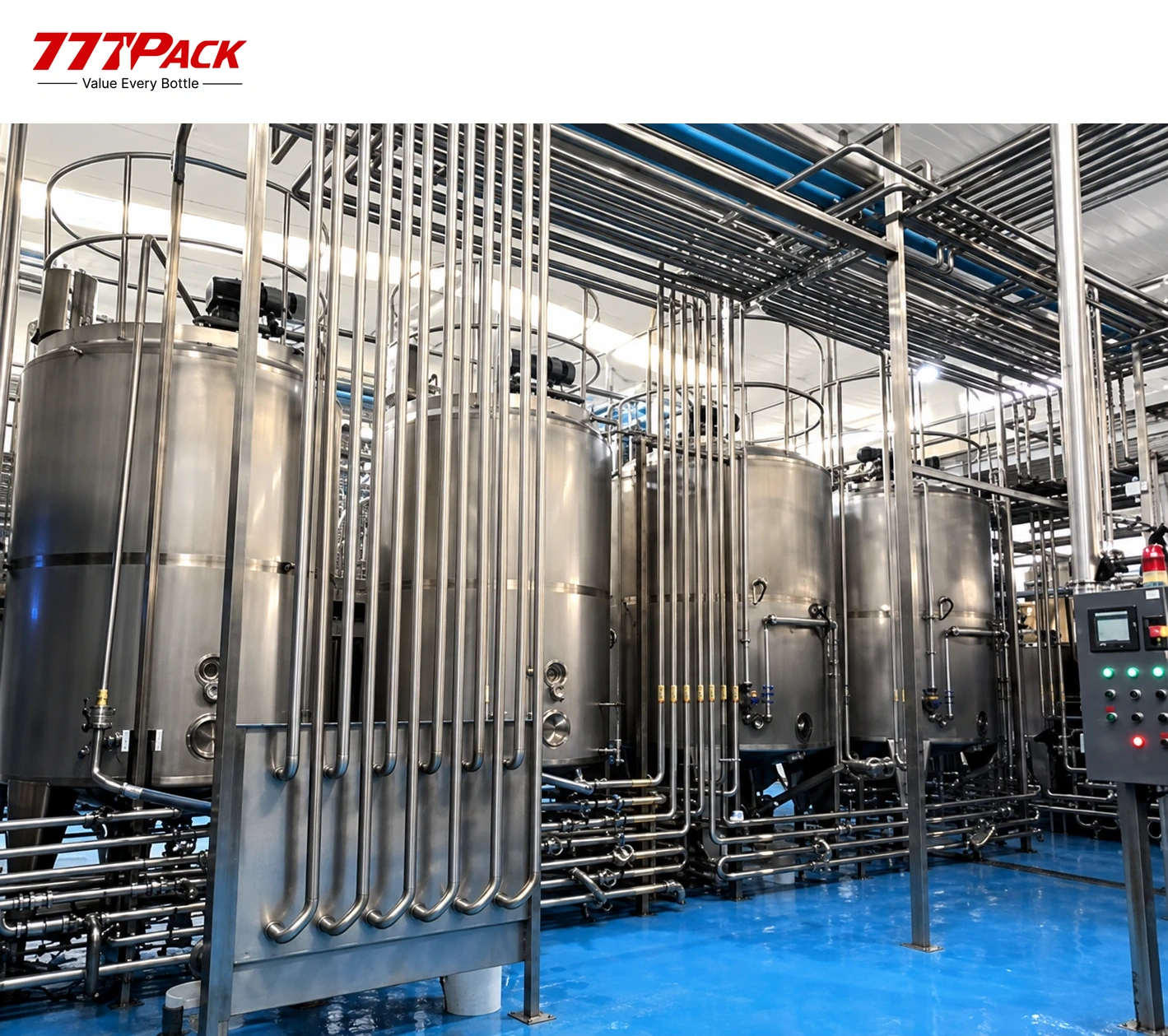
Beverage Processing Equipment & Systems
Prepare juice, tea drinks, dairy beverages and fermented products with equipment selected for your recipe. Explore storage, extraction, mixing, fermentation, heat exchange, thermal processing and CIP systems.
Line integration
Position in the Production Line
Beverage processing sits in Product Prep, before filling. This example shows a juice or tea hot-fill line using PET bottles.
- 01Water TreatmentFilter · Purify · Disinfect
- Parallel preparation02AProduct PrepMix · Blend · HeatCURRENT02BBottle BlowingPreform to Bottle
- 03FillingRinse · Fill · Cap
- 04Bottle InversionHeat-Treat Cap & Neck
- 05CoolingCool Hot-Filled Containers
- 06DryingRemove Surface Moisture
- 07CodingDate · Batch · Traceability
- 08LabelingSleeve · Hot Melt · Self-Adhesive
- 09PackingFilm · Carton · Tray
- 10PalletizingStack Finished Packs
Swipe or scroll to explore all stages →
Example flow: the required preparation steps depend on the recipe and filling method. Extraction and fermentation are selected only where needed. CIP serves the connected product-contact circuits across the line. Each stage links to related equipment.
Beverage Processing Equipment Range
Build the preparation process around the product. Select the equipment, controls and cleaning circuits that your recipe and production method require.
01 / STORAGE & BLENDING
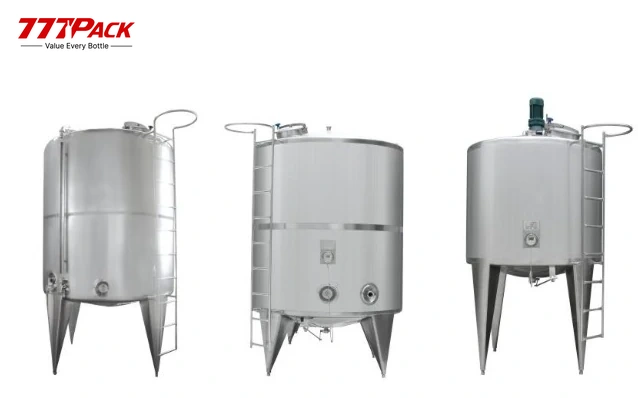
Storage & Process Tanks
Storage and process tanks connect ingredient preparation with the next production stage. They provide a place to hold liquid ingredients or prepared beverage, with mixing, heating or cooling added when the recipe requires it. Single-wall, insulated and jacketed designs can be configured around the duty, while agitation is selected for the product and mixing task.
Available construction options include SUS304 and SUS316L stainless steel. Sampling valves, temperature indication, access manholes and CIP spray balls can be included in the agreed scope. The final tank arrangement should match the upstream preparation equipment and the requirements of the filling line. Coordinate ingredient-water quality with the water treatment and purification system.
- Single-wall, insulated or jacketed options
- Product-specific agitation arrangements
- Optional sampling and CIP fittings
Selection focus: Define the product, working volume, holding time, mixing duty and heating or cooling requirements before selecting the tank configuration.
02 / INGREDIENT EXTRACTION
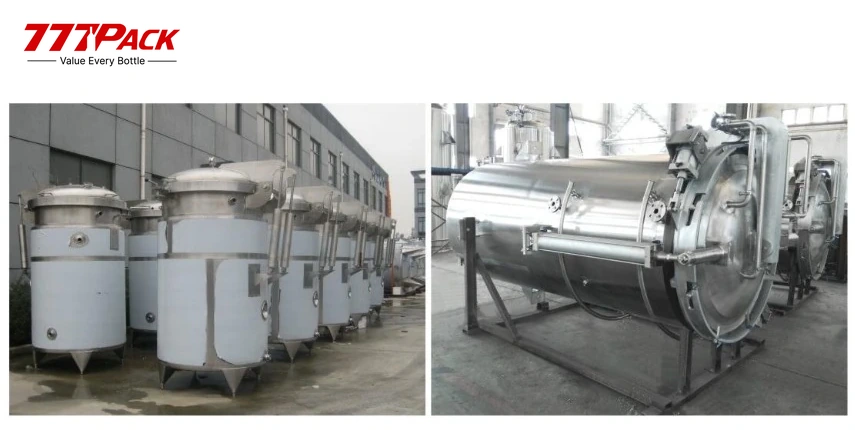
Tea & Botanical Extraction Tanks
Extraction tanks prepare liquid extracts from tea, herbs and other botanical ingredients before blending and downstream processing. The vessel arrangement can be selected around the raw material, extraction method and production sequence. Options include different vessel geometries, circulation arrangements and jacketed heating or cooling.
Temperature monitoring and control can be configured for the extraction duty, while pressure or vacuum operation depends on the selected vessel design. Aroma-recovery arrangements can be specified where the extraction process requires them. Extraction equipment should be considered together with the preparation tanks and thermal processing system so that ingredient handling and product transfer suit the complete process. For a complete application, see how preparation connects to a juice and tea bottling line.
- Tea, herb and botanical applications
- Configurable circulation and temperature control
- Optional aroma-recovery arrangements
Selection focus: Confirm the raw material, extraction procedure, batch size and required operating conditions before specifying the vessel and accessories.
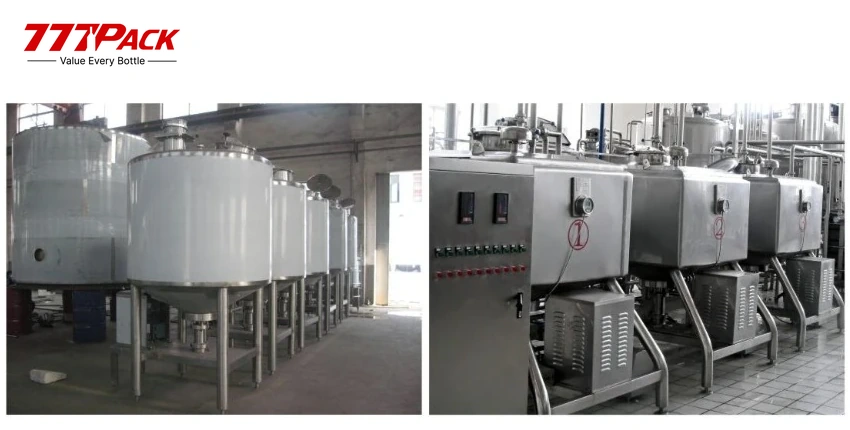
03 / DISSOLVING & DISPERSION
High-Shear Mixing & Emulsification Tanks
High-shear mixing and emulsification tanks support ingredient dissolving, dispersion and liquid blending during beverage preparation. They can be configured for liquid–liquid or liquid–solid mixing tasks, with the mixing arrangement selected around the recipe and process requirements. Jacketed heating or cooling can be included when temperature management forms part of preparation.
Available options include SUS304 or SUS316L construction, temperature indication, sampling connections and CIP spray devices. This equipment belongs within the product preparation stage, ahead of the selected thermal treatment and filling process. High-shear mixing and high-pressure homogenization serve different duties, so the required process should be confirmed before either is specified. Match the preparation output and transfer temperature to the PET bottle juice filling machine.
- Dissolving, dispersion and emulsification duties
- Optional jacketed heating or cooling
- Configurable mixing and hygienic fittings
Selection focus: Describe the ingredient forms, recipe, viscosity, mixing objective and temperature requirements so the appropriate mixing arrangement can be selected.
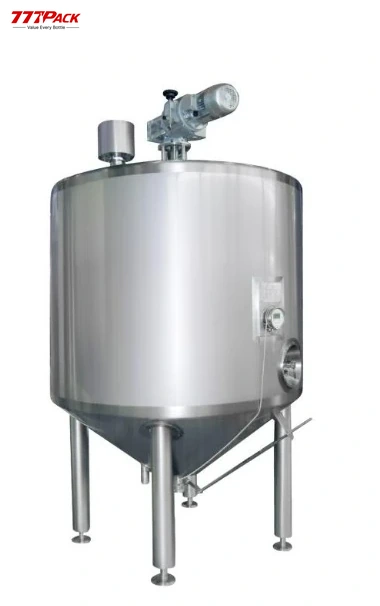
04 / CONTROLLED FERMENTATION
Fermentation Tanks
Fermentation tanks provide a controlled vessel for fermented beverage and dairy applications, including products that require a defined preparation and fermentation stage. The tank can be configured with agitation, insulation and jacketed heating or cooling to suit the process. Temperature, pH and oxygen monitoring or control are available configuration options rather than standard features of every vessel.
Hygienic vents, sampling fittings, product connections and CIP spray balls can also be specified. Tank selection should consider the complete operating sequence, including preparation, fermentation, product transfer and cleaning. Any requirement for sterilizable construction or additional hygienic provisions needs to be included in the project scope. Review the vessel temperature duty together with the heat exchange system and the CIP cleaning circuits.
- Configurable agitation and jacket construction
- Optional temperature, pH and oxygen control
- Hygienic sampling and cleaning options
Selection focus: Confirm the fermentation process, batch cycle, control parameters and cleaning requirements before selecting the vessel and instrumentation.
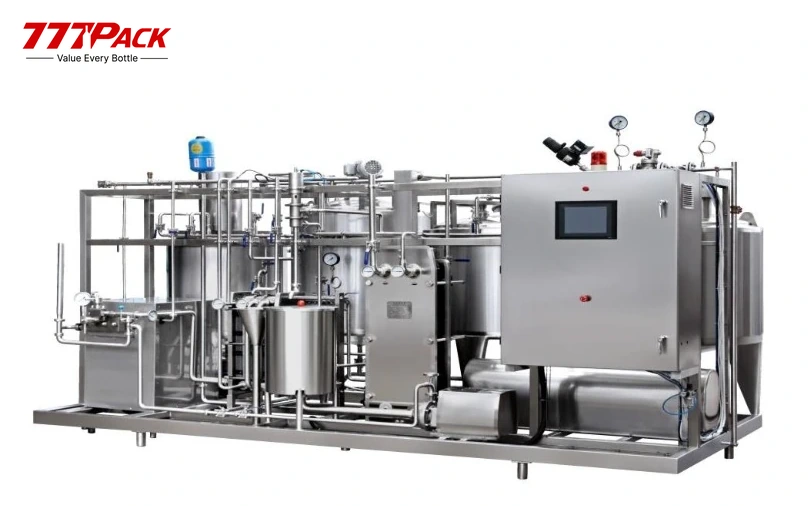
05 / PRODUCT HEATING & COOLING
Heat Exchange Systems
Heat exchange systems heat or cool liquid food and beverage products as they move between preparation stages. The available range includes plate, tubular and tube-in-tube arrangements, selected according to the product and required temperature duty. Heating and cooling utilities may include steam, hot water, chilled water or cooling water, subject to the selected system and site conditions.
SUS304 and SUS316L stainless-steel construction options can be selected for the duty. A heat exchange skid should be specified together with the connected tanks, pumps and downstream equipment. This establishes the required product connections, operating sequence and utility interfaces before the final equipment configuration is agreed. For a defined heating-and-holding sequence, explore the thermal processing systems below.
- Plate and tubular configurations
- Heating or cooling to the process duty
- Integration with available site utilities
Selection focus: Provide the product, required flow, inlet and outlet temperatures, available utilities and cleaning requirements for heat exchanger selection.
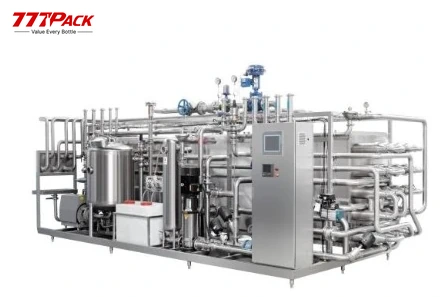
06 / CONTROLLED THERMAL TREATMENT
Pasteurization & Thermal Processing Systems
Pasteurization and thermal processing systems combine controlled heating, holding and cooling for liquid products such as juice, tea drinks and dairy beverages. Plate and tubular configurations are available, with the equipment selected around the product and required treatment. Manual, semi-automatic and PLC control options can be configured to the project scope.
Integration with degassing, homogenization and CIP or SIP may also be considered where the selected process requires them. The thermal programme must be defined for the actual product and intended production method. Confirm the product-specific thermal schedule, filling conditions and any required process validation as one coordinated system. Coordinate treatment and packaging with the selected beverage filling equipment.
- Plate or tubular thermal processing
- Manual through PLC control options
- Optional degassing, homogenization and CIP integration
Selection focus: Confirm the product formulation, processing objective, flow requirement, thermal programme and downstream filling method before finalizing the system.
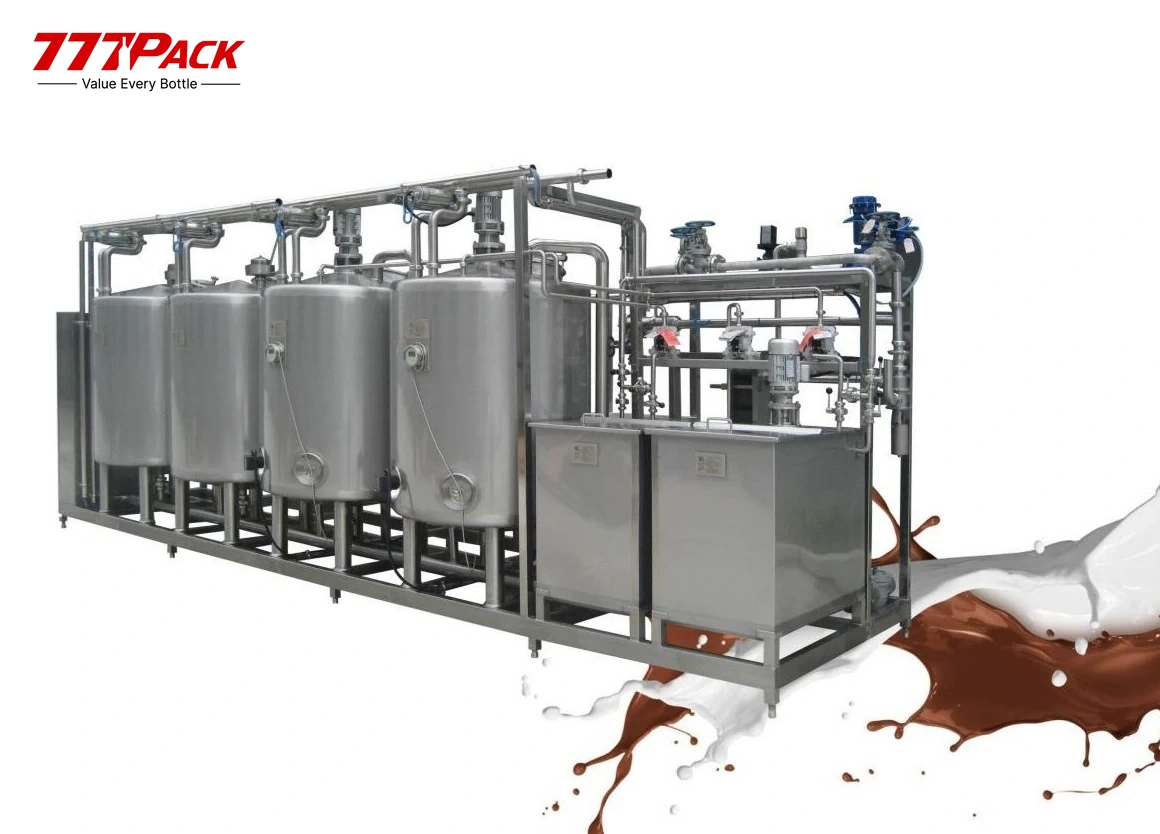
07 / CLEANING IN PLACE
CIP Cleaning Systems
CIP cleaning systems circulate cleaning solutions through the product-contact equipment included in the cleaning circuit, such as tanks, pipes, pumps and valves. This supports cleaning without routine dismantling of the connected equipment. Three-, four- and five-tank arrangements are available, with the tank configuration selected around the cleaning sequence and solution-recovery requirements.
Manual, semi-automatic and automatic control options are available. Automatic systems can be configured to manage cleaning temperature, time, pressure, sequence and solution concentration through a PLC and touchscreen. The project should clearly define which production equipment and return circuits are included, together with the required cleaning procedures and verification. Include cleaning access, operator training and maintenance requirements in the installation and service plan.
- Three-, four- or five-tank options
- Configurable cleaning and recovery circuits
- Optional PLC and touchscreen control
Selection focus: Identify the equipment to be cleaned, circuit arrangement, cleaning procedure, recovery needs and available utilities before specifying the CIP system.
Start with Your Recipe and Process
Share these project details for a pre-sale engineering review, so the equipment and interfaces can be defined together.
Product & Recipe
Ingredients, viscosity, particles, mixing objective and the intended product range.
Output & Filling
Batch size or process flow, thermal programme, container material and filling method.
Utilities & Cleaning
Heating and cooling supplies, available space, cleaning circuits and control interfaces.
Planning your system
Beverage Processing FAQs
Does every beverage require all seven types of processing equipment?
No. The required equipment depends on the product recipe and production method. Tea or botanical beverages may need extraction, while other recipes may need dissolving, mixing or emulsification. Fermentation applies only where the process calls for it. Storage, thermal treatment and cleaning arrangements should be selected as part of the complete process rather than treated as an identical sequence for every beverage.
What information is needed to select a beverage processing system?
Start with the product and recipe, required production rate, batch or continuous operation, ingredient forms and intended filling method. Include the required temperature programme, tank working volumes, cleaning procedure and available utilities. These details establish the equipment scope and interfaces; tank volumes, heating duties and control options should be confirmed for the project instead of inferred from a generic equipment photograph.
Can the preparation equipment be connected to an existing filling line?
Integration can be assessed for an existing line. The review should cover the product transfer route, required flow and temperature, tank operation, equipment connections and control interfaces. Cleaning supply and return connections also need to be considered. The final configuration depends on the actual upstream and downstream equipment, so existing line drawings and operating requirements are useful inputs.
Does a CIP system automatically clean every machine in the plant?
A CIP system serves the equipment and circuits included in its agreed design. Tanks, piping, pumps and valves must have suitable cleaning connections and return arrangements. The cleaning sequence and operating parameters should match the connected equipment and product. The project scope should identify the circuits to be cleaned and how cleaning will be checked; CIP should not be treated as an automatic guarantee of sterilization.
Process Engineering References
For further technical reading, these chapters from the Tetra Pak Dairy Processing Handbook explain general mixing, heat transfer and CIP principles.
Mixing & Ingredient Dispersion
Learn how ingredient properties influence the choice between gentle agitation and high-shear mixing.
Read the reference ↗Heat Exchanger Fundamentals
Explore product properties, temperature duties and cleaning considerations when selecting a heat exchanger.
Read the reference ↗Cleaning-in-Place Principles
Review cleaning parameters, circuit design and methods for verifying cleaning effectiveness.
Read the reference ↗Plan Your Beverage Processing System
Tell us what you make, how you want to process it and how it will be filled. We can review the preparation equipment and line connections with you.