
Bottled water case study · Indonesia
15,000 BPH Water Bottling Line for 700 mL PET Bottles
This Indonesian contract bottler uses spring water as its source. An air conveyor links separate blowing and filling machines, with downstream equipment sized to keep pace with filling.
- Design reference
- 15,000 BPH
- Bottle format
- 700 mL PET
- Bottle neck finish
- 29/25
- Preform weight
- 15.8 g
- Finished-product acceptance
- 90%
- Test duration
- 3 days × 8 hours
01 · Line sizing
How was the 700 mL line sized?
The customer bottles drinking water for other brands. The 700 mL format and the 15,000-bottle-per-hour target guided the design of the bottled water production line.
- Reference capacity (bottles/hour)
- 15,000
- Reference rate (bottles/minute)
- 250
- Theoretical volume in bottles (L/h)
- 10,500
At the design rate, 15,000 bottles × 0.7 L equals 10,500 L/h of water going into bottles. A water-treatment specification also needs to account for other plant uses and treatment losses.
02 · Production flow
How do water and bottles reach the filler?
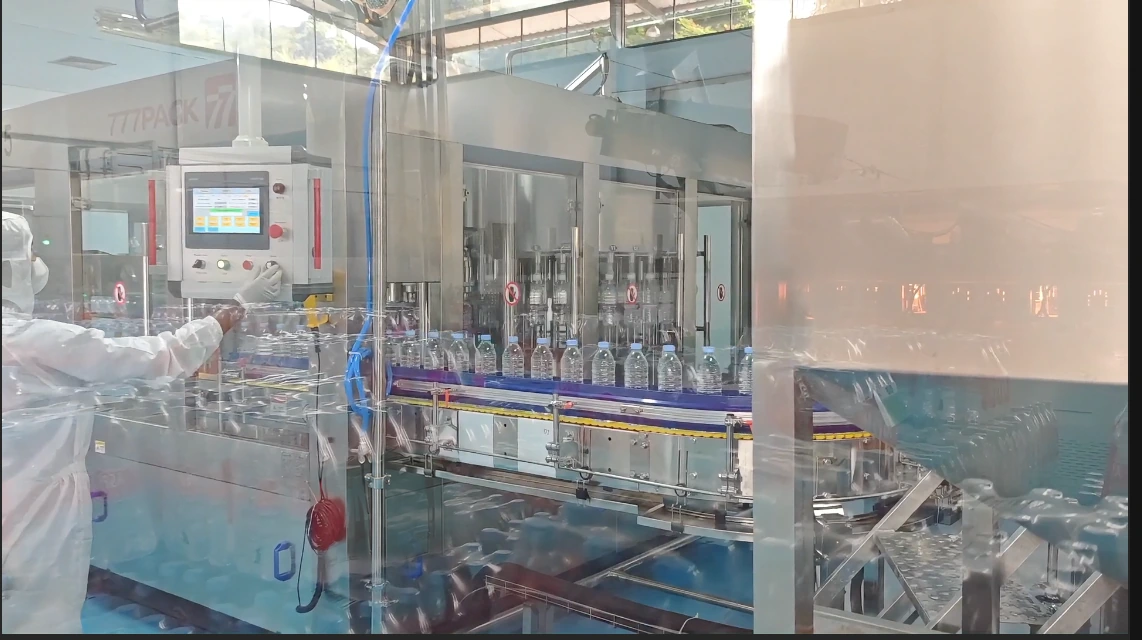
Water treatment and bottle blowing run in parallel. The two paths meet at the 3-in-1 rinser, filler and capper.
Empty bottles move from blowing to filling
A PET bottle air conveyor carries the newly molded 700 mL bottles from the blow molding machine to the filler. Treated water feeds the same filling station through its own supply path.
Downstream capacity keeps pace with filling
The equipment after filling was sized more than 20% above the 15,000 BPH design reference. That gives labeling and film wrapping a bottle-equivalent design capacity above 18,000 BPH.
03 · Acceptance test
How was the 90% pass rate measured?
The test ran for three days, eight hours per day. The team counted finished products that met the acceptance criteria at the film wrapper exit and used actual test output as the denominator.
- Test duration
- 3 days
- Test time per day
- 8 hours
- Finished-product pass rate
- 90%
Finished-product pass rate (Accepted finished products at the film wrapper exit ÷ total units actually produced during the test) × 100%
04 · Factory delivery
How did the equipment reach the mountain factory?
A local Indonesian partner handled import and inland delivery to the customer’s factory gate. A container truck could not reach the site by the narrow road, so the equipment was transferred to a smaller truck at a transit warehouse.
- Manufactured in China
- Import handling in Indonesia
- Transfer at the transit warehouse
- Handover at the factory gate
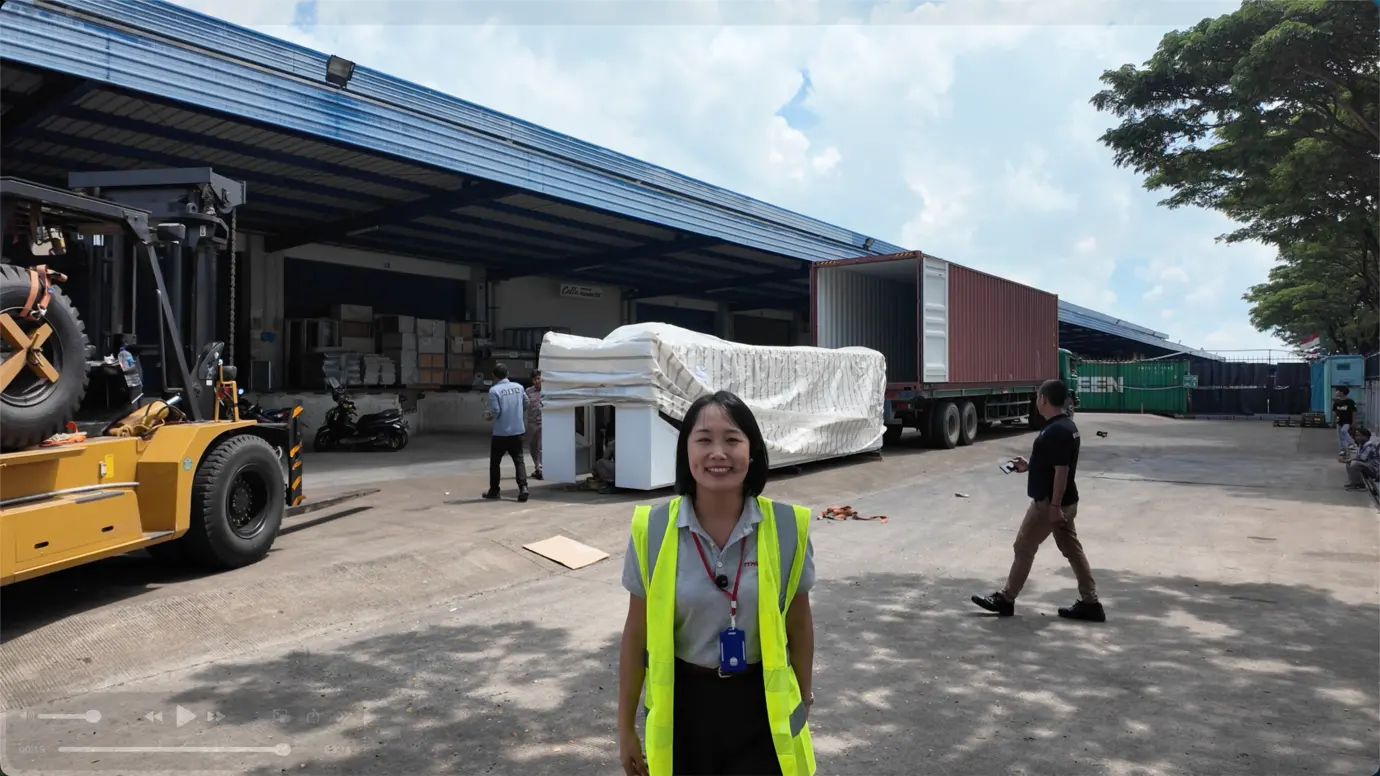
Unloading at the transit warehouse
The container went to the transit warehouse, where the equipment was prepared for transfer to a vehicle that could use the factory access road.
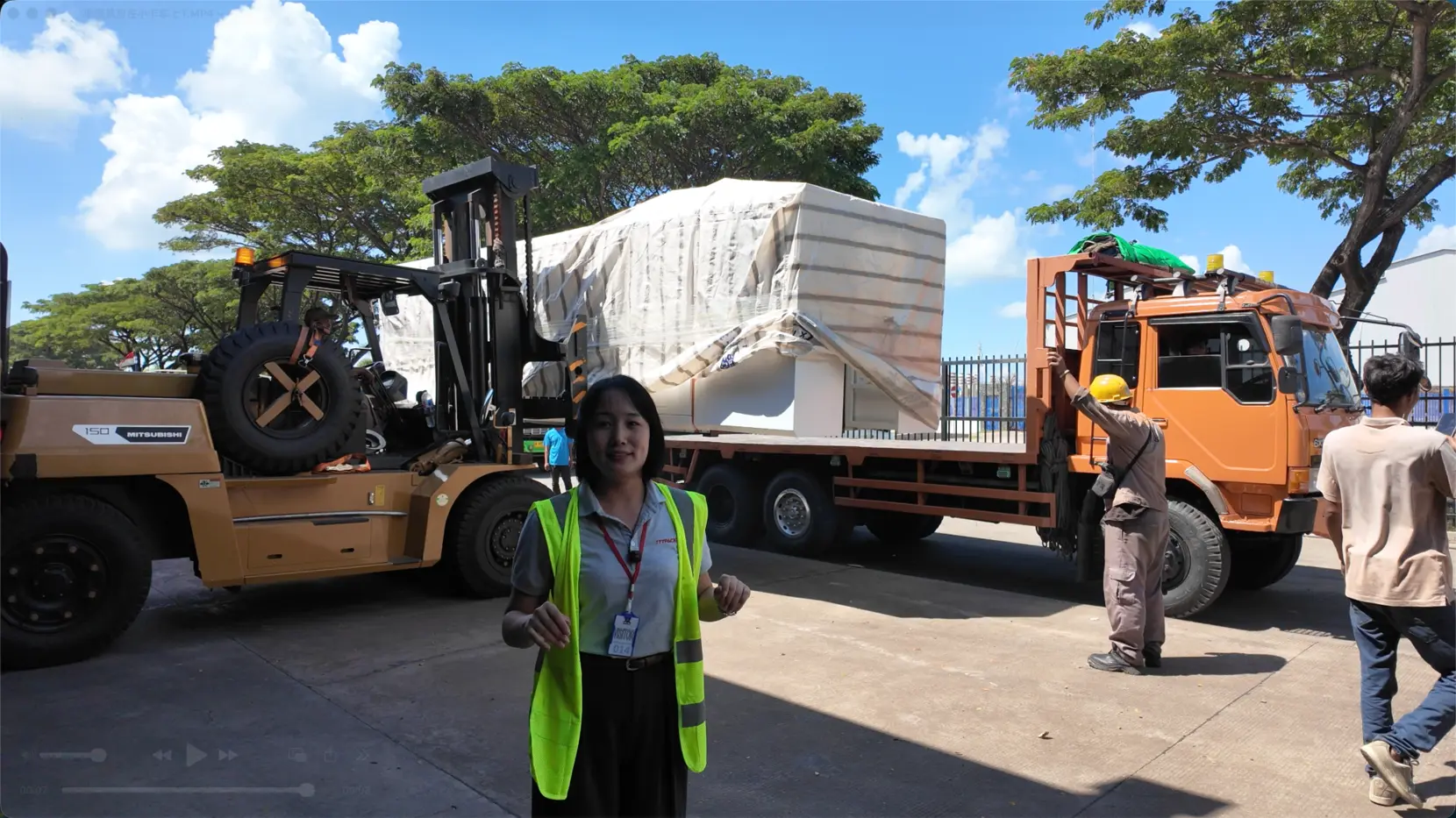
Transferring to a smaller truck
The blow molding machine was moved onto a smaller truck for the remaining journey to the factory.
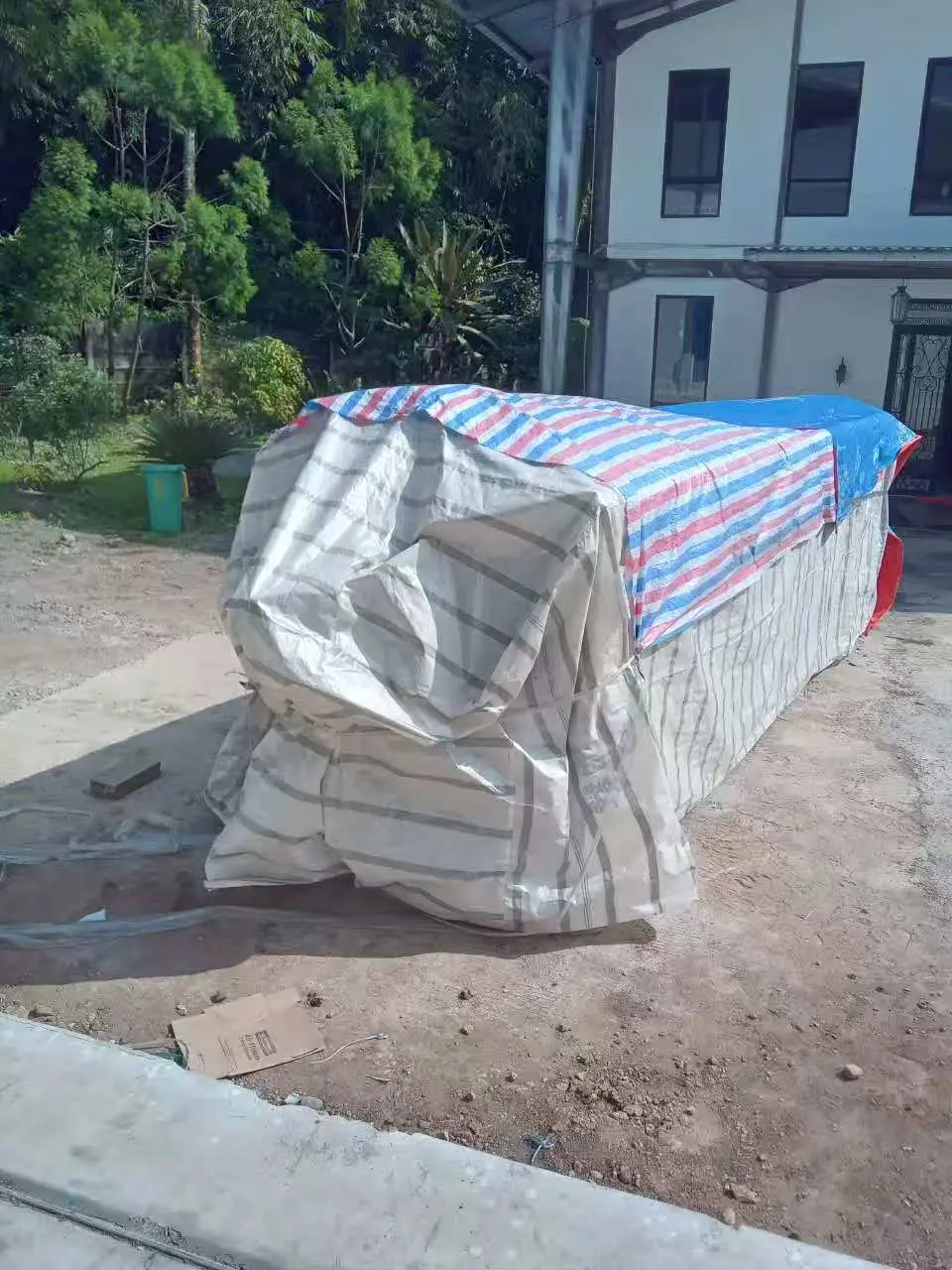
Handover at the factory gate
The smaller truck reached the customer’s plant, where the equipment was handed over at the factory gate.
05 · Project video
What does the 700 mL line look like in operation?
The project video shows the 700 mL PET line during operation.
06 · Project planning
What do you need to specify for a similar line?
Use your bottle specifications, production target, and packaging format to discuss the configuration with 777Pack.
Bottle, neck finish, and cap
Provide drawings or samples of the bottle and cap. Check the 29/25 neck finish and 15.8 g preform against the intended bottle design.
Production target and site conditions
Share the hourly bottle target, operating hours, source water data, and plant layout. This information helps size the equipment and place the conveyors.
Label, code, and bottles per pack
Specify the label size and type, code content and position, and the number of bottles per pack. Use these details to discuss the downstream equipment.
Road access and handover point
Share the factory location, photos or video of the narrowest section, and the room available for vehicle maneuvering. This helps determine the vehicle, transfer needs and handover point.
Planning a water bottling line for your bottle format?
Share your bottle size, output target, factory location and access-road conditions so we can discuss the line configuration and delivery scope.