Glass Bottle Wine & Vodka Filling Machine
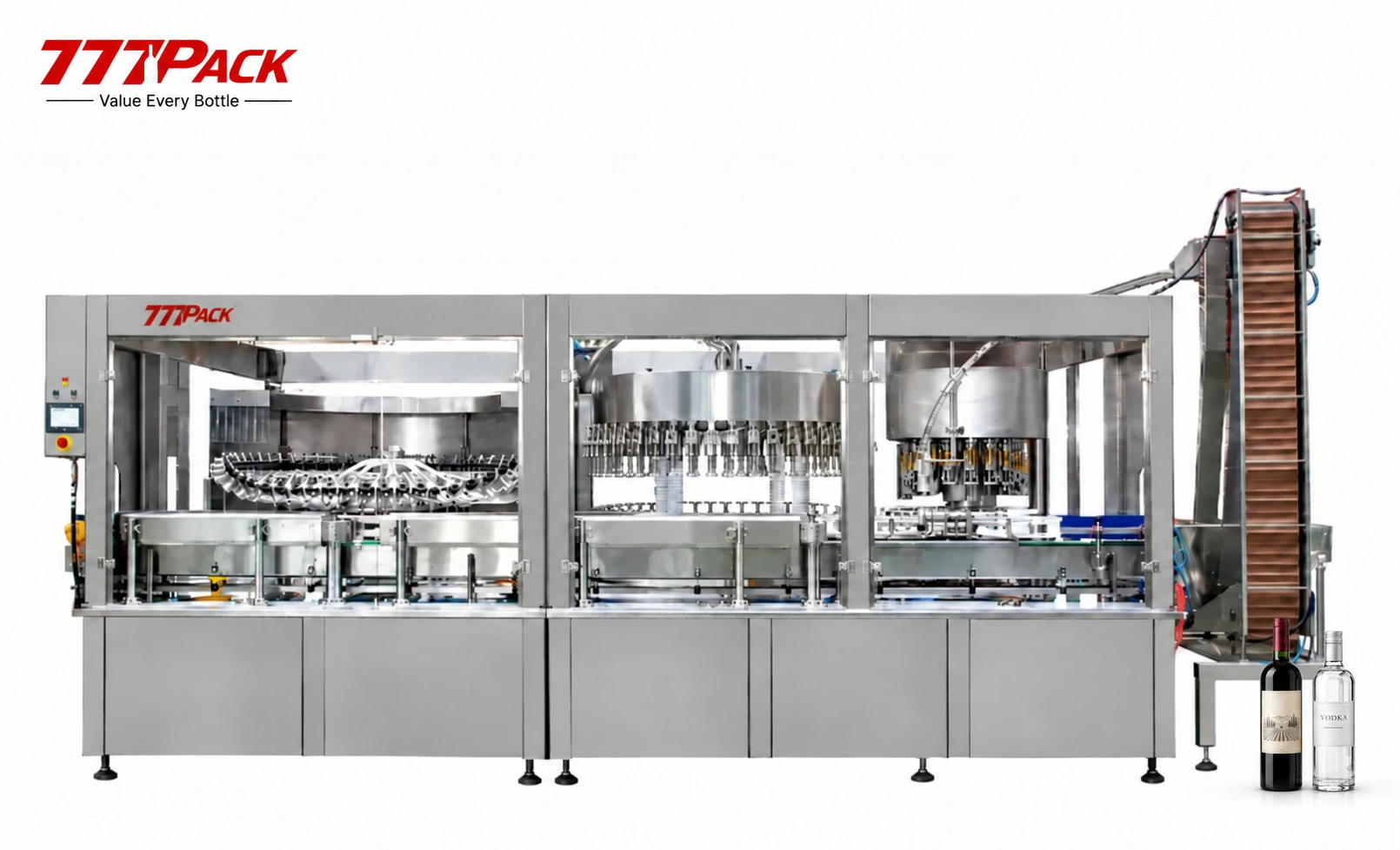
Glass-bottle rinsing, equal-level negative-pressure filling and aluminum-cap closing in one machine. Review the 2,000–18,000 BPH series and the CGF60-48-18 reference configuration for your wine or vodka bottling project.
Output and configuration must be confirmed for the actual bottle, closure, product and complete-line conditions.
Request a Configuration →Wine and Vodka Bottling in Glass Bottles
This machine combines the bottle-rinsing, liquid-filling and aluminum-cap closing stages. The filling process uses equal-level negative-pressure filling for the specified glass-bottle application.
Selection starts with your beverage, required output, bottle drawings and closure samples. Bottle dimensions alone do not establish compatibility: the neck finish, closure design and product requirements also need review.
- Rinsing, filling and cap closing in one machine
- Wine and vodka applications in glass bottles
- Published series output of 2,000–18,000 bottles per hour
- CGF60-48-18 reference configuration
Technical Selection Reference
| Parameter | Published Reference |
|---|---|
| Applications | Wine and vodka bottling |
| Container material | Glass bottles |
| Machine functions | Bottle rinsing, equal-level negative-pressure filling and aluminum-cap closing |
| Series output range | 2,000–18,000 BPH; confirm the selected model and bottle conditions |
| Reference configuration | CGF60-48-18 |
| Bottle height range | 120–320 mm; bottle drawing and samples require confirmation |
| Bottle diameter range | 50–100 mm; bottle drawing and samples require confirmation |
| Closure | Aluminum cap; confirm the actual neck finish and closure specification |
The output range describes the machine series. It does not guarantee the same output for every bottle, beverage or configuration. Confirm the selected model, bottle format, closure and production conditions before ordering.
How the Machine Works
1. Bottle Rinsing
Glass bottles pass through the rinsing stage before filling. Confirm the rinsing arrangement and utilities for the project.
2. Liquid Filling
The equal-level negative-pressure filling process fills the specified wine or vodka product into the approved bottle format.
3. Cap Closing
The machine closes the approved aluminum cap. Confirm the bottle neck and closure samples during configuration review.
Position in a Wine or Vodka Bottling Line
The filler sits between bottle preparation and downstream packaging. Review empty-bottle supply, conveyor interfaces, labeling, coding and secondary packaging together with the filling-machine selection.
For an existing plant, provide the current equipment details, conveyor heights, available floor space and target output so the connection requirements can be reviewed.
Frequently Asked Questions
What bottle and cap information is needed?
Provide the glass-bottle drawing, height, diameter, neck finish and actual cap samples. These are needed to review bottle transfer, filling and cap-closing compatibility.
Does the full series run at 18,000 bottles per hour?
No. The published series covers 2,000–18,000 BPH. The appropriate model and achievable output depend on the selected bottle, closure, product and complete-line conditions.
Can different glass bottle shapes be reviewed?
Send drawings and samples for every intended bottle format. Confirm compatibility and any required change parts before selecting the configuration.
What should I send when requesting a quotation?
Send the product description, required output for each bottle size, bottle and cap specifications, packaging format, factory layout and project location.
Plan Your Bottling Project
Configure Your Wine & Vodka Filling Machine
Share your product, required output, bottle drawing, cap samples and factory conditions to confirm a suitable configuration.