Technical Guides
How Does a Bottled Water Production Line Work? From Source Water to Finished Packs
Published
A bottled water production line connects source-water assessment and treatment with bottle preparation, filling, capping, labeling, and finished-pack handling. I evaluate how these stages work together because the wrong treatment specification, bottle format, or packaging capacity can leave a buyer with equipment that does not match the intended product or output.
A bottled water production line works by moving suitably treated water into prepared bottles, applying closures, identifying the product, and grouping bottles into saleable packs. I assess the configuration against source-water conditions, container specifications, production targets, and supply responsibilities—not against the filling machine’s advertised speed alone.
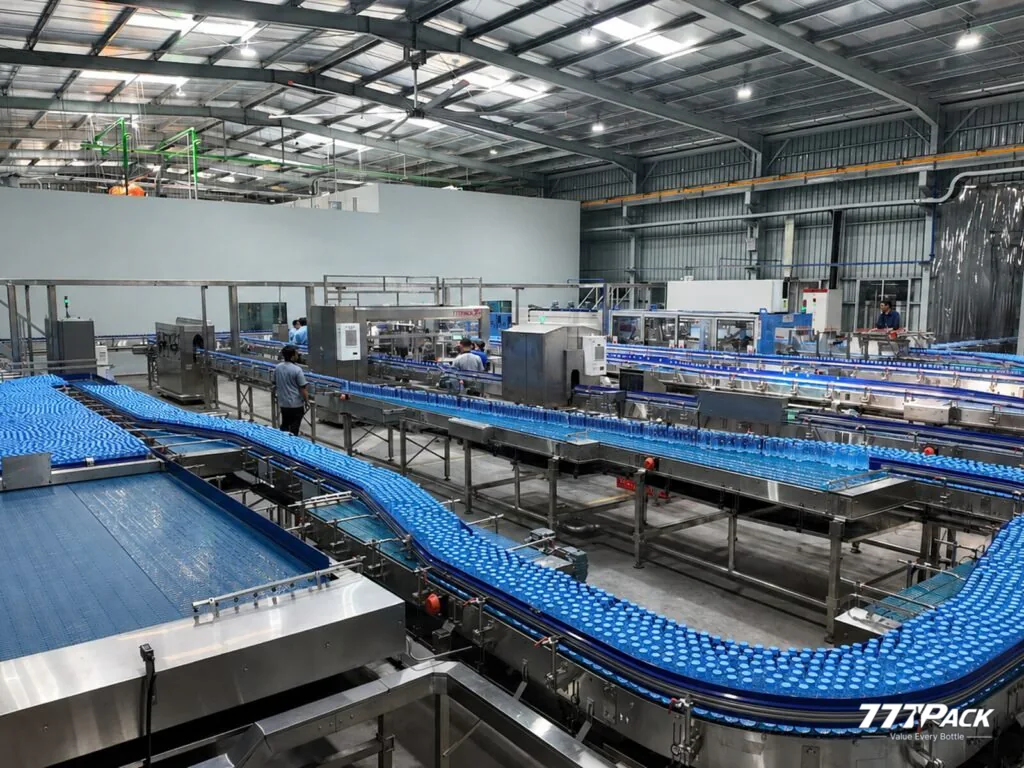
I find the process easier to understand when each stage answers a purchasing question. The important issue is not simply which machines appear in a quotation. It is whether their specifications, capacities, and responsibilities form a complete, workable production plan.
How does source water affect a bottled water production line?
I start with source water because an equipment discussion can move in the wrong direction before anyone notices. A buyer may know the desired bottle size and budget but have limited water-quality information. That gap makes treatment selection and meaningful quotation comparison difficult.
I use available source-water information to identify what requires technical assessment before a treatment system is selected. Different sources can present different quality concerns, so I do not recommend a universal configuration.1 Qualified water-treatment professionals should review the water data, product requirements, and applicable requirements before the specification is finalized.
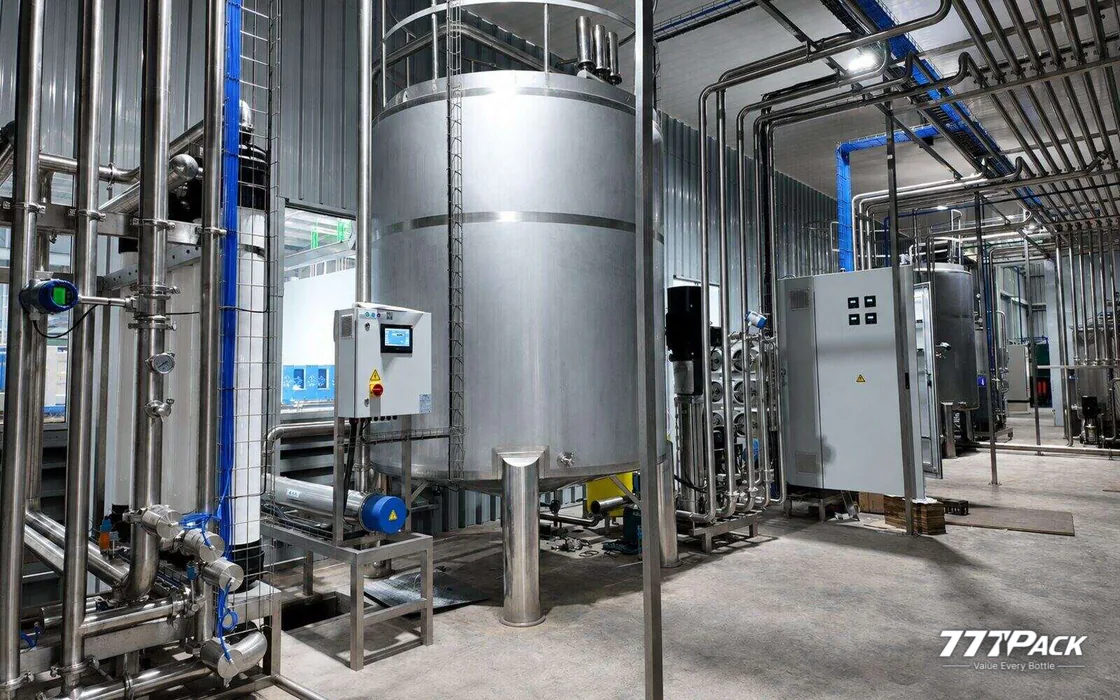
I treat the water report as a purchasing input
A question I would put at the beginning of a consultation is: “What do we know about the water entering the plant?” That question is more useful than asking whether a standard treatment package is available.
I ask buyers to share an existing laboratory report, identify the water source, and explain whether the supply changes during the year. I also ask when and where the sample was collected. A report from a different supply point, or from conditions that no longer apply, may not represent the water that the proposed plant will receive.2
I separate this requirement clarification from laboratory validation. My role as a packaging-line supplier does not make a preliminary consultation a substitute for qualified sampling, analysis, or process-design review.
I connect treatment choices to evidence
The treatment scope should follow assessed requirements rather than an equipment-name checklist. Depending on the application, a technical review may consider filtration, membrane treatment, disinfection, storage, or other measures. I would not assume that every source needs all of them, or that the same arrangement suits every bottled-water product.
| Buyer information | Why I request it | What requires confirmation |
|---|---|---|
| Source type and supply location | I need to understand the proposed incoming supply. | A qualified reviewer should assess whether the available data represent that source. |
| Available laboratory results | I need evidence for treatment discussions. | The relevant testing scope and interpretation need professional review. |
| Seasonal or supply changes | I need to identify possible variation. | The proposed system’s suitability for that variation needs assessment. |
| Intended water product | I need to distinguish product requirements from assumptions. | Treatment compatibility, composition, and labeling requirements need verification. |
| Local regulatory destination | I need to understand where the product will be sold. | The buyer should confirm applicable requirements with qualified local advisers. |
| Treatment waste and drainage conditions | I need to clarify utility and site interfaces. | Discharge arrangements and responsibilities need explicit agreement. |
I carry those requirements into the line specification
Source-water assessment affects more than the treatment equipment. It can influence treated-water storage, transfer arrangements, monitoring responsibilities, and the interface with the filler.3
For an expansion, I also ask whether the existing treatment system has documented capacity for the proposed demand. A faster filler does not establish that the upstream water system can support it. I want the bottled water production line quotation to identify where supplier responsibility begins and ends, especially when the buyer retains existing treatment equipment.
Video: UF and RO Water Treatment Before Bottling
What happens during bottle preparation, filling, and capping?
I often find that bottle preparation receives less attention than filling speed. That creates a purchasing risk because bottle supply, container geometry, neck finish, and closure compatibility all affect the filling section. A machine description alone does not confirm that the intended bottle and cap will work together.
I review bottle preparation, filling, and capping as a connected handling process. Bottles may arrive ready-made or be produced from preforms, depending on the project. I then check the proposed preparation method, filling arrangement, closure system, and changeover requirements against actual container specifications and supplier documentation.
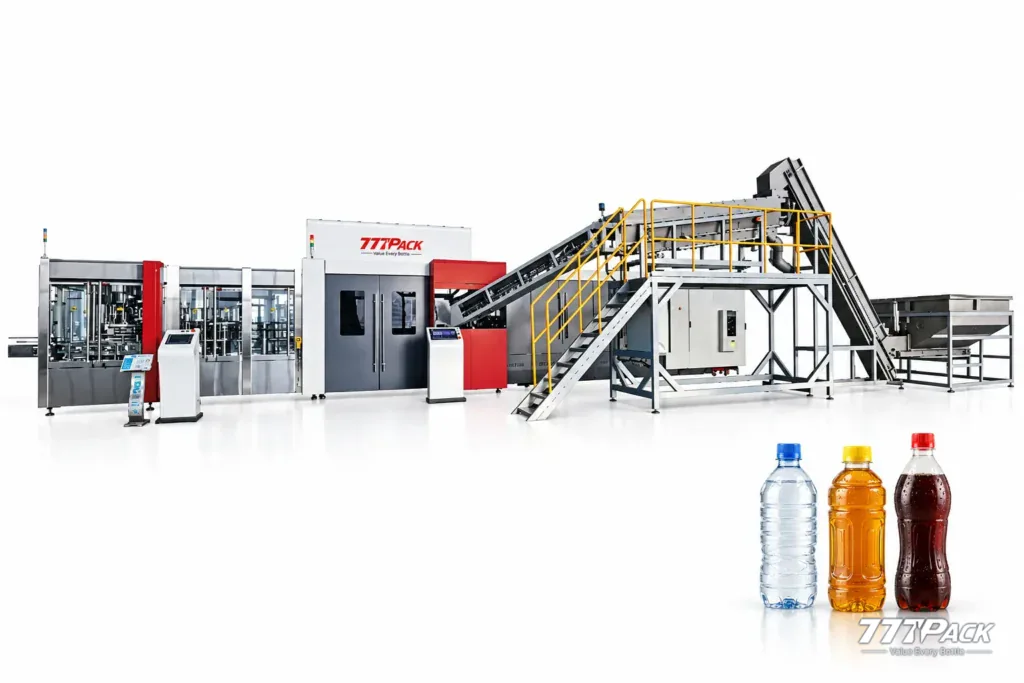
I first establish where the bottles come from
A bottled water production line can receive purchased empty bottles or include bottle-production equipment. Those alternatives create different responsibilities, utility demands, storage needs, and supply risks.
I do not assume that a bottle-blowing machine is included simply because a quotation is described as a “complete line.” If the project includes bottle production, I ask about preform specifications, mold scope, compressed-air requirements, cooling arrangements, and the equipment interfaces.4 The relevant supplier should confirm those details for the proposed configuration.
| Bottle-supply approach | What I would evaluate | What I would clarify in the quotation |
|---|---|---|
| Purchased empty bottles | I would assess storage, transport protection, bottle consistency, and feed arrangements. | I would confirm the bottle-entry equipment and preparation scope. |
| On-site bottle production | I would assess preform compatibility, utility demand, molds, and integration. | I would confirm which bottle-production equipment and supporting systems are included. |
| Existing bottle-production equipment | I would assess documented capacity, bottle quality, and transfer compatibility. | I would define responsibility for connecting the existing equipment to the new line. |
I use bottle drawings rather than volume alone
A nominal bottle volume is not a complete container specification.5 I also request drawings or representative samples that show the bottle body, neck finish, base, and label area.
Those details help the supplier evaluate handling parts and format changes. A tall, narrow container may present different handling questions from a shorter, wider container, even when both hold the same volume.
My specification review includes:
- Bottle information: I request dimensions, material, drawings, and samples where available.
- Closure information: I request the cap specification and its intended neck compatibility.
- Format range: I identify every proposed bottle-and-cap combination.
- Changeover scope: I ask which parts, settings, and procedures change between formats.
- Inspection scope: I clarify how the proposal addresses fill level, closure application, and rejected containers.
I ask what evidence supports compatibility
For the bottled water production line, I prefer documented compatibility confirmation over a broad statement that a machine “handles many bottles.”
Where trials or acceptance checks are proposed, I ask the supplier to define the sample materials, operating conditions, inspection criteria, and responsibilities. I also distinguish a supplier’s demonstration from independent validation of product safety or regulatory compliance.
The purchasing objective is clear: I want evidence that the proposed equipment can handle the intended packaging materials under agreed conditions. I do not treat a generic machine video as proof of that result.
How much finished product can a bottled water production line deliver?
I separate advertised filling speed from finished-pack output because they describe different things. A filler may have a stated nominal capacity, while bottle supply, labeling, packing, changeovers, or interruptions limit the complete line. That distinction matters when an investor builds a sales plan around production capacity.
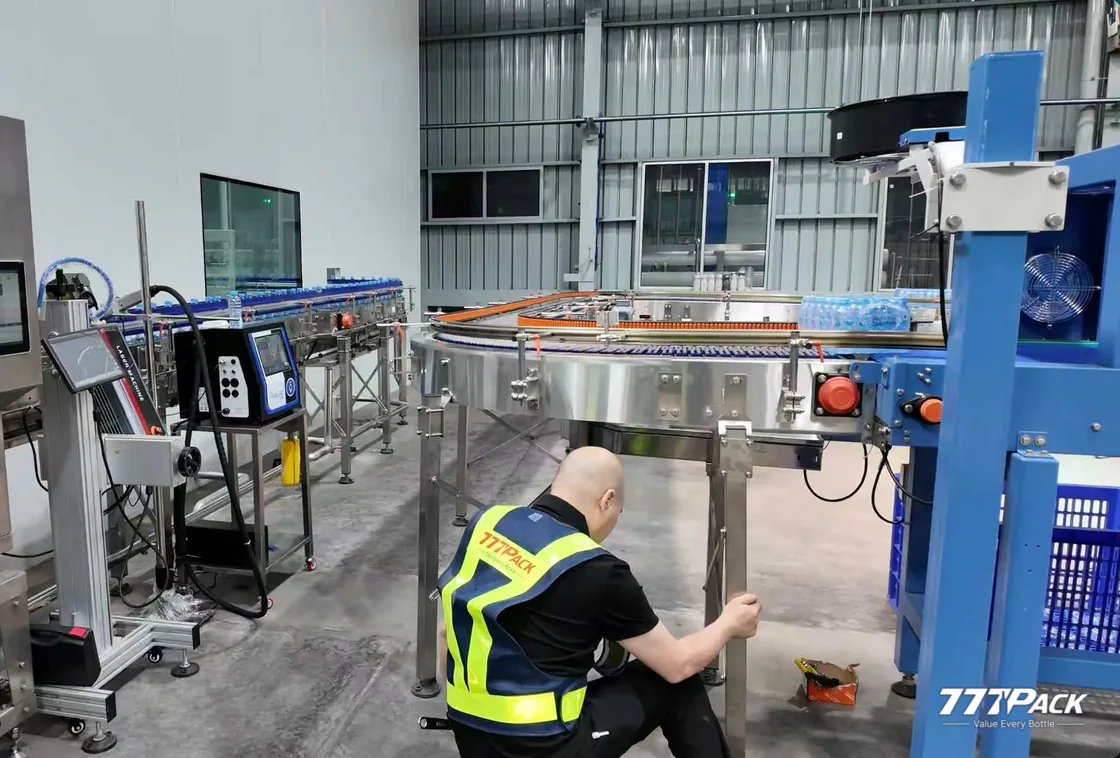
I evaluate bottled water production line output against a defined bottle format, pack format, operating schedule, and capacity balance. Nominal machine ratings are useful comparison inputs, but they are not guaranteed saleable output.6 I ask suppliers to state the assumptions and acceptance conditions behind any proposed line-capacity commitment.
I define the output unit before comparing suppliers
An output target can mean bottles entering the filler, acceptable filled bottles, completed retail packs, or palletized goods. I ask buyers to specify which measure matters to their business.
I also distinguish an instantaneous rate from production over an operating period. The latter depends on the agreed schedule and on practical allowances for format changes, checks, cleaning, maintenance, and interruptions.
That does not mean I apply a universal efficiency deduction. I ask for project-specific assumptions and supporting evidence rather than treating an arbitrary percentage as an industry guarantee.
I compare capacities on the same basis
| Capacity term | What it describes | What I ask before relying on it |
|---|---|---|
| Nominal filler capacity | A stated filling-machine rate under defined conditions | I ask which bottle, product, and operating conditions support the rating. |
| Individual machine capacity | A stated rate for a particular production stage | I ask whether that stage can support the selected product and pack format. |
| Integrated line capacity | A proposed rate for connected equipment | I ask about capacity matching, transfer arrangements, and acceptance criteria. |
| Finished-pack output | Completed packs meeting the agreed product specification | I ask which inspection, rejection, and packing conditions apply. |
| Planned operating-period output | Expected production over the buyer’s chosen schedule | I ask what downtime and operating assumptions the estimate includes. |
I look for the limiting stage
A useful consultation question is: “Can the downstream equipment package everything the filler is expected to produce?”
I apply the same question upstream. The treated-water supply and bottle-preparation section must also support the intended operating conditions. A mismatch anywhere in the chain can reduce usable output or create unstable product flow.7
For an expansion project, I review the existing conveyors, labeler, packer, and finished-goods handling arrangements rather than assuming they can remain unchanged. I also ask whether the buyer intends to add formats that require different changeover parts or packing materials.
A bottled water production line should therefore be compared through a capacity-and-format matrix, not a single speed figure. I want each proposed stage to have a documented basis for the buyer’s intended products.
Where a supplier offers a performance commitment, I ask that commitment to identify the test materials, utilities, operating conditions, duration, quality criteria, and exclusions.8 Those written conditions provide a more useful commercial comparison than a headline capacity alone.
How does a bottled water production line handle labeling and packaging?
I treat labeling and packaging as production requirements, not optional finishing details. A buyer can select a suitable filler and still face problems if the label system does not match the bottle or the packer does not match the sales format. Those decisions should enter the specification early.
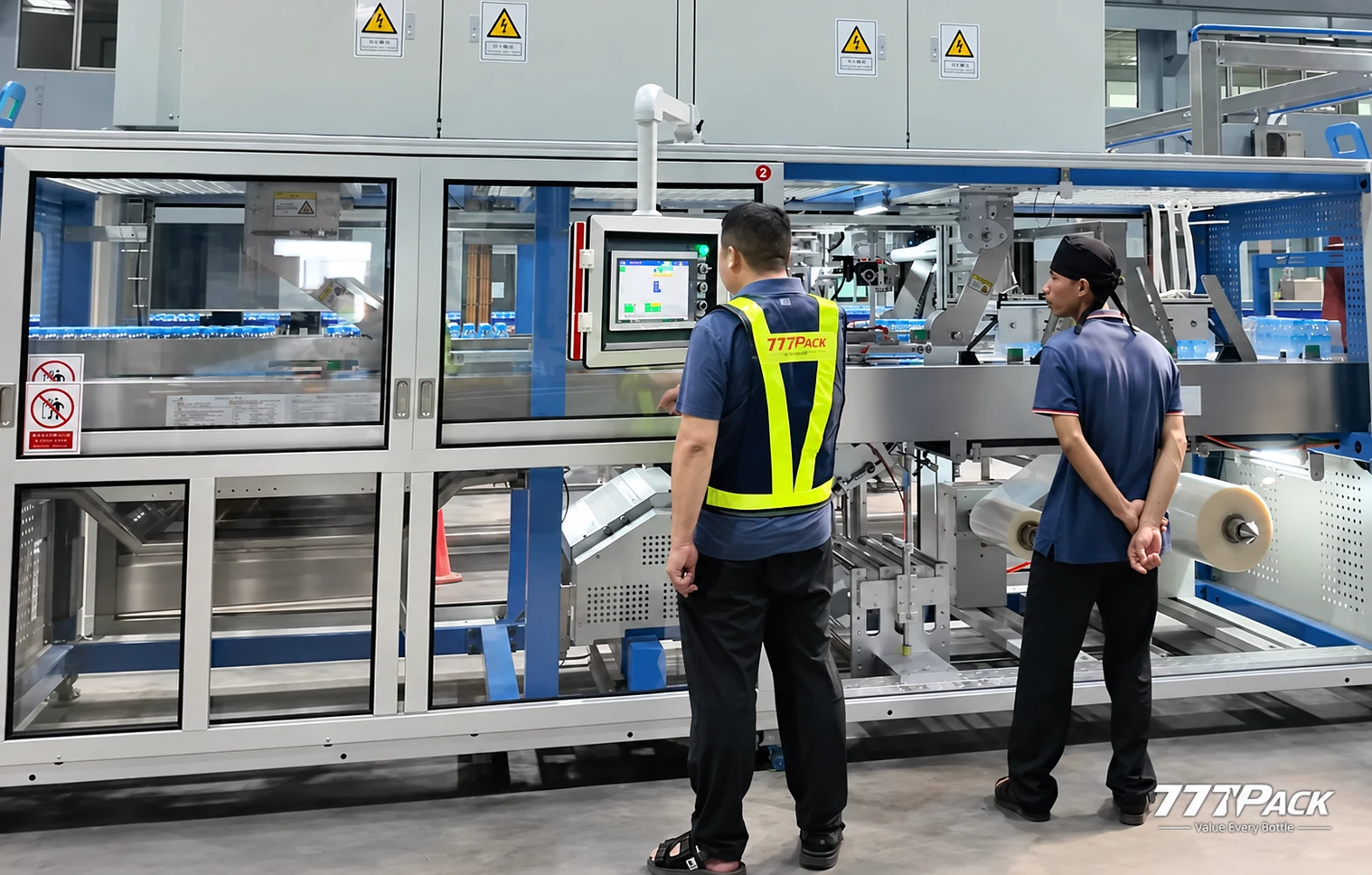
I match labeling, coding, and packing equipment to the intended container, artwork, identification requirements, and distribution format. Bottles may be grouped into film-wrapped packs, cartons, or other agreed formats. I then check material compatibility, changeover scope, capacity, and finished-pack handling with the relevant equipment suppliers.
I begin with the product’s route to market
I ask where and how the water will be sold before discussing a packaging machine. The route to market helps define whether the buyer needs retail multipacks, cartons for distribution, or another pack arrangement.
I also request bottle artwork and label specifications where available. Label dimensions, bottle shape, material choice, and application method need to be reviewed together. I do not infer compatibility simply because a quotation includes a labeler.
For coding, I ask the buyer to confirm the required information and its intended location. The appropriate legal and commercial requirements need verification in the destination market.9
I compare packaging options through procurement questions
| Packaging approach | What I would evaluate | What I would ask the supplier to confirm |
|---|---|---|
| Film-wrapped multipacks | I would assess pack arrangement, appearance, handling, and material supply. | I would request format compatibility, utility requirements, and capacity conditions. |
| Carton packing | I would assess carton design, product arrangement, and distribution needs. | I would request carton specifications, closure scope, and changeover details. |
| Manual or assisted packing | I would assess staffing, repeatability, workflow, and planned output. | I would clarify the supplied equipment and the operator tasks that remain. |
| Automated pallet handling | I would assess pallet patterns, downstream flow, and warehouse interfaces. | I would clarify the handling scope, site requirements, and integration responsibilities. |
I include packaging materials in the evaluation
A bottled water production line depends on consumables as well as machinery. I ask who will supply bottles or preforms, caps, labels, film, cartons, and other required materials.
I then ask whether representative materials can be reviewed before the equipment specification is finalized. Variations in packaging materials can affect handling, appearance, and operating consistency.10 The supplier should identify the material specifications that support its proposed equipment.
I also check what happens after a pack leaves the machine. Conveying, accumulation, manual handling, pallet preparation, and warehouse transfer may sit outside the quoted scope. I want those boundaries visible.
For a buyer serving different markets, I recommend a format list that connects each bottle to its label, closure, pack arrangement, and coding requirement. That document helps expose missing change parts and downstream limitations before purchase. It also gives the buyer a clearer basis for comparing quotations that otherwise appear similar.
What should a bottled water production line quotation include?
I view quotation preparation as a scope-definition exercise. A low total price can look attractive while excluding treatment, utilities, installation work, format parts, or local responsibilities. Without a written boundary, a buyer may compare proposals that supply substantially different projects.
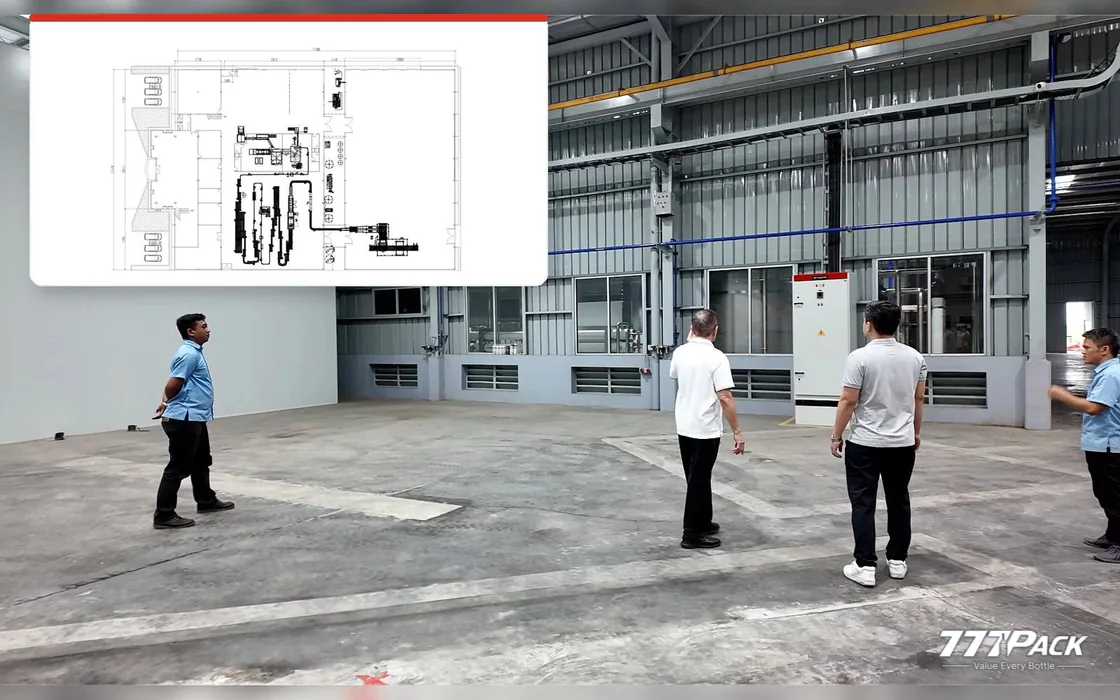
I prepare a meaningful bottled water production line inquiry around source-water data, bottle and closure specifications, target output, pack formats, available utilities, and required service scope. I then ask for an itemized proposal that identifies included equipment, excluded work, interfaces, acceptance conditions, and buyer responsibilities.
I build the inquiry before requesting a final price
For a first-time investor, I would request the following information:
- Source-water information: I need the source description, available reports, and any known supply variation.
- Bottle and closure specifications: I need the planned sizes, formats, drawings, and available samples.
- Output target: I need the intended production measure, operating schedule, and product mix.
- Pack format: I need the bottle arrangement, packaging material, and finished-pack requirements.
- Available utilities: I need the site’s documented electrical, water, air, drainage, and other relevant service conditions.
- Site information: I need the available layout, access restrictions, and proposed equipment area.
- Installation and service expectations: I need to know which activities the buyer wants the supplier to undertake.
- Existing equipment: I need details of retained machines and the proposed connection points.
For an expansion, I place extra emphasis on existing-equipment documentation. A new machine’s specification cannot establish that the retained equipment, utilities, or building layout will support it.
I distinguish equipment supply from readiness to operate
| Scope area | What I expect the quotation to state | What I would not assume |
|---|---|---|
| Equipment | I expect an itemized machine list and agreed specifications. | I would not assume every supporting system is included. |
| Utilities | I expect requirements and connection boundaries. | I would not assume the supplier provides the site infrastructure. |
| Installation | I expect task ownership, exclusions, and scheduling responsibilities. | I would not assume all mechanical and electrical work is covered. |
| Testing and acceptance | I expect agreed methods, materials, and criteria. | I would not assume dispatch means acceptance or operating readiness. |
| Training and service | I expect the scope, location, language, and commercial terms. | I would not assume unlimited support or immediate parts availability. |
| Documentation and compliance | I expect a list of supplied documents. | I would not assume a certificate resolves every local obligation. |
I verify service claims and supporting documents
Our business serves global markets and has a company in Indonesia for local service. I still recommend that buyers confirm the actual service scope, engineer availability, spare-parts arrangements, and response terms for their location.
I treat certifications as documents to verify. The buyer should check the issuer, validity, applicable equipment, and scope.11 Qualified local professionals should assess application-specific safety, water-quality, and regulatory requirements.
I would place the equipment link here: Review our bottled water production line product page and equipment scope. The placeholder should be replaced with the business’s verified product-page URL before publication.
My aim is to make the bottled water production line quotation commercially comparable and technically reviewable. Equipment delivery is a milestone. It is not, by itself, evidence that the entire facility is ready to produce and sell compliant bottled water.12
Frequently Asked Questions
Does every bottled water plant need the same water-treatment system?
I would not select the same treatment system for every source. I request representative water-quality information and the intended product requirements first. A qualified water-treatment professional should assess those inputs and confirm the proposed configuration, monitoring requirements, and any applicable local obligations.
Is bottle-blowing equipment always included in a water bottling line?
I do not assume bottle-blowing equipment is included. A project may use purchased bottles, existing bottle-production equipment, or a newly supplied system. I ask the quotation to identify the bottle-supply approach, included machines, molds, supporting utilities, and integration responsibilities explicitly.
Is the filling machine’s rated speed the plant’s actual output?
I treat rated filling speed as a configuration-dependent machine specification, not a promise of finished-pack production. I review upstream supply, downstream packaging, product formats, operating conditions, and planned interruptions. I ask for written assumptions before using a proposed capacity in an investment or sales plan.
What information should I send when requesting a quotation?
I recommend sending source-water data, bottle and cap specifications, target output, packaging requirements, available utilities, and site information. I also ask buyers to identify existing equipment and desired installation or service support. Those inputs help suppliers prepare proposals with clearer scope and fewer unresolved assumptions.
Conclusion
I evaluate a bottled water production line as a chain of connected requirements, from source-water assessment to finished-pack handling. Treatment suitability, container compatibility, capacity balance, packaging materials, and supply boundaries all influence selection. I do not treat nominal filler speed or an equipment list as proof of complete operating readiness. To begin a useful consultation, send us your available water report, bottle and closure specifications, output target, pack format, utility information, and required installation or service scope. We can then clarify the proposal and identify matters that need qualified technical review.
Watch the 33,000 BPH Bandung Line Walkthrough
"Guidelines for drinking-water quality: fourth edition ...", https://www.who.int/publications/i/item/9789240045064. WHO drinking-water guidance links treatment selection to source-water hazards and the performance of available control measures; this supports source-specific assessment rather than a universal treatment arrangement, but does not establish a design for a particular bottling plant. Evidence role: general_support; source type: institution. Supports: Treatment selection should account for source-water hazards and the requirements of the intended drinking-water product.. Scope note: General drinking-water guidance is not a project-specific bottled-water treatment specification. ↩
"National Field Manual for the Collection of Water-Quality ...", https://www.usgs.gov/mission-areas/water-resources/science/national-field-manual-collection-water-quality-data-nfm. USGS water-quality sampling guidance explains that sampling design must account for the location, timing, and variability of the water being characterized; a result from one sampling event therefore does not establish conditions at another intake or operating period. Evidence role: mechanism; source type: government. Supports: Water-quality measurements describe sampled conditions and may not capture differences across locations or periods.. Scope note: The guidance establishes principles of representativeness, not whether any particular laboratory report is inadequate. ↩
"Water safety planning", https://www.who.int/teams/environment-climate-change-and-health/water-sanitation-and-health/water-safety-and-quality/water-safety-planning. The Codex code of hygienic practice for bottled drinking waters addresses controls across water handling, storage, and bottling, supporting the need to consider post-treatment operations when assessing product protection. Evidence role: general_support; source type: institution. Supports: Maintaining bottled-water quality requires hygienic controls and monitoring beyond the treatment stage.. Scope note: Hygienic guidance does not determine storage capacity, transfer-system design, or contractual responsibility for an individual line. ↩
"Blow molding", https://en.wikipedia.org/wiki/Blow_molding. Research on PET stretch-blow molding describes the interaction of preform geometry and temperature, mold geometry, stretching, and pressurized air in bottle formation; this provides a technical basis for specifying these inputs and supporting services. Evidence role: mechanism; source type: paper. Supports: PET stretch-blow molding depends on suitable preforms, molds, thermal conditions, and pressurized air.. Scope note: This support applies to PET stretch-blow molding and does not establish utility requirements for every bottle-production technology or machine. ↩
"Guidance for Industry: Container Closure Systems for ...", https://www.fda.gov/media/70788/download. FDA guidance on container-closure systems identifies dimensional information and component specifications as relevant to packaging characterization, illustrating why nominal capacity alone does not fully describe a bottle and its closure interface. Evidence role: general_support; source type: government. Supports: Container specifications include dimensional and closure-system characteristics in addition to capacity.. Scope note: Pharmaceutical container-closure guidance provides contextual specification principles, not direct validation of bottled-water packaging or filling equipment. ↩
"Manufacturing", https://www.nist.gov/manufacturing. Manufacturing performance literature separates availability, operating performance, and quality yield when assessing equipment effectiveness, explaining why a nominal processing rate alone does not establish saleable production. Evidence role: definition; source type: research. Supports: Production performance distinguishes theoretical speed from actual operation and acceptable-product yield.. Scope note: Equipment-effectiveness measures do not supply a universal efficiency allowance or a capacity guarantee for a particular bottling line. ↩
"Theory of constraints", https://en.wikipedia.org/wiki/Theory_of_constraints. Research on serial production systems shows that processing-rate differences, interruptions, and finite buffers can cause blocking or starvation and constrain system throughput; these mechanisms explain why individual machine ratings cannot be assessed independently. Evidence role: mechanism; source type: paper. Supports: Connected production stages interact through bottlenecks, blocking, starvation, and intermediate buffers.. Scope note: The magnitude of any throughput loss depends on the line's configuration, buffering, reliability, and operating conditions. ↩
"Validation (drug manufacture)", https://en.wikipedia.org/wiki/Validation_(drug_manufacture). EU GMP Annex 15 describes qualification against documented user requirements and acceptance criteria, including factory and site acceptance testing where appropriate; this supports evaluating performance under specified conditions rather than relying on an unqualified capacity statement. Evidence role: general_support; source type: institution. Supports: Equipment qualification evaluates performance against documented requirements and predefined acceptance criteria.. Scope note: Pharmaceutical qualification guidance is contextual support, not a bottled-water contracting standard or an automatic legal requirement for the proposed equipment. ↩
"Codex Alimentarius", https://en.wikipedia.org/wiki/Codex_Alimentarius. The Codex General Standard for the Labelling of Prepackaged Foods includes lot identification among labeling provisions; its provisions provide an international reference but do not by themselves establish the enforceable coding requirements in a destination market. Evidence role: general_support; source type: institution. Supports: Food-labeling frameworks specify identification information, while applicable obligations must be established for the destination jurisdiction.. Scope note: National rules, product-specific exceptions, and commercial coding requirements may differ from the international reference. ↩
"Polyoxymethylene", https://en.wikipedia.org/wiki/Polyoxymethylene. Packaging-material research relates properties such as friction, stiffness, and thickness to feeding, forming, and sealing behavior, providing a mechanism by which material variation can affect processing consistency and finished-pack appearance. Evidence role: mechanism; source type: paper. Supports: Physical properties such as friction, stiffness, thickness, and dimensional consistency influence packaging-material behavior during processing.. Scope note: Evidence for a particular material or packaging operation does not establish equivalent effects for every bottle, cap, label, film, or carton. ↩
"ISO 9000 family", https://en.wikipedia.org/wiki/ISO_9000_family. ISO explanations of certification distinguish management-system certification from product certification, demonstrating that a certificate supports only the conformity claim covered by its stated subject and scope. Evidence role: definition; source type: institution. Supports: Certification concerns a defined subject and scope and does not establish compliance beyond that coverage.. Scope note: This distinction does not authenticate a particular certificate or establish the equipment's compliance with local safety and food-production requirements. ↩
"Part 129 -- Processing and Bottling of Bottled Drinking Water", https://www.ecfr.gov/current/title-21/chapter-I/subchapter-B/part-129. U.S. bottled-water manufacturing requirements in 21 CFR Part 129 address plant construction, sanitary operations, equipment, production controls, and testing, illustrating why equipment delivery alone cannot establish compliant operating readiness. Evidence role: general_support; source type: government. Supports: Bottled-water production compliance includes facility, sanitation, process-control, and testing requirements beyond possession of equipment.. Scope note: These requirements apply in the U.S. regulatory context and do not establish the complete obligations for facilities serving other jurisdictions. ↩