Technical Guides
How to Choose Bottle Sizes for a Bottled Water Brand
Published
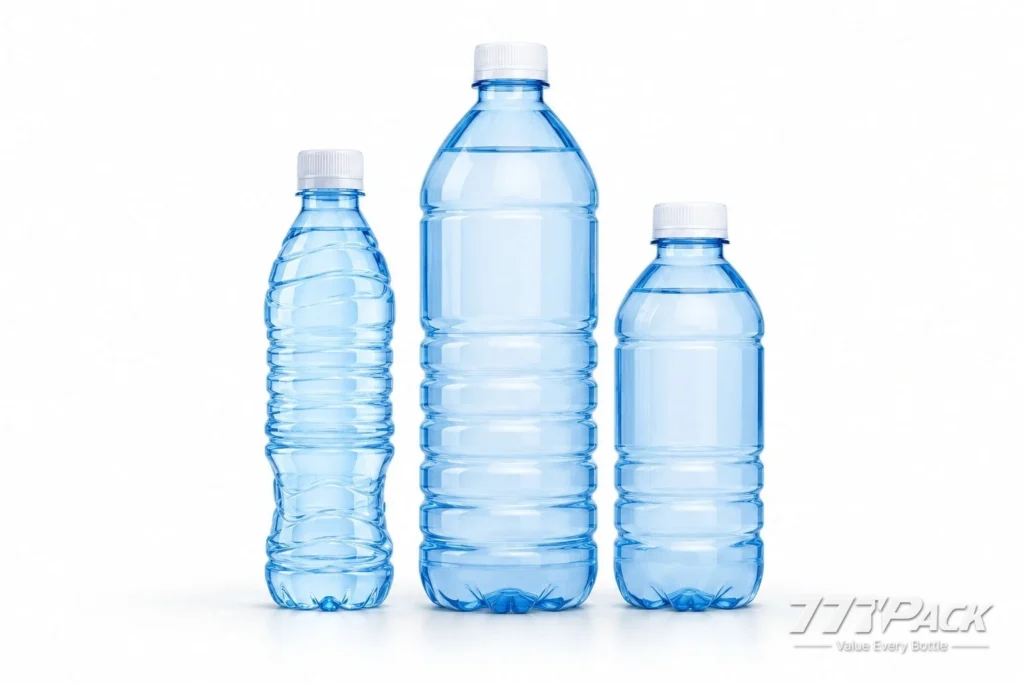
Choosing bottle sizes without a clear customer and sales channel can leave a bottled water brand with packaging that looks good but costs too much or sells too slowly. That mistake can also complicate sourcing and production. A better approach starts with drinking occasions, target prices, and local demand before moving to bottles, preforms, and equipment.
To choose bottle sizes for a bottled water brand, match each capacity to a target customer, drinking occasion, sales channel, and price range. Then check local preform availability, packaging costs, and production-line compatibility. Start with a proven PET bottle combination unless market research supports the extra cost and complexity of customization.
The discussion below uses PET bottles as the example. Indonesian capacities provide research starting points, not a universal buying list. The practical sequence is straightforward: define the product, study the channel, check established packaging options, and only then decide whether customization makes sense.
How Should Product Positioning Guide Bottle Sizes?
A bottle capacity alone does not define a product. A 600 mL bottle can serve everyday convenience-store shoppers or appear on a hotel dining table. When a brand treats those products as the same purchasing decision, packaging spending can drift away from what customers actually value.
The best bottle sizes support a specific drinking occasion and a realistic selling price. Economy products usually benefit from established packaging and reliable supply. Mid-range products can differentiate through grip and presentation. Premium products may justify distinctive designs, but a standard capacity can also support a premium position.
Capacity and positioning answer different questions
Capacity answers a practical question: How much water does the customer need for this occasion?
Positioning answers a commercial question: What packaging experience will the customer or channel pay for?
Those decisions overlap, but they are not interchangeable. A larger bottle does not automatically offer better value if shoppers cannot carry it comfortably. A smaller bottle does not automatically look premium if its presentation feels ordinary.
Before requesting packaging quotations, the brand should define:
- The target customer: commuters, restaurant guests, event attendees, households, or offices.
- The drinking occasion: immediate consumption, table service, travel, or storage.
- The sales channel: convenience stores, supermarkets, wholesalers, hospitality, or delivery.
- The price range: the expected retail price and the revenue available after channel deductions.
- The packaging priorities: low cost, comfortable handling, shelf recognition, or distinctive presentation.
Packaging investment should follow the commercial goal
| Product position | Main purchasing priority | Packaging approach worth evaluating |
|---|---|---|
| Economy | Competitive price and consistent supply | Established capacity, proven bottle design, readily available preforms |
| Mid-range | Familiar value with visible differentiation | Mainstream capacity with improved grip, label design, or shelf appearance |
| Premium | A presentation customers will pay for | Refined standard bottle or validated custom design for a defined channel |
An economy brand often gains more from dependable replenishment than from an unusual bottle shape. A mid-range brand may create useful differentiation through label placement and bottle proportions without introducing a custom preform.
A premium brand has more room to invest in presentation, but the business case still needs evidence. A hotel buyer may value a bottle that fits neatly on a dining table. A retail shopper may care more about appearance, portability, and price.
The commercial team should test those assumptions with prospective buyers before committing to tooling. A standard capacity with thoughtful packaging can be a stronger launch choice than a distinctive capacity with uncertain demand.
How Can Local Market Research Identify the Right Bottle Sizes?
A familiar capacity in one country may be a weak choice in another. Even within the same city, supermarkets and hotel buyers may want different formats. Copying a competitor’s bottle without checking its channel can lead to a product that fits the shelf but misses the buying occasion.
The most useful bottle sizes are those supported by actual channel demand. A market survey should record capacities, shelf prices, bottle designs, and case quantities. Hospitality and delivery research should also cover consumption patterns, ordering frequency, storage space, and handling. Indonesian examples should guide investigation, not replace local evidence.
A simple survey can reveal practical differences
A useful market survey does not need to begin with a large research budget. It needs consistent observations across the channels the brand intends to serve.
For each comparable product, the research team should record:
- The stated capacity and bottle format.
- The regular selling price and any promotional price.
- The bottle shape, closure, and label presentation.
- The number of bottles per case or multipack.
- The shelf position and storage conditions.
- The channel’s ordering and replenishment requirements.
Price per liter helps compare products with different capacities. The calculation is simple:
Price per liter = selling price ÷ bottle capacity in liters
However, that figure does not explain every purchase. A shopper may accept a higher price per liter for a portable bottle. A household may prefer a larger format because it reduces purchasing frequency. The research should capture both the price comparison and the reason for buying.
Indonesian capacities provide a starting point
For an initial market survey in Indonesia, consider 250 mL, 600 mL, 700 mL, 1 L, and 15 L. Confirm which formats your target retailers, hospitality buyers, or delivery customers actually order.
| Capacity | Questions worth investigating |
|---|---|
| 250 mL | Does the channel need a small serving for meals, meetings, or events? |
| 600 mL | Does the format fit everyday drinking, portability, and the expected price? |
| 700 mL | Does the added volume offer a benefit that customers recognize? |
| 1 L | Does the format suit longer drinking occasions, storage, or sharing? |
| 15 L | Does the household or office delivery model support storage, dispensing, and handling? |
The 15 L format deserves a separate assessment. Buyers should clarify whether the proposed package is single-use or returnable and confirm its material, closure, dispensing arrangement, and equipment requirements. They should not assume that a small-bottle PET line can also produce and package large containers.
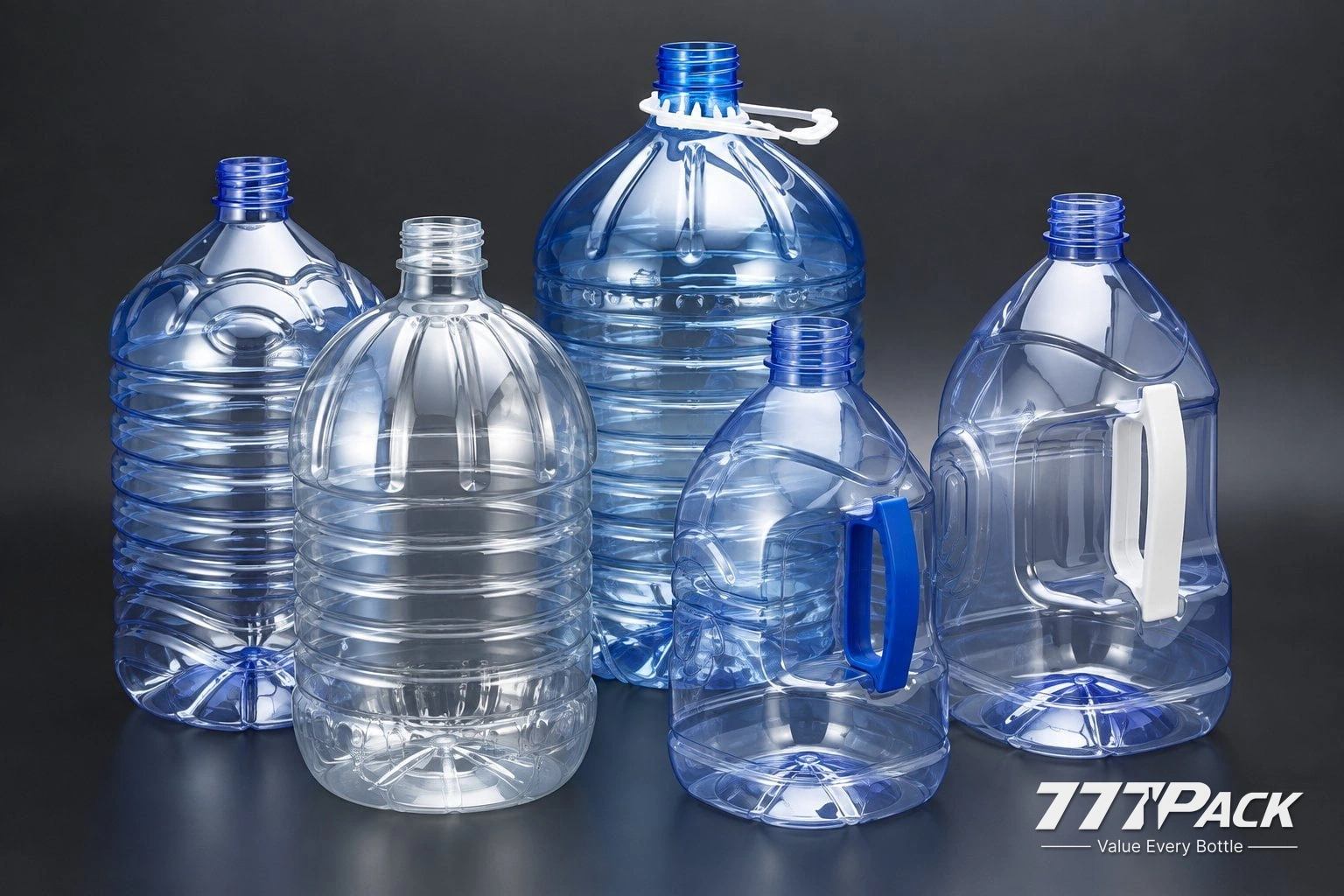
The launch decision should connect one capacity to one clear commercial use. A focused first product is easier to validate than a wide range built around untested assumptions.
How Should Bottle Sizes Be Matched With Preforms and Production Equipment?
A bottle can look suitable on paper and still create problems during blowing, filling, or distribution. Buyers may also assume that a particular preform weight guarantees the right result. Without sample trials, that assumption can hide weaknesses in bottle strength, appearance, closure fit, or line handling.
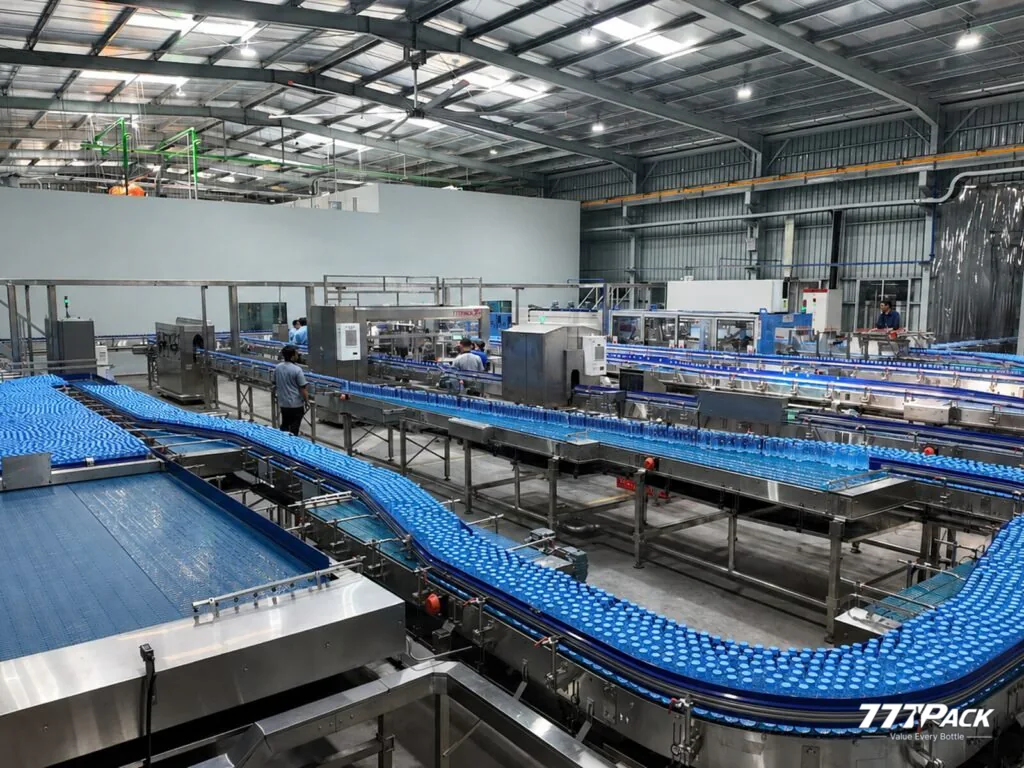
Bottle sizes should be matched with proven combinations of bottle design, preform geometry, preform weight, neck finish, and cap. The finished bottle design and blow mold determine capacity. Preform weight affects PET consumption, while geometry and processing affect material distribution. Suppliers should validate the complete combination through production trials.
Capacity does not determine preform weight by itself
A finished bottle’s volume depends on its design and blow mold. Its performance depends on more than the amount of PET used.
The same nominal capacity can use different preform weights. One preform may also suit more than one capacity or shape, but that suitability must be confirmed through trial blowing and finished-bottle testing.
Buyers should therefore avoid treating a quoted weight as a complete specification. A lighter preform may reduce material consumption, but it does not automatically deliver an acceptable bottle. A heavier preform does not automatically solve a poor design or process mismatch.
Qualified packaging and equipment specialists should evaluate the proposed combination for the actual application.
Established combinations can reduce launch uncertainty
New bottled water businesses often benefit from bottle and preform combinations with a documented local production history. Those combinations can provide a practical reference for samples, tooling discussions, and initial trials.
They can also make procurement easier when several suppliers stock compatible preforms and caps. Still, “commonly available” should be checked rather than assumed.
| Item to verify | Evidence buyers should request |
|---|---|
| Bottle design and capacity | Drawing, sample bottle, and agreed fill specification |
| Preform weight and dimensions | Technical drawing, sample measurements, and tolerances |
| Neck finish and cap | Matching specifications and closure trial results |
| Material suitability | Applicable food-contact documentation for the destination market |
| Supply availability | Minimum order quantity, normal lead time, and stock arrangements |
| Production performance | Trial records using the proposed packaging combination |
Trials should cover the complete packaging process
A successful blow-molding trial is the first checkpoint. Test filling, capping, labeling, and secondary packaging on the line. Evaluate transport and stacking separately with an agreed distribution test plan.
The trial team should assess bottle dimensions, usable fill conditions, leakage, closure application, handling stability, label fit, and package performance under agreed conditions. Any advertised production speed should be linked to the proposed bottle, not only to a machine’s maximum rating.
Buyers should verify certificates and compliance documents for validity, scope, issuer, and relevance. A certificate does not replace sample testing or demonstrate compatibility with a specific line.
A backup preform supplier also needs validation. A similar nominal weight and neck description do not guarantee identical processing behavior or finished-bottle performance.
When Do Custom Bottle Sizes and Shapes Make Commercial Sense?
Distinctive packaging can help a water brand stand out, but custom development adds decisions, costs, and supply dependencies. A brand that starts with tooling before checking demand may spend heavily on a package that its channel does not need. Customization works better when it solves a verified commercial problem.
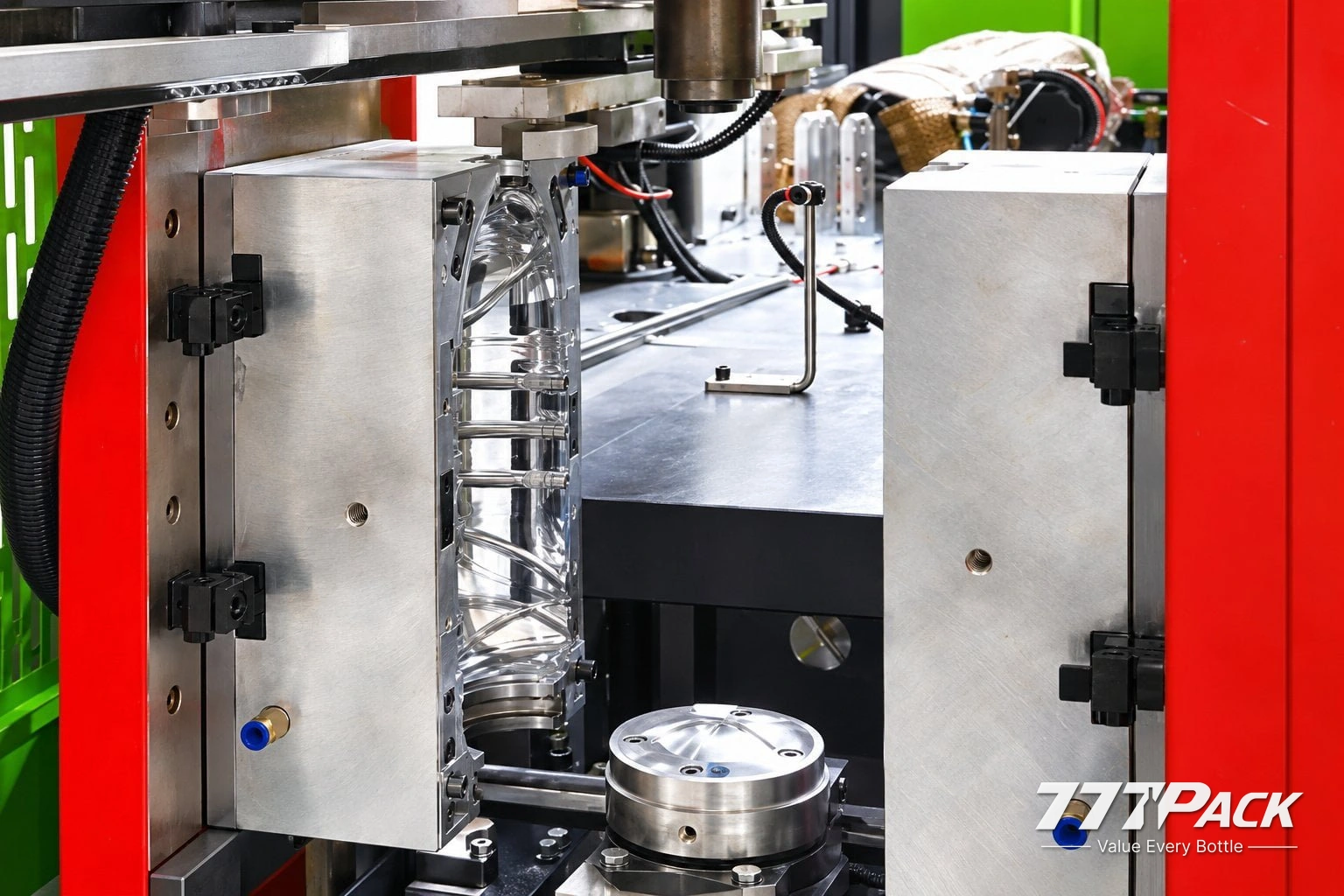
Custom bottle sizes or shapes make sense when customer demand, expected volume, and packaging benefits justify development costs. Buyers should first test existing preforms with a custom bottle mold. If that route fails, they can evaluate a custom preform. In-house preform production deserves consideration only after a full cost and utilization assessment.
Step 1: Existing preforms should be assessed first
The lowest-complexity development route often starts with a commercially available preform.
The buyer should provide the preform supplier and blowing-equipment manufacturer with the target capacity, bottle drawing, closure requirements, and performance expectations. Those specialists can assess whether an existing preform is a reasonable candidate for trials.
If testing confirms suitability, the brand may be able to commission a custom blow mold while continuing to purchase established preforms. This route can provide a distinctive finished bottle without introducing a dedicated preform supply chain.
However, a drawing review alone is not approval. Samples should pass the agreed bottle and line tests before the buyer commits to commercial production.
Step 2: A custom preform needs its own business case
An existing preform may not support the proposed shape, material distribution, or required performance. In that case, a preform manufacturer may need to develop a new design and injection mold.
The commercial agreement should clarify:
- The parties’ ownership rights for drawings, molds, and development results.
- The sampling and approval process before production orders begin.
- The minimum order quantity and replenishment lead time.
- The agreed specifications and acceptance criteria.
- The arrangements for maintenance, changes, and replacement tooling.
- The options for supply continuity if the original supplier cannot deliver.
The buyer should approve the custom preform only after trial blowing, finished-bottle testing, and line compatibility checks. A custom component can improve packaging options, but it can also make alternative sourcing harder.
Step 3: In-house preform production requires a full cost comparison
Stable demand at sufficient volume may justify evaluating preform production in-house. That does not mean the equipment purchase will automatically reduce total cost.
The comparison should include injection machinery, auxiliary equipment, molds, PET resin, energy, labor, maintenance, scrap, quality control, financing, and actual utilization. The business should also account for startup losses, inventory, and the technical resources needed to maintain consistent output.
| Route | Potential advantage | Main issue to evaluate |
|---|---|---|
| Existing preform with custom blow mold | Differentiation with simpler sourcing | Trial-proven design and process compatibility |
| Outsourced custom preform | More freedom in packaging development | Tooling cost, minimum orders, and supplier dependency |
| In-house preform production | Greater control over preform supply | Capital investment, utilization, and operating capability |
Before approving any route, the business should answer three questions with evidence: Will the target customer buy it? Can the required components be sourced reliably? Can the proposed line produce it consistently? Qualified specialists should confirm application-specific technical decisions.
Frequently Asked Questions
What bottle sizes should a new bottled water brand launch first?
A new brand should usually start with a capacity that serves a clearly defined channel and has accessible packaging components. The choice should follow local research rather than a universal rule. A limited launch range can simplify purchasing and production while the business gathers evidence about demand.
Does a larger PET water bottle always need a heavier preform?
A larger bottle does not have a universal preform-weight requirement. Bottle shape, preform dimensions, material distribution, handling expectations, and production conditions all matter. The supplier should recommend candidates and validate them through trials. Buyers should not approve a preform based on capacity and weight alone.
Can one production line handle several bottle sizes?
A line may handle several capacities, but compatibility depends on its documented operating range and changeover requirements. Buyers should confirm molds, handling components, filling and capping arrangements, labeling, and secondary packaging. The supplier should demonstrate the proposed formats and explain changeover time, output, and any limitations. The PET bottle water filling machine guide lists the bottle and cap details to confirm before selecting equipment.
Is a custom bottle necessary for premium bottled water?
A custom bottle is not essential for premium positioning. A familiar capacity can support a premium product through proportions, grip, closure, label design, and outer packaging. Custom development makes more sense when buyers recognize its benefit and expected sales can support the additional tooling and sourcing costs.
What should buyers verify before placing a packaging order?
Buyers should verify approved samples, drawings, tolerances, material documentation, neck and cap compatibility, minimum orders, and lead times. They should also confirm trial results and acceptance criteria in writing. Applicable certifications need checking for scope and validity, while technical suitability requires evaluation for the intended product and market.
Conclusion
The right bottle sizes connect customer demand with dependable sourcing and stable production. The brand should define its positioning, research its actual channels, and evaluate proven PET bottle, preform, and cap combinations before investing in customization. A distinctive design is useful only when its commercial benefits justify its added complexity. Share your target capacities, bottle and cap samples, and required output when discussing your bottled water production line with 777Pack. For projects in Indonesia, confirm the scope of local support when reviewing the proposal.
References
- NIST Handbook 130: Uniform Unit Pricing Regulation
- Advances in Polyethylene Terephthalate Beverage Bottle Optimization: A Mini Review
- European Commission: Food Contact Materials Legislation
- Indonesia BPOM Regulation No. 11 of 2026: Food Packaging
- ASTM D4169: Performance Testing of Shipping Containers and Systems