Technical Guides
What Is AMDK? A Guide to Packaged Drinking Water in Indonesia
Published
AMDK stands for Air Minum Dalam Kemasan, the Indonesian term for packaged drinking water, not just mineral water. For a business entering Indonesia, the first decisions are what water to sell, how to package it, and how much to produce; those choices guide water sourcing, factory planning, compliance, and equipment selection.
AMDK is a category of packaged drinking water in Indonesia, not a claim about a particular source or treatment method. A buyer choosing between mineral water and a product marketed elsewhere as “purified water” needs to confirm the Indonesian product classification before specifying treatment equipment or approving the label.
A useful starting point is a specification that a water specialist, bottle supplier, and filling-line manufacturer can all work from. It gives each party the same product to evaluate and gives the buyer a fair basis for comparing their proposals.
Which AMDK product and packaging requirements should buyers confirm first?
Two suppliers can quote the same hourly output and still offer quite different lines. One may assume a lightweight PET bottle with a wraparound label, while the other prices a sleeved bottle in a carton. Both quotes may be accurate, but they answer different questions.
An AMDK equipment brief should identify the water category, raw-water analysis, bottle material, capacity, neck finish, cap, label, and shipping pack. It should state the required output at a named bottle size and distinguish launch formats from future options. A drawing and a physical sample help resolve details that a written description misses.
What is the target water product?
Explore water treatment and purification systems.
A source report describes the incoming water. It does not establish what the finished product may be called. Before requesting a treatment proposal, the buyer should ask a qualified water specialist to evaluate the source results against the intended product and ask a qualified Indonesian adviser to confirm the applicable category, standard, and label name.
This matters when a commercial brief uses a term such as purified water. The term may describe what the buyer sells in another market without identifying the correct Indonesian classification. Similarly, a spring location alone does not establish that a product qualifies as natural mineral water. A useful supplier proposal explains why the proposed treatment suits both the tested source and the intended finished water.
Will the line run PET or glass?
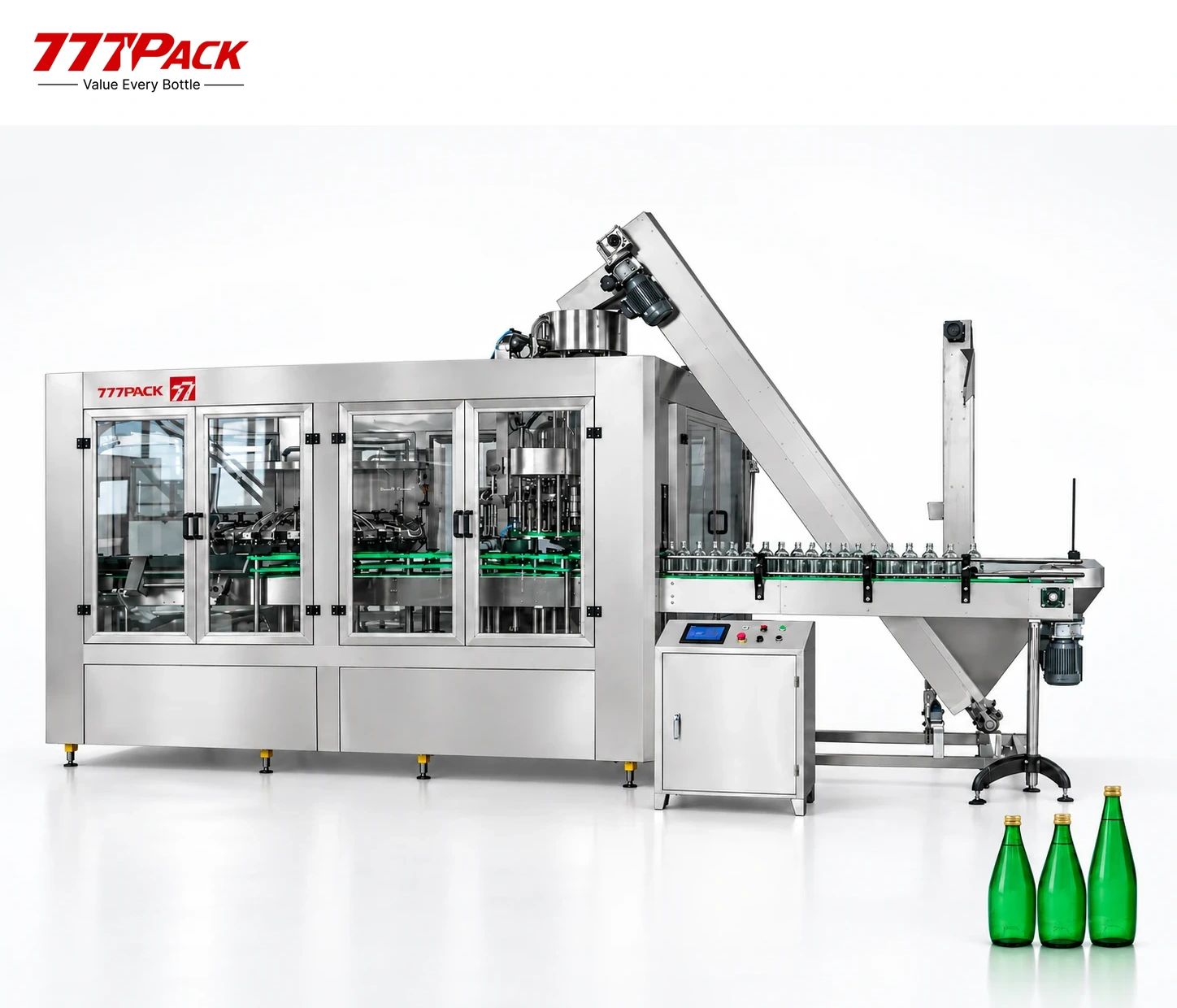
Compare glass bottle water filling equipment.
| Buyer decision | PET bottles | Glass bottles |
|---|---|---|
| Sales channel and freight | Low bottle weight can suit broad retail distribution. | Bottle weight and breakage allowances affect delivered cost. Some hospitality channels may favor the presentation. |
| Bottle supply | The plant can buy finished bottles or blow them from purchased preforms. | The plant needs a reliable supply of bottles with consistent dimensions, weight, and neck finish. |
| Reuse model | The quotation should state the intended use and supply format. | A returnable format adds collection, incoming inspection, and washing requirements that a one-way bottle does not have. |
| Line handling | The supplier should demonstrate that the bottle remains stable through conveying, filling, and packing. | The supplier should confirm glass handling, closure compatibility, and provisions for breakage. |
A change from PET to glass is not simply a change of container. It can alter the infeed, conveyors, filler, capper, and packing equipment. If both materials appear in a launch plan, the supplier should identify which machines can genuinely serve both and which need separate provision.
Which sizes, neck finishes, and preform weights will run?
See the 15,000 BPH project for 700 mL PET bottles.
A plant might launch with 600 mL bottles and later add 250 mL, 700 mL, 1 L, or a larger format. Each size needs a bottle drawing, dimensions, and a matching closure specification. A tall, narrow bottle can behave differently on a conveyor from a shorter bottle of the same volume. A format quotation should identify the blow molds, guides, and other change parts required, plus the time needed to fit and adjust them.
For PET, the lightest preform is not necessarily the lowest-cost choice. The buyer should confirm material, weight, neck finish, and local availability, then request tests with the intended bottle design. A bottle that looks good after blowing may distort in a shrink pack or lose stability when stacked. Trial packs should reflect the actual warehouse conditions, stack arrangement, and delivery distance. For glass, the equivalent checks focus on bottle weight, dimensional tolerances, neck consistency, and the supplier’s ability to maintain those specifications between deliveries.
Which label and shipping pack suit the channel?
An OPP wraparound labeler applies a band of oriented polypropylene film around the bottle, commonly with adhesive. A sleeve labeler places a sleeve over the bottle before heat shrinks it to shape. Buyers should compare appearance, label dimensions, material and adhesive costs, and adjustments between formats. For sleeves, the quote should say whether it includes the shrink tunnel and its steam supply or other heat source. Similar labeling speeds do not mean similar installed costs.
The shipping pack also sets a capacity requirement. At 12,000 bottles per hour, for example, a 12-bottle bundle requires 1,000 completed packs per hour before any allowance for stops. A six-bottle bundle doubles that demand on the packer. Buyers should specify carton or shrink film, bottles per pack, tray requirements, plain or printed film, and the expected handling and stacking conditions. Automatic case packing and palletizing should appear as priced items rather than assumptions.
AMDK product requirements checklist
| Item | Information to confirm |
|---|---|
| Water product | Target category, source report, finished-water requirements |
| Bottle material | PET or glass; finished-bottle supply, on-site blowing, or return system |
| Capacity | Launch size and planned additions |
| Bottle and neck | Drawings, samples, neck finish, cap specification |
| PET preform | Weight, material, neck finish, supplier, trial results |
| Label | OPP or sleeve, dimensions, artwork, consumables, heat requirements |
| Secondary packaging | Carton or film, bottles per pack, tray, pallet pattern |
| Output | Required saleable bottles per hour at each specified size |
What steps does an AMDK factory project in Indonesia involve?
A factory can have enough floor space for a filler yet lack a doorway wide enough to bring it inside. A project can also finish installation while product registration remains open. Both problems become easier to manage when the buyer plans the site, equipment, and approvals together.
An AMDK factory project has seven main steps: map compliance requirements, assess the source and site, coordinate construction, evaluate suppliers, approve the detailed layout, manage manufacturing and freight, and commission the line. These steps overlap. Early planning should identify which decisions must precede construction and which checks need an operating facility or trial product.
1. Map permits, certification, and product registration
A qualified local adviser should identify the business, construction, production, source-use, water abstraction, and environmental requirements that apply to the proposed site. The review should also establish the relevant Indonesian National Standard (SNI), certification route, and BPOM product registration and labeling requirements. See also BPOM’s AMDK registration guidance.
The practical output is a checklist with a responsible party, supporting documents, dependencies, and target date for each item. Some activities may require a site audit, product testing, or trial production. The plan should place those activities when the necessary evidence exists rather than assume every certificate must be issued before construction. Buyers reviewing a certificate should verify its issuer, validity, site, product scope, and relevance to the proposed operation.
2. Assess the water source and factory site together
A promising location needs more than proximity to a spring. The assessment should cover source quality, available volume, seasonal reliability, legal access, and source protection. Land suitability, electricity, drainage, and freight costs to the target market can change the economics of an otherwise attractive location.
An initial layout belongs at this stage. It should allow for treatment, filling, packaging storage, and finished stock, as well as access for trucks and containers. A low-cost site becomes less attractive if each major machine needs a difficult transfer from the nearest accessible road.
3. Coordinate source facilities and construction
The project team should develop abstraction, transfer, and raw-water storage facilities according to the approved plan. The building design should separate activities according to their hygiene and operating needs and give people, packaging materials, and finished goods workable routes through the plant.
Before civil work fixes a wall, floor opening, or drain, the builder should obtain the supplier’s critical dimensions and utility information. The review should cover not only the machine footprint but also where an operator stands and how maintenance staff will remove a component for repair.
4. Evaluate suppliers against the same operating brief
Review the complete bottled water production line.
A relevant reference plant is one running a comparable bottle, closure, label, and pack at a comparable output. During a visit or witnessed trial, buyers can examine manufacturing finish, observe a format change, and see where operators intervene. An output figure taken from the filler alone says little about how many acceptable packs leave the line.
Comparable quotations should answer four questions:
- What output will the complete line deliver with the specified bottle and shipping pack?
- What evidence supports that commitment, and how will the buyer test it?
- What does the price exclude, such as molds, utility equipment, interconnecting conveyors, or commissioning travel?
- Who supports the plant in Indonesia for training, spare parts, and service calls?
777Pack supplies beverage packaging lines for international projects and provides local project support in Indonesia. As with any supplier, the buyer should confirm the assigned service team, responsibilities, parts availability, and response arrangements in writing.
5. Approve the final layout and utility connections
Before equipment enters manufacture, the buyer and suppliers should approve a dimensioned layout and equipment list. The drawings should identify conveyor connections, buffer space, electricity, compressed air, water, and steam where required. They should also show service aisles, incoming packaging routes, finished-goods exits, and space reserved for expansion.
The unloading and lifting route deserves its own check. The largest shipping section, rather than the assembled machine shown on a sales drawing, determines what must pass through the entrance. Any dimension that affects civil work needs confirmation before that work proceeds, even if other layout details remain open.
6. Coordinate procurement, manufacturing, and transport
Before placing the order, the buyer should agree on samples, technical specifications, manufacturing milestones, factory acceptance criteria, payment terms, freight responsibilities, and installation scope. During manufacture, the site team can prepare utilities while packaging suppliers produce trial materials.
The freight forwarder should review cargo dimensions, booking arrangements, import documents, customs preparations, inland transport, and unloading access before equipment is ready to ship. The contract should identify who can release the shipment after the factory acceptance test and who verifies any agreed corrections.
7. Commission the line and prepare for commercial release
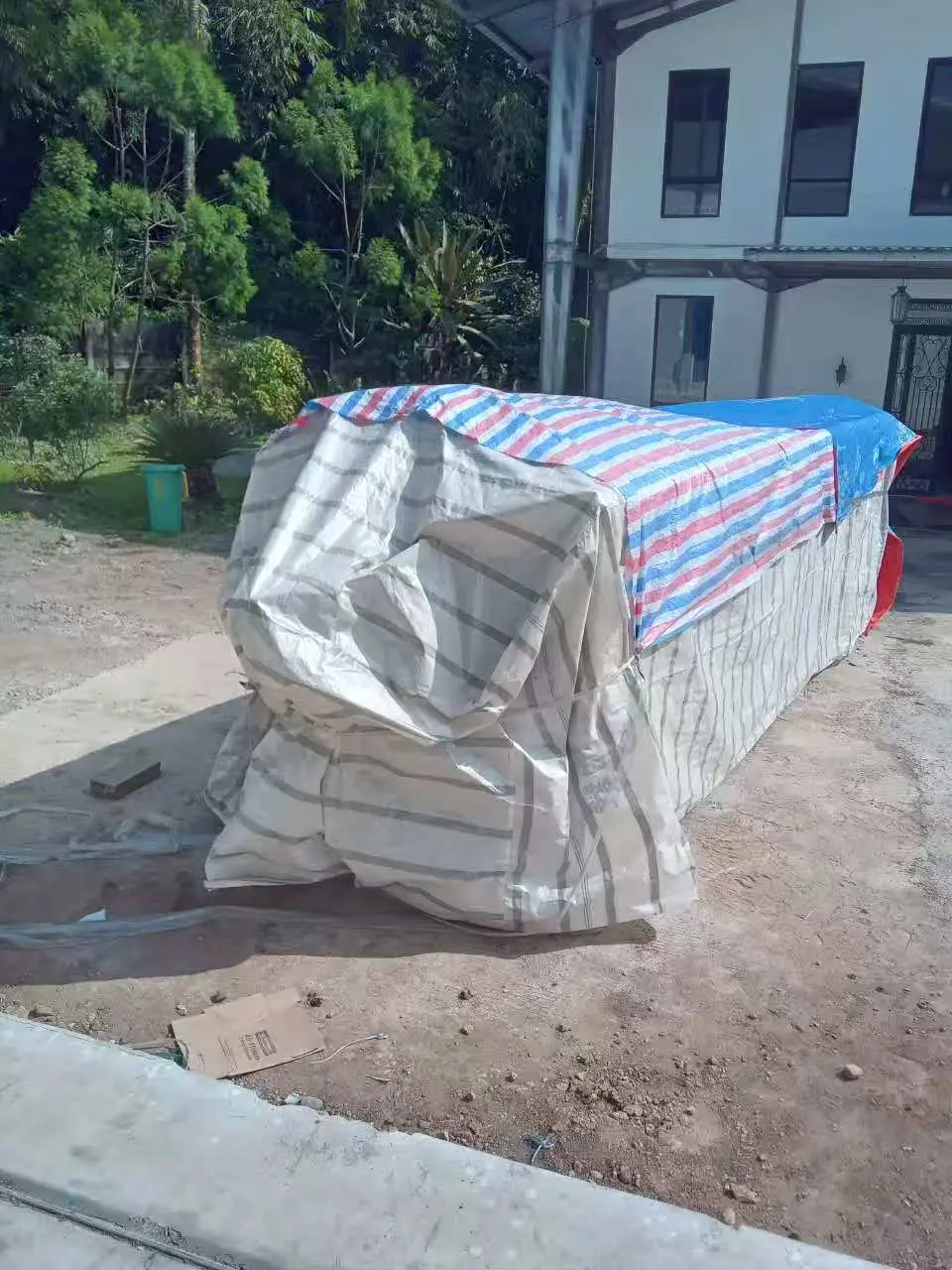
On arrival, the receiving team should check shipping condition and completeness before positioning equipment and connecting utilities. Commissioning should move from individual machines to a linked trial using the actual bottles, caps, labels, and shipping materials.
Site acceptance should record agreed run time, saleable output, fill consistency, closure quality, label placement, and pack integrity. Operators and maintenance staff also need training on the installed configuration. Equipment acceptance and permission to sell are separate decisions. The project owner should verify outstanding testing, certification, registration, and labeling obligations before commercial release.
How much time should an AMDK project allow for manufacturing, shipping, and installation?
A lead time stated in months is hard to use without a start date and an endpoint. If the supplier starts counting at drawing approval but the buyer starts at deposit payment, the two schedules can differ before manufacturing even begins.
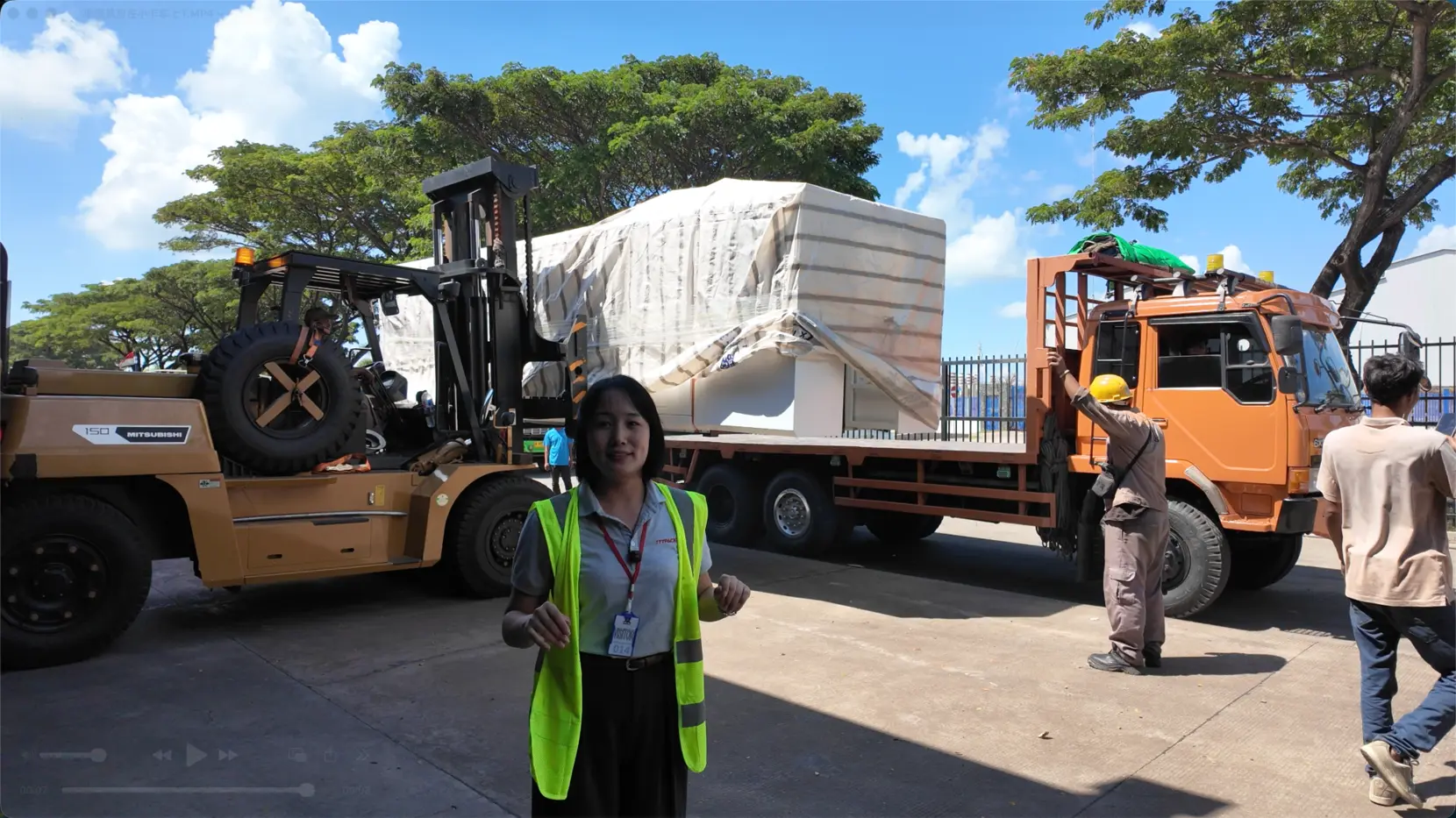
For an AMDK line, buyers should schedule design approval, manufacturing, factory testing, freight, installation, and commissioning separately. If 777Pack proposes a three-to-six-month equipment window, the offer should define its starting milestone and included work. That figure is neither an ocean transit estimate nor a promise about the time from an undeveloped site to legal sales.
How should the buyer read a delivery schedule?
| Workstream | Milestone the buyer can verify |
|---|---|
| Technical approval | Both parties sign off on bottle drawings, layout, equipment list, and interfaces. |
| Equipment and mold manufacturing | The supplier confirms build slots and dates for custom parts and tools. |
| Factory acceptance | Trial materials arrive, tests run, and agreed corrections close. |
| International and domestic freight | The forwarder confirms booking, documents, clearance responsibilities, and delivery route. |
| Site readiness | The site team confirms access, utilities, trial materials, and operators. |
| Commissioning | The installed line passes the agreed trial and staff complete training. |
| Commercial readiness | The project owner verifies applicable testing, certification, and registration status. |
A useful contract date might run from signed technical approval and receipt of agreed samples to completion of factory acceptance testing. Another offer might extend to commissioning in Indonesia. Those dates describe different deliverables. Buyers comparing them should ask each supplier to price and schedule the missing stages rather than treating the shorter figure as the faster project.
Custom bottle molds, late artwork, or a change of neck finish can affect more than one milestone. For example, a revised neck may require a different cap and new samples for acceptance testing. The buyer should ask what can continue during that change, what must pause, and whether the original test booking remains available.
Site preparation and shipping also need a common calendar. A vessel booking does not establish a site delivery date, and a site delivery date does not mean utilities are ready. Actual timing depends on the configuration, degree of customization, sailing schedule, clearance, inland route, and factory location. Before dispatch, the project manager should check the forwarder’s current plan against the site team’s readiness report and the installer’s availability. That check helps avoid paying for storage at one end while technicians wait at the other.
Frequently Asked Questions
Does AMDK mean mineral water in Indonesia?
No. AMDK means packaged drinking water. Mineral water is not a synonym for the whole category. The appropriate product name depends on the source, treatment, finished product, and applicable Indonesian requirements, so the classification needs review before label printing.
Can one AMDK line handle both 600 mL and 1 L bottles?
It may, provided the equipment supports both drawings, closures, labels, and pack formats. The quotation should state the output for each size, the required change parts, and the changeover time. A successful 600 mL trial does not establish 1 L performance.
What should buyers send before requesting a water filling line quotation?
The most useful inputs are a source-water report, intended product category, bottle and cap drawings or samples, label type, shipping pack, and hourly output by size. A factory location and preliminary floor plan help the supplier identify layout, delivery, and service constraints.
What happens if final packaging is unavailable for the factory test?
The buyer and supplier should document which substitute materials will be used and which results remain provisional. For example, a substitute label may demonstrate conveyor flow without proving final label placement. The site acceptance plan should reserve those outstanding checks for trials with approved production materials.
Conclusion
An AMDK project starts with the water a business intends to sell and the pack its customer will receive. Those choices give the source assessment, factory layout, equipment quotation, and delivery schedule a common basis. To discuss a line configuration and delivery plan with 777Pack, the buyer can share the source-water test report, target product, bottle capacities, packaging format, required hourly output, and factory location.