Technical Guides
What to Test Before Shipping a Bottled Water Line and After Installing It
Published
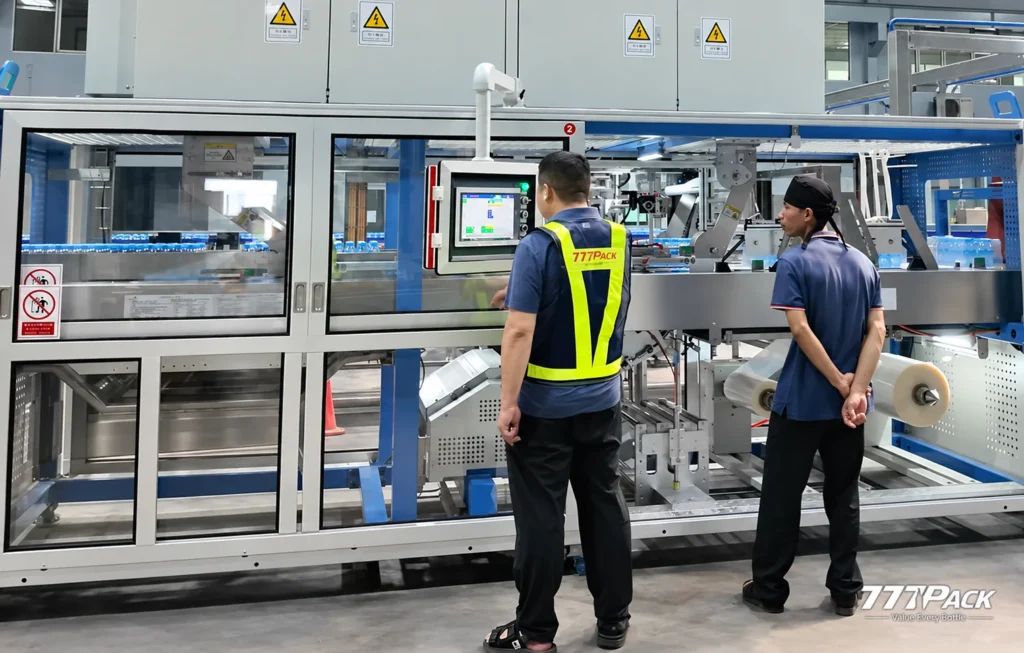
A bottled water line can look ready for shipment while still hiding specification errors, missing parts, or performance gaps. Those problems become more expensive once the equipment reaches another country. A structured inspection before shipping, a receiving check, and a documented installation acceptance test help buyers protect their investment and production schedule.
Before shipping a bottled water line, buyers should verify contracted components, machine materials, bottle compatibility, sustained output, identification records, and spare parts. After delivery, they should confirm equipment identity and shipment completeness. After installation, they should check trial materials, record performance issues, close outstanding defects, and replenish commissioning spares.
A successful factory trial does not automatically mean a successful production start. Transport, installation, utilities, and material availability can introduce new problems. The following three inspection stages create a clear chain of evidence, so buyers and suppliers can resolve issues before they affect commercial production.
What Should Buyers Test Before Shipping a Bottled Water Line?
An overseas equipment purchase creates a difficult timing problem. Once machines leave the supplier’s factory, correcting the wrong components or an unsuitable bottle setup becomes slower and more costly. A thorough pre-shipment inspection gives buyers the best opportunity to identify discrepancies while the equipment remains accessible to the manufacturer.
Before shipment, a bottled water line should undergo a factory acceptance test against the purchase contract. Buyers should check electrical components, specified materials, approved bottle formats, sustained production speed, equipment identification, and shipment readiness. Photographs, test records, and an agreed spare-parts package should support the shipping decision.
Check the Actual Configuration Against the Contract
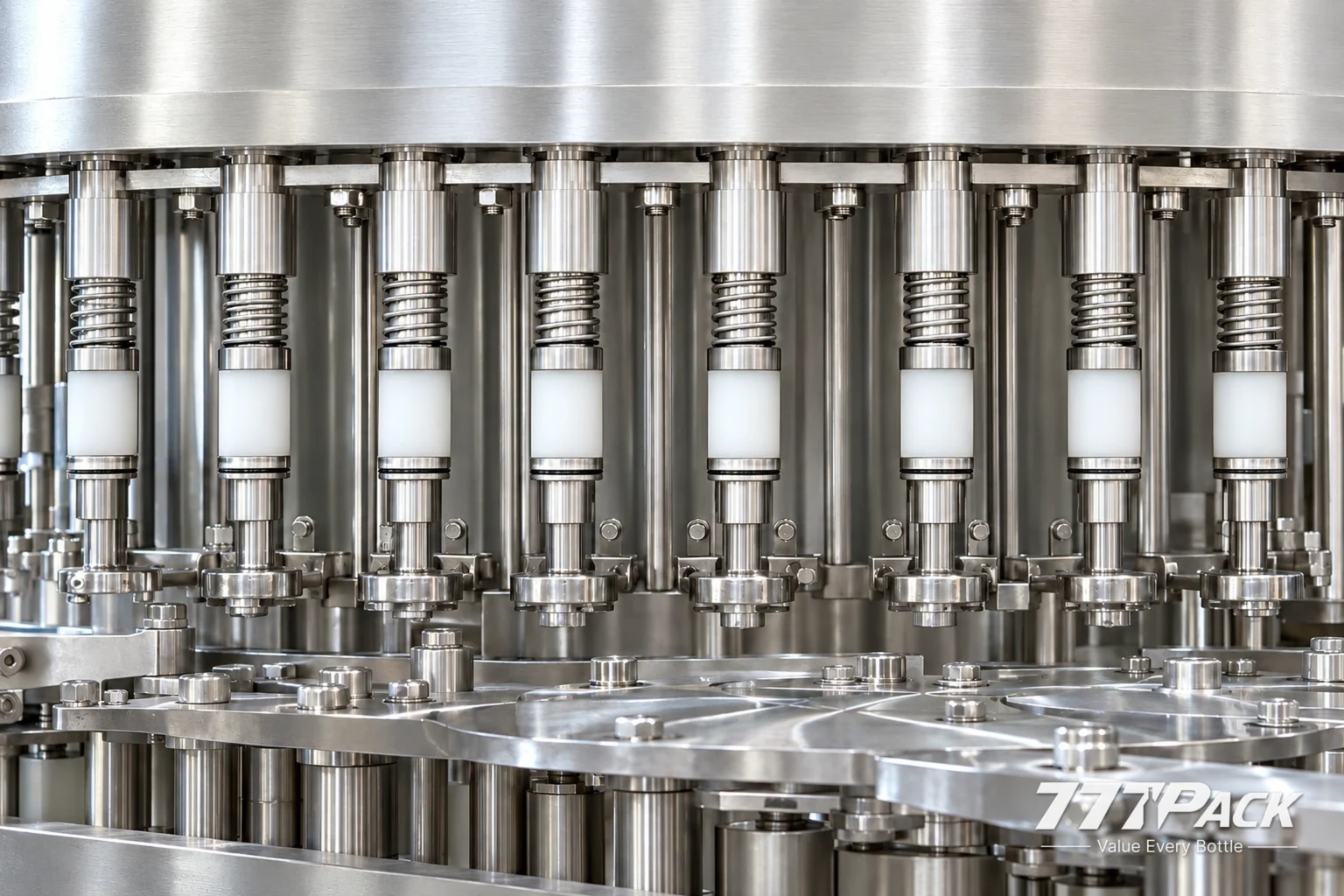
The purchase contract should serve as the inspection baseline. A brochure or quotation may describe a general machine configuration, but the final agreed specification should identify what the supplier must deliver.
Buyers should compare the installed equipment with the approved component list. Typical inspection items include:
- Electrical components: PLC, HMI, motors, drives, sensors, and agreed component brands or models.
- Machine materials: Specified stainless-steel grades, product-contact materials, seals, and other contractually defined materials.
- Machine configuration: Included conveyors, packaging machines, inspection equipment, and format-change parts.
- Technical documents: Electrical drawings, equipment manuals, parts lists, and maintenance information.
- Identification: Model numbers, serial numbers, nameplates, and control-cabinet labels.
Appearance alone cannot establish a stainless-steel grade or confirm material suitability [1]. Buyers should request supporting material documentation and arrange qualified verification where the application or contract requires it.
The same caution applies to certificates. A certificate should be checked for its issuer, scope, validity, and connection to the supplied equipment. It should not replace a physical inspection or application-specific professional review.
Any proposed component substitution should receive written buyer approval. A different component may perform adequately, but unapproved substitutions can affect maintenance familiarity, replacement availability, or compatibility with the buyer’s existing equipment [2].
Use the Bottle Format Approved During Design
A factory trial should use the bottle format that the line was designed to handle. Testing only an easier substitute bottle can hide transfer, handling, labeling, or packing problems.
The trial materials should match the approved specifications for:
- Bottle volume, dimensions, shape, and neck finish.
- Bottle weight and relevant dimensional tolerances.
- Cap design and dimensions.
- Label size and material.
- Film, cartons, or other secondary packaging.
If the contract covers multiple bottle formats, the acceptance plan should identify which formats require testing. It should also define the expected changeover scope and which format-specific parts must accompany the shipment.
An unfamiliar bottle shape may behave differently from a conventional cylindrical bottle [3]. Buyers should therefore avoid assuming that one successful format proves every contracted format will perform equally well.
Verify Sustained Output, Not Just Displayed Speed
The filling machine’s speed display does not prove the output of the complete line [4]. Buyers should evaluate acceptable finished output over an agreed test period, including the performance of downstream equipment.
As a starting point for line planning, consider specifying nominal capacity for supporting equipment at approximately 120% of the contracted filling speed. For example, a filler contracted at 12,000 bottles per hour would suggest a target nominal capacity of 14,400 bottles per hour for supporting equipment.
This 120% figure is a planning guideline, not a universal engineering standard. Qualified line engineers should confirm whether it suits the bottle formats, accumulation design, machine functions, and operating conditions.
| Inspection point | Evidence to request | Purchasing purpose |
|---|---|---|
| Filling capacity | Timed output record and agreed test conditions | Confirms the contracted performance basis |
| Supporting equipment capacity | Machine ratings and integrated trial results | Helps identify potential bottlenecks |
| Finished output | Count of acceptable completed bottles or packs | Distinguishes saleable output from machine speed |
| Interruptions | Stop log with causes and durations | Reveals recurring transfer or packaging problems |
| Rejects | Agreed defect categories and recorded counts | Supports a meaningful acceptance decision |
The contract should define the test duration, permitted interruptions, acceptance criteria, and treatment of rejected products. An unexplained short demonstration should not substitute for an agreed performance test.
Create a Photographic Record and Prepare Spares
Buyers should retain photographs of the complete line, individual machines, nameplates, control cabinets, accessories, and packed crates. Videos can supplement these records by showing the trial conditions and material flow.
Each image should be linked to an equipment number or inspection item. This makes the records useful during receiving checks rather than leaving the buyer with an unorganized photo collection.
International replacement shipments can take time because of production lead times, freight schedules, and customs clearance [5]. A pre-shipment spare-parts review should therefore identify critical wear parts, suitable quantities, part numbers, and storage requirements. Buyers should prioritize items whose absence could stop production, rather than purchasing a large but poorly matched assortment.
What Should Buyers Check When a Bottled Water Line Arrives?
A shipment can arrive on schedule and still leave the installation team unable to work. The wrong machine, a missing change part, or an incomplete electrical package can create delays that are not obvious from the outside of the crates. A receiving inspection helps reveal these problems before installation resources are fully committed.
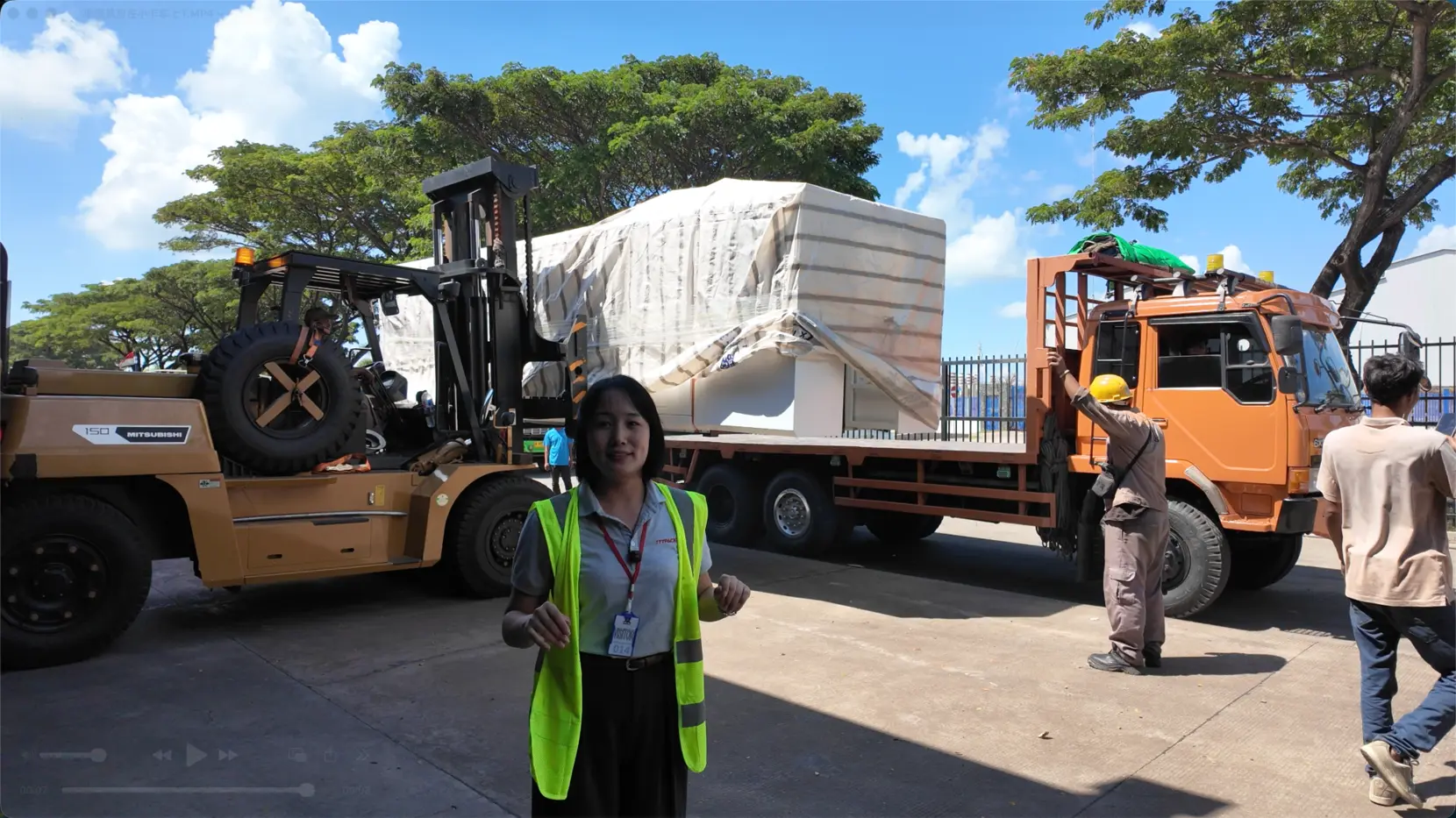
When a bottled water line arrives, buyers should match machine identities to the pre-shipment records and check every crate against the packing list. The inspection should confirm accessories, documents, format parts, and installation components. Any damage or shortage should be documented promptly, with a written replacement plan agreed with the supplier.
Confirm That the Delivered Machines Match the Inspected Machines
Buyers should verify that the received equipment is the same equipment inspected at the supplier’s factory. Model names alone may not be sufficient, particularly when the supplier builds several similar machines [6].
Useful reference points include:
- Machine serial numbers.
- Nameplate photographs.
- Equipment identification tags.
- Control-cabinet identification.
- Distinctive layouts or visible assemblies.
- The final approved equipment list.
If a machine was changed after the factory inspection, the supplier should provide a clear explanation and supporting acceptance evidence. The buyer should not treat an undocumented replacement as automatically equivalent.
This identity check protects both parties. It helps establish whether a later discrepancy concerns the inspected equipment, an approved change, or an incorrect shipment.
Reconcile the Packing List With the Installation Requirements
A crate count is only the first level of verification. A shipment may contain every listed crate while still missing individual components inside them.
The receiving team should compare three documents: the contract equipment list, the supplier’s detailed packing list, and the installation requirements. This comparison helps reveal items that are absent from the packing list itself.
| Item category | Examples to check | Possible consequence if missing |
|---|---|---|
| Main equipment | Filling, conveying, labeling, and packing machines | Installation or line integration cannot proceed |
| Connection components | Specified cables, brackets, conveyor sections, and fittings | Mechanical or electrical completion is delayed |
| Format parts | Guides, star wheels, and other agreed change parts | A contracted bottle format cannot be trialed |
| Documentation | Manuals, drawings, parts lists, and agreed software backups | Troubleshooting and maintenance preparation become harder |
| Spares and tools | Purchased spare parts and supplied specialist tools | Commissioning issues may take longer to resolve |
Responsibility should also be checked. Some installation items may be supplied by the buyer rather than the equipment manufacturer. The contract should make this division clear so a buyer-supplied item is not mistakenly reported as a shipping shortage.
Report Shortages and Damage Without Delay
The receiving record should include photographs of crate condition, identification markings, visible damage, and missing-item locations. The team should follow the agreed handling and unpacking procedures and preserve relevant evidence for supplier or freight claims.
A useful shortage report identifies:
- The missing or damaged item.
- Its part number and required quantity.
- The relevant crate or packing-list reference.
- Its effect on installation or testing.
- The required delivery date.
- The person responsible for resolution.
The supplier’s response should include more than a promise to send the item. Buyers should request the dispatch plan, tracking information when available, and any practical effect on the installation schedule.
Use Local Support to Improve Coordination
For projects in Indonesia, locally based support can help buyers coordinate receiving, installation, and troubleshooting.
However, buyers should still verify the actual service scope. The agreement should identify who performs receiving support, installation coordination, troubleshooting, and spare-parts fulfillment. Response times, travel arrangements, and included services should be documented rather than assumed.
What Should Buyers Test After Installing a Bottled Water Line?
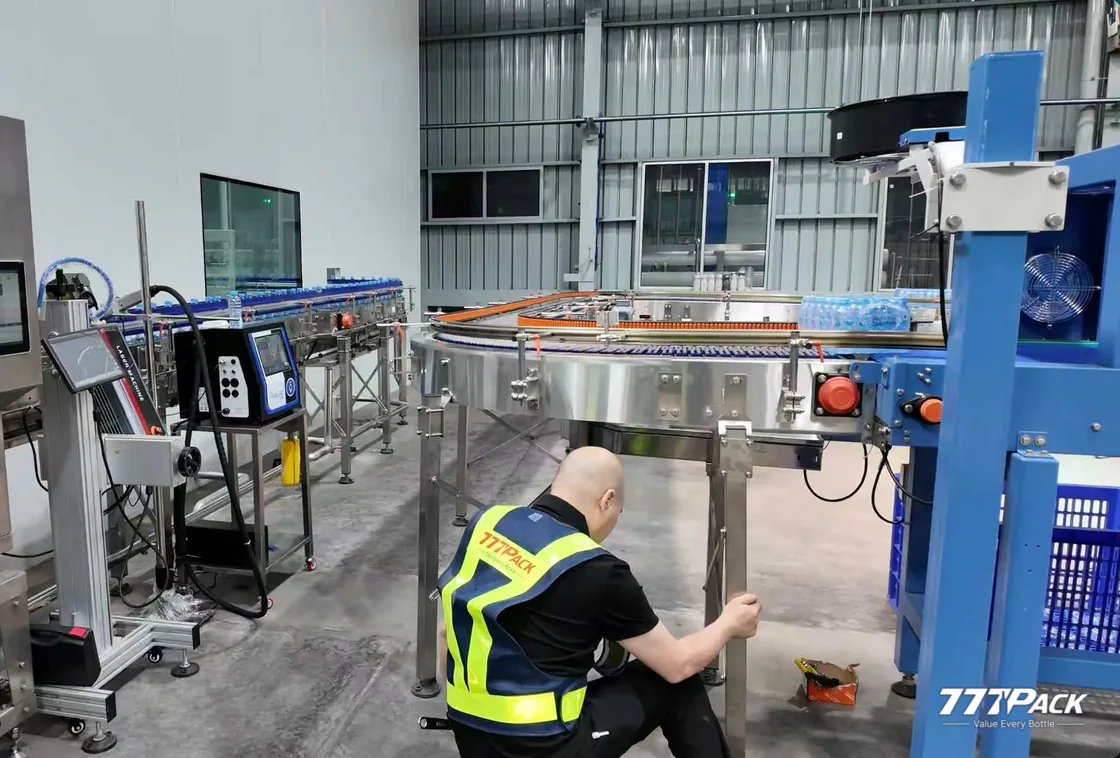
Installation completion can create pressure to begin production immediately. However, missing trial materials and unresolved commissioning faults can turn the first production days into repeated troubleshooting sessions. A site acceptance process helps buyers separate equipment readiness from schedule pressure and establish a documented basis for commercial operation.
After installation, a bottled water line should undergo a site acceptance test under agreed local conditions. Buyers should confirm trial-material availability, review utility and installation readiness with qualified personnel, measure acceptable output, and record every issue. Commercial production should follow closure of relevant defects and replenishment of commissioning spare parts.
Prepare Enough Materials for a Meaningful Trial
A commissioning trial requires more materials than a brief demonstration. Bottles, caps, labels, and secondary packaging must support setup, adjustments, repeated runs, and the agreed acceptance period.
Buyers should prepare a material plan that covers:
- Approved bottles for each scheduled test format.
- Matching caps and labels.
- Film, cartons, trays, or other specified packaging.
- Coding consumables where required.
- Suitable trial water and agreed utility availability.
- Additional quantities for rejects and repeat testing.
A simple planning calculation can make the requirement clearer. At 12,000 bottles per hour, a four-hour continuous test would require 48,000 bottles before allowing for setup losses, rejects, or additional trials.
That example is not a prescribed test duration or purchasing quantity. The actual material requirement should follow the agreed commissioning plan, the number of bottle formats, and the expected adjustment work.
Material quality matters as much as quantity. Trial results may become difficult to interpret if bottles, caps, or labels differ from the approved specifications. Buyers should retain supplier references or batch details where practical.
Confirm Site Readiness Through Qualified Review
The installed equipment depends on local conditions. Electrical supply, compressed air, water supply, layout, and upstream or downstream interfaces can affect performance. For compressed air, review the required supply pressure, air quality, and flow with the installer [7].
Qualified installation and commissioning personnel should evaluate whether the site meets the agreed requirements. Buyers should request documented checks rather than relying only on a verbal statement that the line is ready.
This review should also cover relevant safety functions and installation conformity. Equipment performance acceptance does not replace the buyer’s separate obligations for worker safety, water quality, sanitation validation, or local regulatory compliance.
Commercial release also depends on water quality, hygienic processing, and the rules of the market where the water will be sold. The U.S. FDA describes these requirements for the U.S. market [8].
Application-specific decisions should involve qualified engineering, quality, and regulatory professionals as appropriate.
Keep an Issue Log Throughout Commissioning
Every meaningful problem should enter a shared issue log. Verbal discussions are useful during testing, but they do not provide a reliable closure record [9].
| Log field | Information to record |
|---|---|
| Issue reference | A unique identification number |
| Test condition | Bottle format, target speed, and relevant material details |
| Observed problem | What happened and where it occurred |
| Supporting evidence | Photos, video, measurements, or stop records |
| Assigned responsibility | The supplier or buyer representative handling the issue |
| Corrective action | The agreed response |
| Retest result | Evidence that the action resolved the problem |
| Closure approval | Confirmation from the agreed responsible parties |
The team should distinguish equipment faults from material problems, site deficiencies, and operator-training needs. This prevents every interruption from being attributed to the machine without evidence.
Before formal production, the responsible parties should review the log item by item. Issues affecting safety, agreed quality, or essential performance require appropriate resolution and verification. Lower-priority items may be handled through a written outstanding-items agreement where commercially and technically acceptable.
Replenish Commissioning Spares and Plan the First Year
Commissioning may consume spare parts originally intended for later maintenance. Buyers should record those withdrawals and reorder necessary replacements before the initial stock becomes too low.
For initial maintenance planning, consider approximately one year of spare-parts coverage. Use this as a planning horizon and set quantities according to how each component is used.
A practical first-year inventory should consider:
- Expected operating hours and shift patterns.
- Manufacturer maintenance recommendations.
- Wear rates under the planned application.
- Part criticality and replacement lead time.
- Local availability.
- Shelf life and storage conditions.
- Common parts shared across machines.
The supplier should provide part numbers, equipment references, and recommended quantities. Buyers should then review the proposal against their operating plan. A risk-based stock is generally more useful than an expensive collection of parts that may never be needed [10].
Frequently Asked Questions
What is the difference between a factory acceptance test and a site acceptance test?
A factory acceptance test checks equipment at the supplier’s premises before shipment. A site acceptance test checks the installed bottled water line under agreed local conditions. Both should use documented acceptance criteria, but the site test also evaluates installation, utilities, interfaces, and actual trial-material availability.
Should supporting equipment always run at 120% of the filler’s speed?
A 120% nominal capacity target can provide useful planning headroom, but it is not a universal requirement. Buyers should ask qualified line engineers to evaluate equipment functions, bottle formats, accumulation, and integrated performance. The contract should state the agreed capacities and how the complete line will be tested.
How many spare parts should buyers order before production starts?
Buyers should replace parts consumed during commissioning and assess approximately one year of maintenance needs. Quantities should reflect operating hours, component criticality, supplier recommendations, and delivery lead times. Shelf life also matters, so buying excessive quantities of storage-sensitive parts can create unnecessary waste.
Can a factory test replace testing after installation?
A factory test cannot fully reproduce transport effects, local utilities, installation conditions, or every production interface [11]. It reduces purchasing risk but does not eliminate the need for site verification. Buyers should agree on both testing stages before shipment and define the evidence required for final acceptance.
What should buyers do when shipment items are missing?
Buyers should document the shortage, identify the affected part and quantity, and notify the supplier promptly. The replacement plan should include responsibility, dispatch timing, and the expected installation impact. The team should also check whether other work can proceed safely without the missing item.
Conclusion
A bottled water line should pass three connected checks: factory acceptance, receiving inspection, and site acceptance. Buyers should verify contracted components, test approved bottle formats, measure meaningful output, and preserve identification records. After delivery, they should confirm shipment completeness, prepare sufficient trial materials, close commissioning issues, and restore spare-parts coverage. For a beverage packaging project, contact the supplier to agree on a documented acceptance checklist, a first-year spare-parts plan, and the available support arrangements, including local service in Indonesia where applicable.
References
- ASTM International. Standard Guide for Metals Identification, Grade Verification, and Sorting
- NASA. Software Configuration Management Guidebook
- New York University. Automated Bottle Packaging System
- NIST. A Hierarchical Structure of Key Performance Indicators for Operation Improvement in Production Systems
- World Bank. Logistics Performance Index 2023
- NIST National Cybersecurity Center of Excellence. IT Asset Management, Volume B
- U.S. Department of Energy. Improving Compressed Air System Performance
- U.S. FDA. Bottled Water Everywhere: Keeping It Safe
- NASA Jet Propulsion Laboratory. Deep Space Network Operations Management
- MIT Center for Transportation & Logistics. Optimization of Fab Spare Parts Inventory
- IEC 62381:2024. Factory and site acceptance tests for automation systems in the process industry