Technical Guides
How to Compare Water Bottling Line Quotes When Suppliers Include Different Equipment
Published
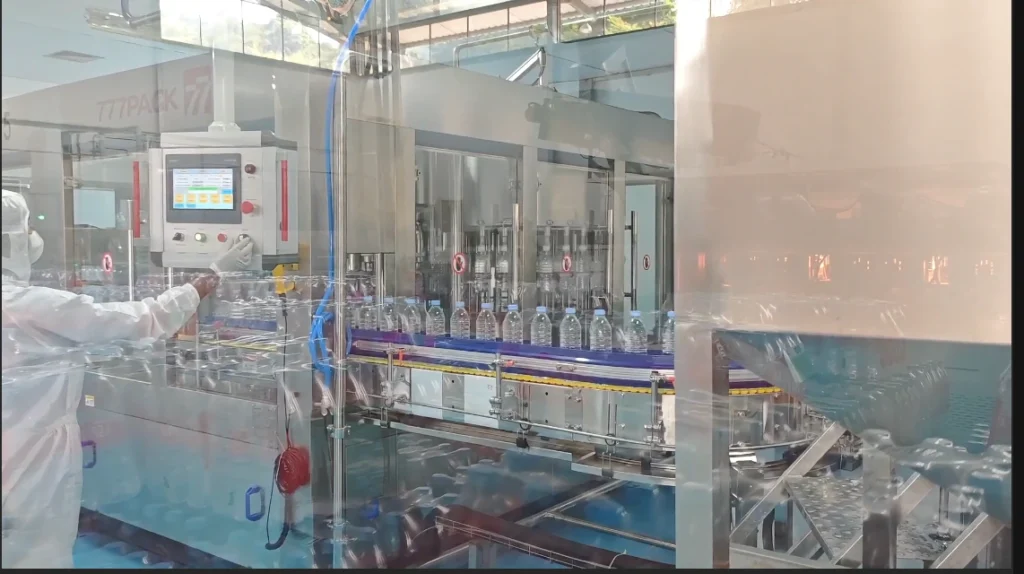
Water bottling line quotes should be compared against the same capacity requirements, equipment processes, and supply scope. Each supplier should itemize its equipment and explain how the proposed machines will meet the required output under the specified packaging conditions. Otherwise, a lower quotation may simply exclude equipment, services, or capabilities included elsewhere.
To compare water bottling line quotes fairly, give every supplier the same production and packaging requirements, then check capacity assumptions, process choices, and included equipment. Request an itemized quotation with clear exclusions, optional items, and performance acceptance conditions. Compare the cost of equivalent operating solutions, not just the quoted totals.
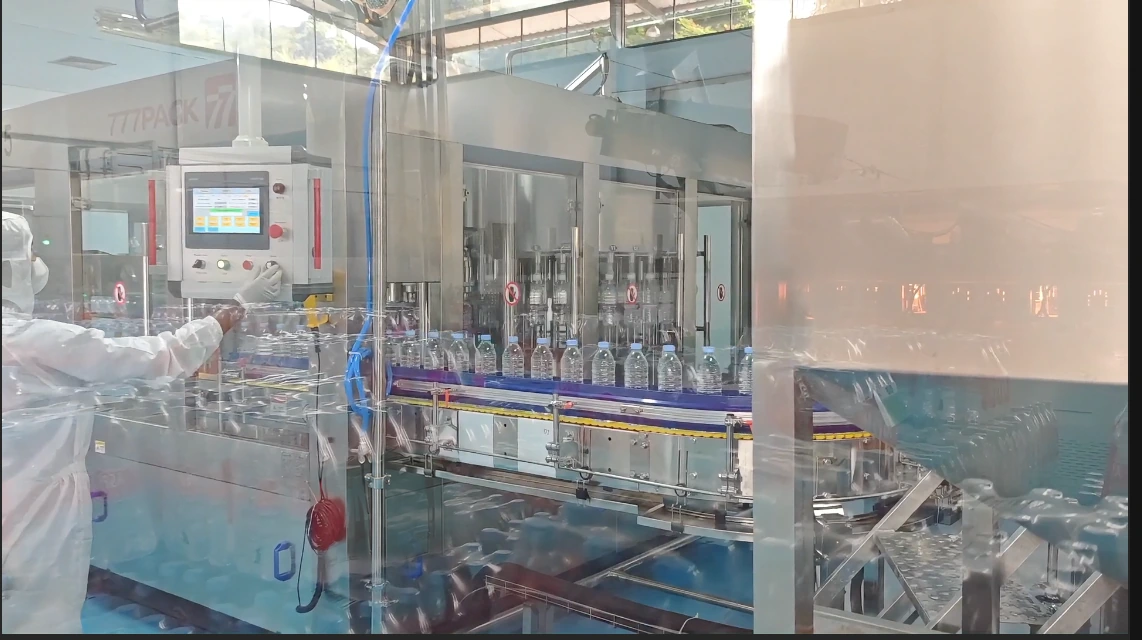
Project photo from the Bogor bottled water line. Compare quotations against an agreed equipment sequence and finished-package requirement.
A useful comparison starts before price negotiation. The quotation must explain what the line will produce, how it will package that product, and where the supplier’s responsibility ends. The questions below help turn different proposals into a common purchasing baseline.
How Can Water Bottling Line Quotes Be Compared for Production Capacity?
A capacity figure can look convincing while leaving important conditions undefined. Suppliers may quote output for different bottle sizes, label formats, or operating assumptions. Buyers then risk comparing machines that share a headline speed but cannot deliver the same finished product at that speed.
Capacity in water bottling line quotes should be evaluated using the same bottle design, volume, closure, label, and final packaging format. Suppliers should identify the capacity basis for each machine and explain the expected output of the integrated line. Acceptance criteria should define how that output will be demonstrated.
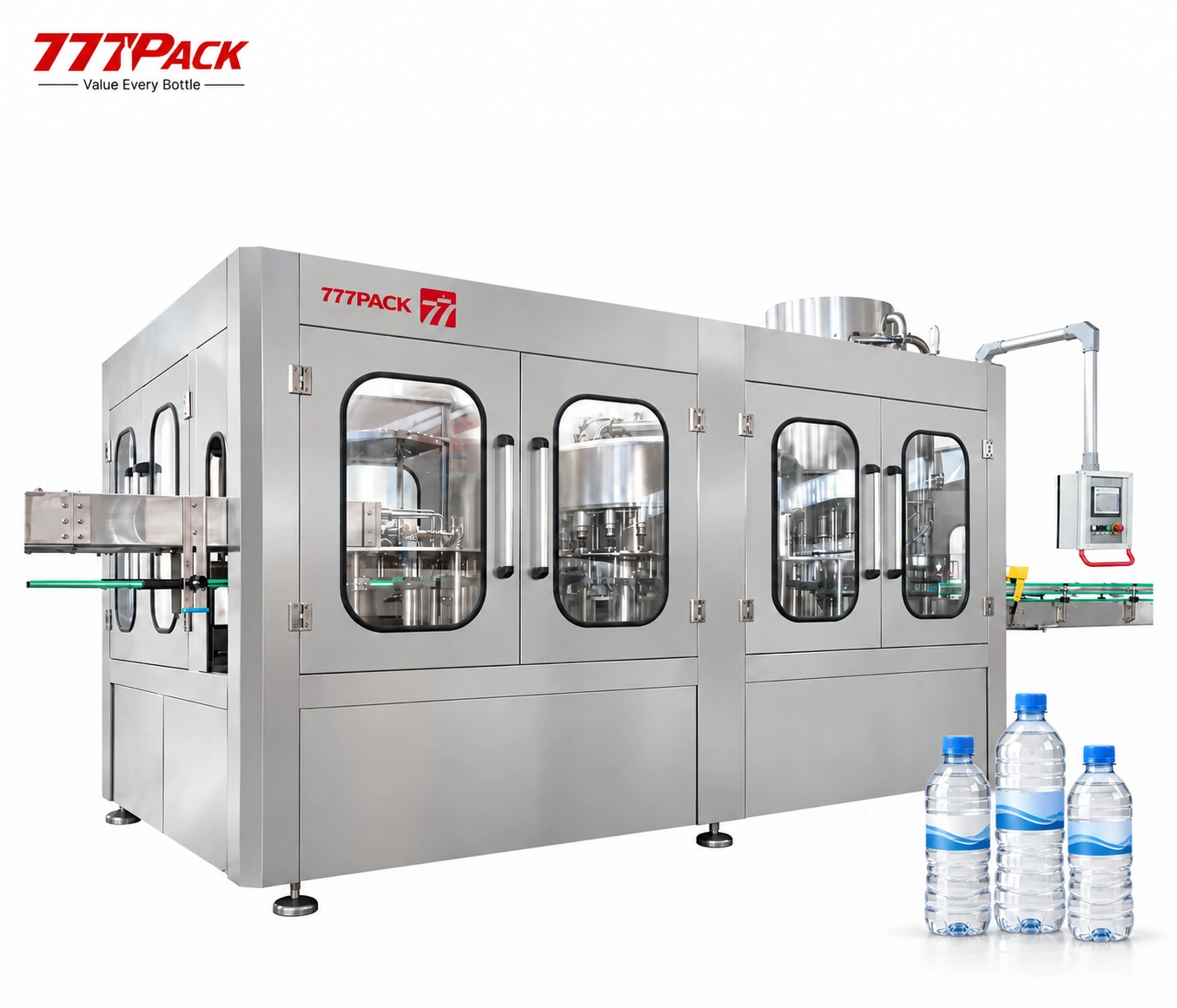
XGF equipment reference with example PET bottles. Ask each supplier to state the bottle format used for its capacity claim.
Start with the finished package
The finished package provides the most useful starting point for a capacity comparison. A quotation for individual bottles does not necessarily describe the output available after labeling, grouping, wrapping, and palletizing.
The buyer’s specification should identify:
- Bottle design and nominal volume, supported by drawings or approved samples.
- Bottle supply method, such as on-site blowing or purchased empty bottles.
- Neck finish and closure specification, including relevant drawings.
- Label format and material, including the intended artwork dimensions.
- Pack configuration, including the required bottles per pack.
- Secondary packaging method, such as shrink wrapping or case packing.
- Pallet requirements, including pallet type and approved stacking pattern.
- Required finished output, expressed in a clearly defined unit.
Each numerical requirement should have an identifiable basis. For example, bottle dimensions should reference the approved bottle drawing, while the required output should reference the buyer’s production plan. A supplier’s capacity claim should reference its quotation, technical schedule, or proposed performance test.
This approach prevents an unsupported figure from becoming a contractual assumption.
Use machine specifications as screening evidence
The supplied business insights identify blow-molder cavity count, filling-head count, and rotary labeling-machine station count as useful preliminary checks. These specifications can help buyers identify major differences between proposals.
For a filling-stage reference, review the 777Pack PET bottle water filling machine specifications.
However, machine counts are not proof of finished-line output.
A supplier should explain how its configuration performs with the specified bottle and packaging materials. Buyers should also ask whether the quoted output depends on operating conditions that differ from the intended production conditions.
Relevant questions include:
- Does the stated speed apply to the required bottle design?
- Does the capacity claim include the labeling and packing stages?
- Which machine is expected to constrain output?
- What material quality assumptions support the claim?
- What stops, rejects, or planned interruptions are excluded from the stated performance?
Define an integrated acceptance method
Water bottling line quotes become more comparable when suppliers respond to the same acceptance requirements.
The proposed test should specify the product format, test materials, measurement point, operating conditions, and acceptance criteria. The contract should also identify how rejected bottles, incomplete packs, and stoppages will be treated.
A qualified production or engineering professional should review application-specific performance commitments before purchase. The objective is not to demand the largest machine configuration. The objective is to establish whether the proposed configuration can deliver the required finished output under agreed conditions.
Why Do Water Bottling Line Quotes Differ When the Rated Output Is the Same?
Matching rated output does not make equipment technically equivalent. Different labeling methods, bottle-handling arrangements, and packaging processes can require different machines and supporting systems. A price comparison becomes misleading when these process differences remain hidden behind broad descriptions such as “labeling equipment” or “complete packing system.”
Water bottling line quotes can differ because suppliers propose different production and packaging processes. Buyers should confirm the required label type, material, application method, and supporting equipment. The correct comparison is between solutions that meet the same package specification, rather than machines with similar names or nominal speeds.
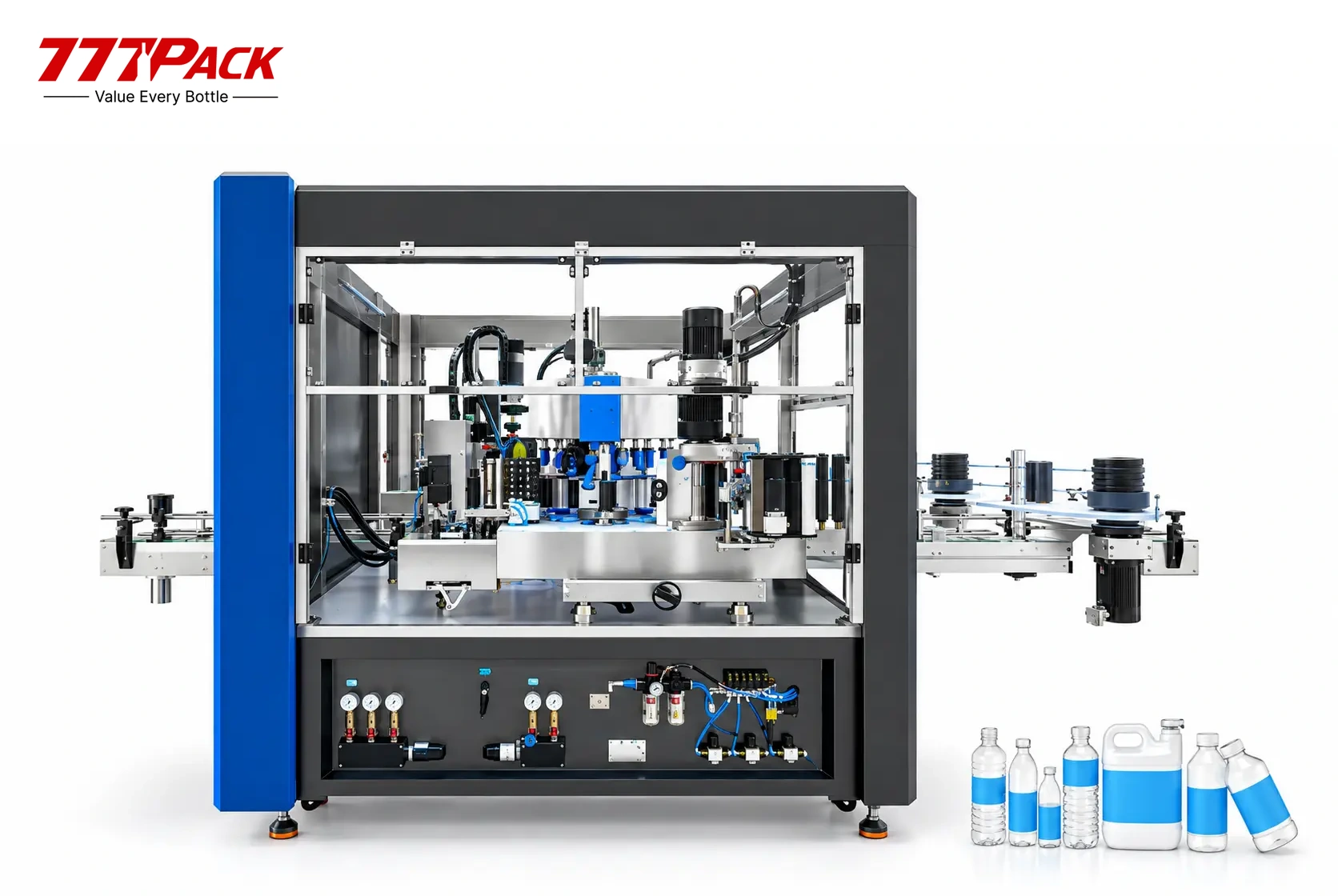
Rotary OPP hot melt glue labeling equipment. Compare the label format and included supporting equipment.
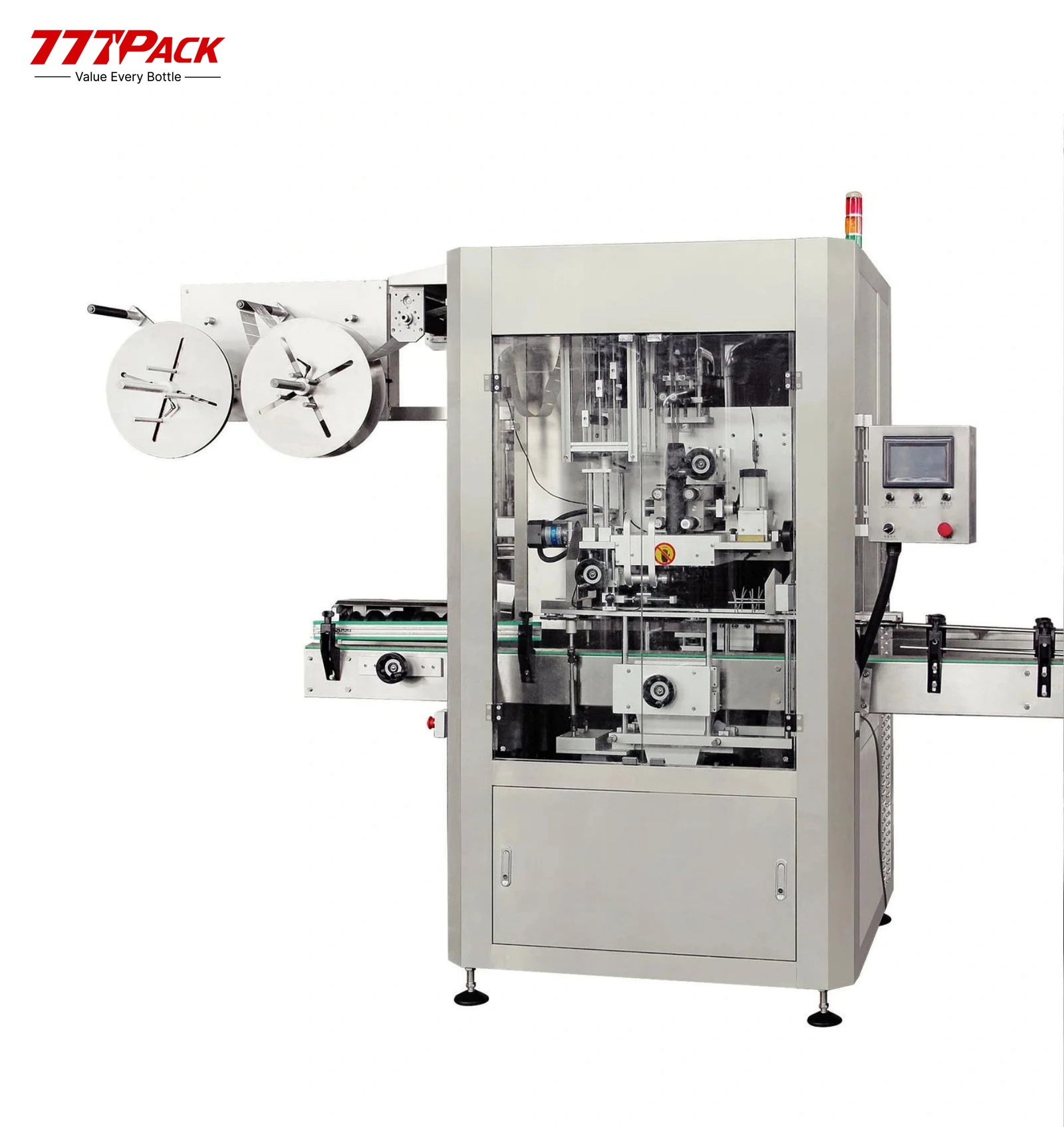
Single-head shrink sleeve applicator. Confirm the shrink tunnel, steam supply, conveyors, and controls included in the quotation.
Separate the required result from the proposed method
The buyer should define the package that must leave the line. The supplier should then explain the method proposed to produce it.
For labeling, the requirement may involve a self-adhesive label, a wraparound label, or a shrink sleeve. These formats are not automatically interchangeable. They may require different application equipment, consumables, and support systems.
For equipment examples, compare the rotary OPP hot melt glue labeling machine and the single-head shrink sleeve labeling machine, checking the supporting equipment included with each proposal.
The supplied business insights specifically distinguish labeling machines from sleeve-labeling machines. That distinction matters because a quotation can appear complete while providing a process that does not match the buyer’s intended packaging.
Before comparing prices, the buyer should ask:
- What label format does the proposal support?
- What material specification forms the basis of the quotation?
- Which label application components are included?
- Does the process require a tunnel or another supporting unit?
- Which utility connections and interfaces fall outside the supplier’s scope?
- How will label placement and finished appearance be evaluated?
Review the complete process package
A main machine price may not represent the cost of a working process.
For example, a sleeve-labeling proposal may include the applicator but describe the associated shrink equipment separately. Another proposal may include the applicator, shrink equipment, conveyors, and controls within a single package.
Neither arrangement is necessarily unsuitable. The problem is that the totals do not represent equivalent scope until the differences are identified.
The same principle applies to secondary packaging. A shrink-wrapped pack and a corrugated case can satisfy different commercial requirements. Buyers should not treat the equipment costs as directly comparable unless both proposals produce the required saleable package.
Check manufacturing quality evidence
Process selection should also include a review of supplier quality-control evidence.
Useful documents may include:
- Equipment inspection and assembly records.
- Relevant material specifications for product-contact components.
- Control-system component lists.
- Proposed factory acceptance procedures.
- Sample-package evaluation records.
- Drawings showing machine interfaces and access requirements.
Certificates should be treated as documents to verify, not as automatic proof that the complete line suits the application. Buyers should check the issuing organization, validity, scope, and relevance to the supplied equipment.
Where hygiene, product-contact materials, or local compliance requirements affect the decision, qualified specialists should review the proposal. Commercial evaluation can identify missing information, but it cannot replace application-specific technical assessment.
What Equipment Should Water Bottling Line Quotes Include?
Descriptions such as “complete line” and “palletizing included” can conceal substantial differences. A buyer may assume that conveyors, controls, and handling equipment are included when the supplier has allowed only for a main machine. Those gaps can later become additional purchases or unresolved installation responsibilities.
Water bottling line quotes should list every included machine, its quantity, configuration, supporting equipment, and supply boundary. Buyers should also request explicit exclusions and options. For palletizing, the quotation should identify the handling method, automation scope, conveyors, controls, and any pallet or load-handling equipment included.
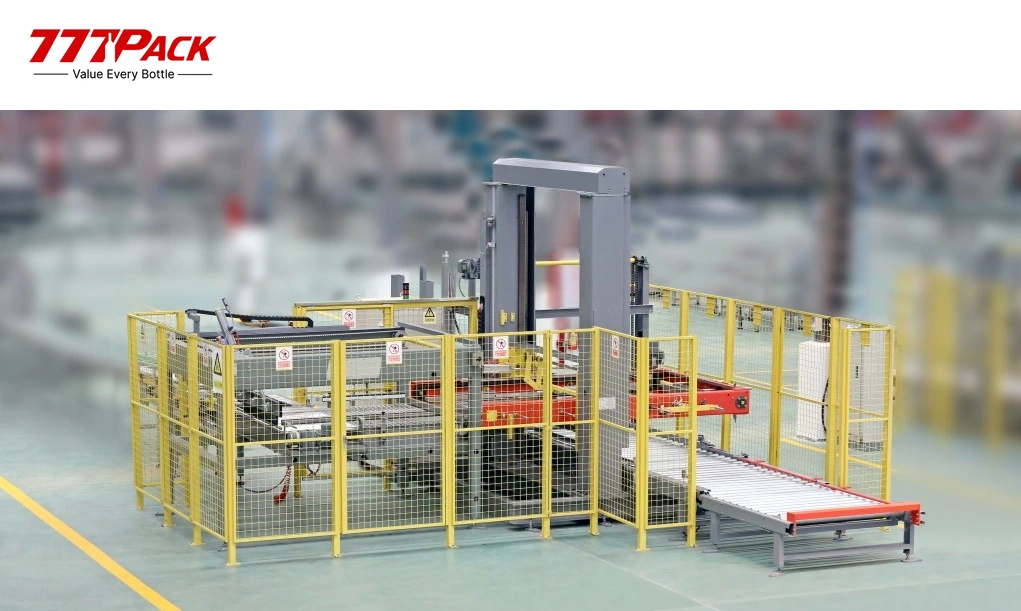
Example low-level gantry palletizer. Specify the handling method, supporting conveyors, pallet supply, and discharge equipment in each quotation.
Build a single comparison matrix
A common matrix makes differences visible without forcing every supplier to use an identical machine design. The buyer can allow alternative solutions while requiring each supplier to explain how its proposal meets the same requirement.
The following table consolidates the main comparisons. It is a procurement checklist, not a statement that every project requires every listed item.
| Comparison area | Common requirement to establish | Evidence to request from each supplier | Difference that can affect price |
|---|---|---|---|
| Production capacity | Required finished output for the specified package | Capacity basis and proposed acceptance method | Different bottle formats or measurement points |
| Bottle supply | On-site bottle blowing or purchased bottles | Equipment list and process boundary | Included or excluded blowing and bottle handling |
| Filling and closing | Approved bottle, closure, and product requirements | Machine configuration and technical schedule | Different configurations or supporting equipment |
| Labeling | Approved label format and material | Process description and included accessories | Label application method and associated equipment |
| Secondary packaging | Required pack format and bottles per pack | Packing-machine configuration and scope | Shrink wrapping, case packing, or omitted accessories |
| Palletizing | Required pallet and stacking arrangement | Layout and handling-method description | Robotic, conventional automatic, or manual arrangements |
| Conveying and controls | Defined interfaces between machines | Layout, conveyor schedule, and control boundary | Missing transfers, integration, or control components |
| Utilities | Available site utilities and connection boundaries | Consumption schedule and interface requirements | Supporting systems assigned to the buyer |
| Inspection and rejection | Agreed quality checks and reject handling | Inspection-device list and acceptance criteria | Omitted inspection or rejection functions |
| Installation and training | Defined service responsibilities | Service scope and buyer obligations | Different commissioning and training coverage |
| Documentation | Required technical and quality records | Document register and delivery commitments | Missing drawings, manuals, or verification records |
| Commercial terms | Common delivery and cost-comparison basis | Delivery terms, exclusions, and payment conditions | Different freight, taxes, insurance, or delivery boundaries |
Look closely at palletizing scope
The supplied business insights highlight palletizing as a common source of quotation differences.
A proposal that says “palletizing included” should explain whether the system uses a robot, another automatic arrangement, or a manual handling method. It should also state which supporting devices are included.
Review the 777Pack palletizing systems and available equipment alongside the proposed equipment list and layout.
Depending on the proposed solution, relevant items may include:
- Pack infeed and accumulation conveyors.
- Layer-forming equipment.
- Robot tooling or other load-handling components.
- Pallet handling and transfer equipment.
- Safety-related equipment within the agreed supply boundary.
- Controls and communication interfaces.
- Load wrapping, if required by the buyer.
The buyer should not assume that any of these items are included merely because palletizing appears in the equipment list.
Assign responsibility at every interface
A supply boundary should describe both the equipment and the work needed to connect it.
For example, the quotation should state who provides utility connections, inter-machine communication, foundations where applicable, and site installation labor. It should also identify the party responsible for demonstrating integrated performance.
An exclusion is not automatically a problem. An unclear exclusion is.
A buyer may deliberately purchase certain systems locally. That arrangement can be commercially reasonable when responsibilities, specifications, and interfaces are agreed before ordering.
How Should Buyers Request Comparable Water Bottling Line Quotes?
Sending different information to different suppliers creates avoidable uncertainty. Suppliers fill specification gaps with their own assumptions, and buyers receive proposals that answer different questions. Negotiation then focuses on price before the underlying equipment scope has been aligned.
Comparable water bottling line quotes begin with a shared request for quotation. Buyers should provide the same bottle, capacity, labeling, packing, and palletizing requirements to every supplier. Each response should include itemized equipment, capacity assumptions, main configurations, exclusions, options, and proposed acceptance conditions.
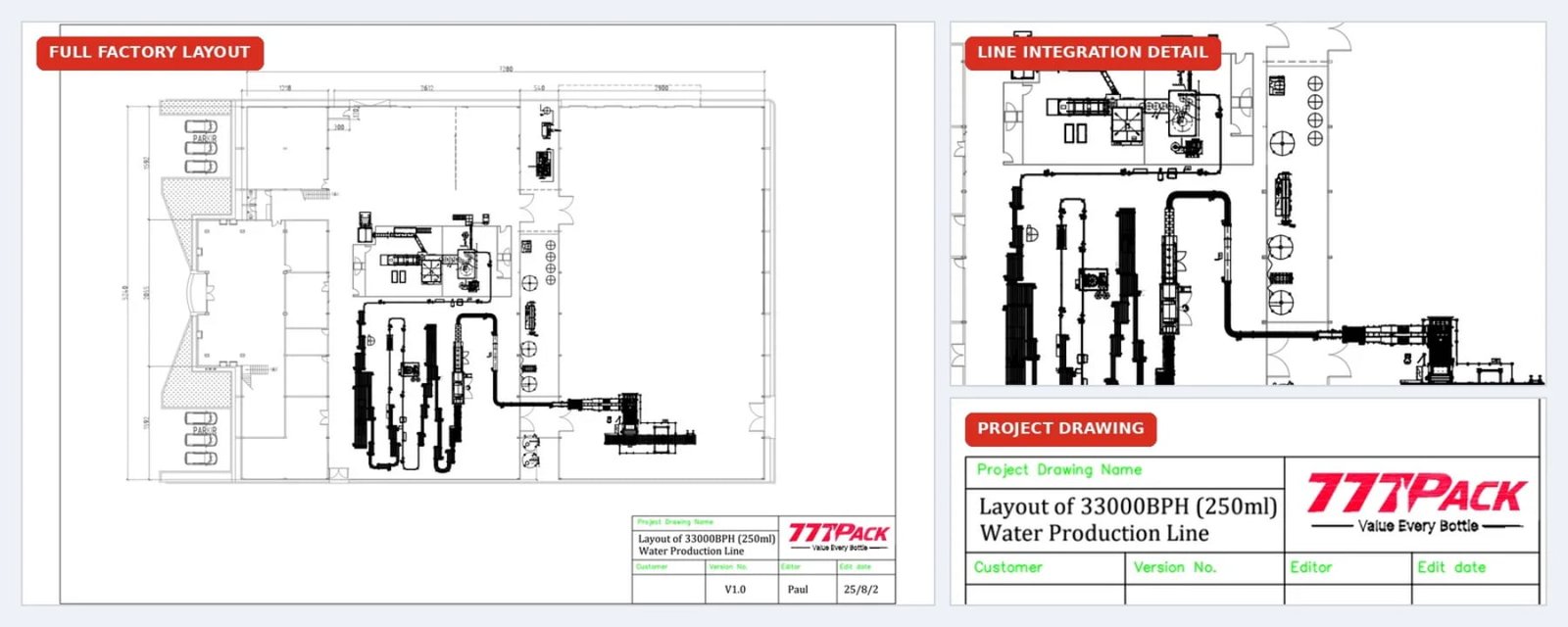
Example factory layout for reviewing equipment positions, conveyor routes, and space requirements before finalizing the quotation scope.
Issue a controlled quotation brief
The request for quotation should have a clear revision identifier so suppliers can confirm which requirements they used.
The brief should include approved drawings or samples where available. It should also distinguish firm requirements from items that remain under review.
For a project-planning reference, see the 777Pack pre-sale service process for requirements, equipment configuration, and quotation preparation.
A practical structure includes:
- Product and bottle requirements: Bottle design, volume, closure, and relevant product information.
- Output requirements: Required finished output and the operating conditions used to establish it.
- Packaging requirements: Label type, label material, pack configuration, and packaging method.
- Palletizing requirements: Pallet specification, stacking arrangement, and automation expectations.
- Site information: Available utilities, layout constraints, and installation conditions.
- Quality requirements: Inspection expectations and proposed acceptance criteria.
- Supply requirements: Equipment, documentation, services, and delivery boundaries.
All numerical inputs should be traceable to the buyer’s approved documents, site data, or production plan. Supplier-proposed numerical values should be marked as proposals and supported by the relevant technical document.
Ask suppliers to disclose deviations
A supplier should not silently replace a requirement with a more convenient alternative.
The quotation should include a deviation list that explains:
- Which requirement the supplier cannot meet as written.
- What alternative the supplier proposes.
- How that alternative affects output or package format.
- Which equipment or services would need to change.
- Whether the alternative affects price or delivery.
This process allows buyers to consider useful alternatives without confusing them with fully compliant offers.
Normalize cost without guessing
Water bottling line quotes should be normalized only after technical scope is sufficiently clear.
Where equipment or services are missing, the buyer should request a revised quotation or a separately priced addition. An internal estimate may support early budgeting, but it should not be presented as a confirmed supplier cost.
The commercial review should distinguish the quoted equipment price from other relevant costs, such as freight, installation, utilities infrastructure, training, and consumables. The buyer should use documented assumptions and identify any unresolved amounts.
Evaluate service claims as specific commitments
Supplier selection should include a review of installation support, commissioning arrangements, spare-parts access, and technical communication.
The 777Pack after-sale service page describes installation, commissioning, operator training, and spare-parts support for comparison with the proposed service scope.
For an Indonesian project, local service availability can be relevant. However, the buyer should ask what that service actually includes: the responsible company, covered activities, personnel availability, and contractual response arrangements.
The supplied business context identifies a beverage-packaging-line business with an Indonesian company providing local service and a global market focus. Buyers should still request project-specific service commitments rather than infer coverage from company location alone.
For an initial equipment discussion, buyers can review the water bottling line product page and configuration options and submit the same specification package used for competing suppliers.
A complete-line overview is available on the 777Pack bottled water production line and configuration page.
Frequently Asked Questions
Is the lowest water bottling line quotation always the best value?
The lowest quotation is not necessarily the best value because it may cover less equipment or use different performance assumptions. Buyers should first align capacity, process, and supply scope. The final decision should consider documented acceptance commitments, installation responsibilities, service arrangements, and relevant operating costs.
Can filling-head count prove the capacity of a complete bottling line?
Filling-head count can help buyers screen equipment configurations, but it cannot prove complete-line output. Bottle handling, labeling, packing, and other stages may limit production. The supplier should support its capacity claim with format-specific information and an agreed method for testing finished output.
Should optional equipment be included in the quotation comparison?
Optional equipment should be included in the comparison when it is necessary to meet the buyer’s approved requirements. Other options should remain separate so their cost and purpose stay visible. Suppliers should explain whether each option supports required performance, changes the package, or adds convenience.
How can buyers verify a supplier’s equipment certificates?
Buyers should request the relevant certificates and check their issuer, validity, scope, and connection to the quoted equipment. A certificate for a company or component does not automatically establish suitability of the complete line. Qualified professionals should review documents relevant to local compliance and application-specific requirements.
What should buyers do when suppliers propose different palletizing systems?
Buyers should compare each proposal against the required pallet, stacking pattern, handling method, and automation scope. The quotation should identify supporting conveyors, controls, tooling, and supply boundaries. Different systems can be considered, but each supplier must explain how its solution meets the same finished-load requirements.
Conclusion
Water bottling line quotes become meaningful when suppliers work from the same capacity, process, and supply requirements. Buyers should verify the output basis, distinguish labeling and packaging methods, and require itemized equipment with clear exclusions. They should also agree on acceptance conditions and review service commitments before selecting a supplier. A lower total matters only after the proposed solutions are comparable. For a project-specific proposal, submit the approved bottle and packaging specifications, production requirements, and palletizing needs, and request an itemized quotation with clearly defined local and international service scope.